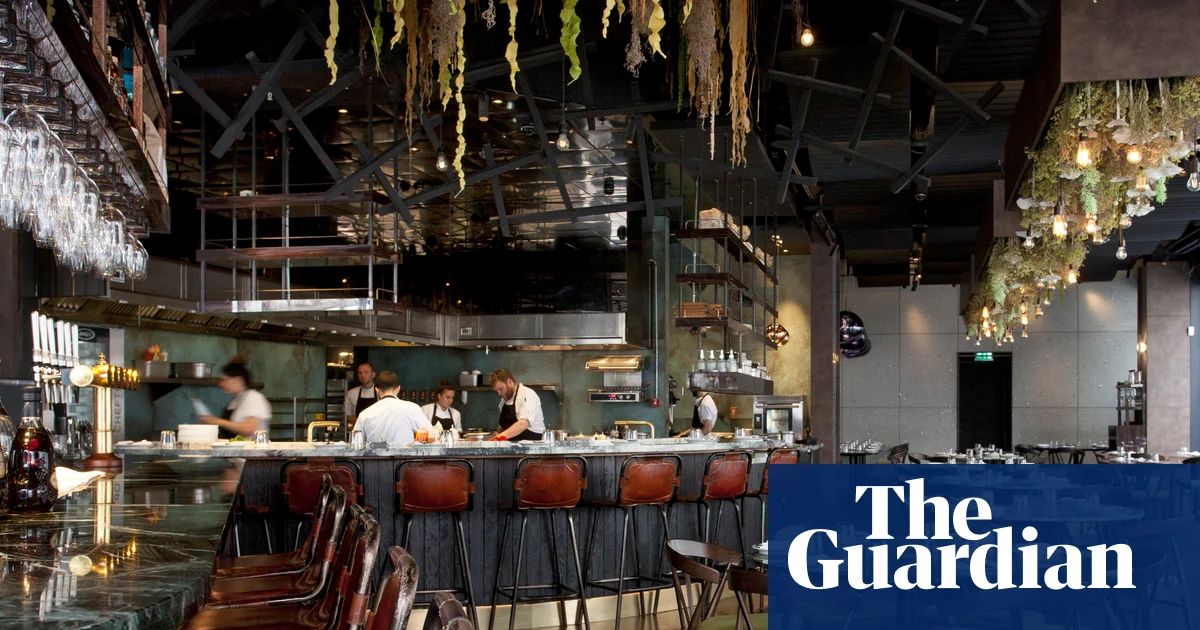
Some of London’s top restaurants are opening branches in Dubai because of a “tax tsunami” in the UK and better work ethic abroad, according to a leading restaurateur. This was reported by Qazaqyia.kz citing The Guardian.
James Robson, a co-owner of Fallow in St James’s Market, regarded as the capital’s hottest restaurant, serving 1,000 people a day, has just signed a deal to open an outpost in the Gulf.
Other restaurants have opened in Dubai, including the celebrity hotspot Scott’s in Mayfair, the two Michelin-starred Indian venue Gymkhana, and the upmarket Chinese restaurant Park Chinois. Isabel’s, a Mayfair institution enjoyed by politicians, has opened in Abu Dhabi. And the trendy Borough Market bakery Bread Ahead has branched out in Dubai.
Despite conflicts in the Middle East, including the US-Israeli war in Iran which caused Dubai to face bombardment and an exodus of expats earlier this year, restaurants continue to open in the emirate.
Speaking from Hong Kong, where he is looking at opportunities in Asia, Robson said: “East Asia, the States and the Gulf are key growth targets for us. America champions business, the Gulf actively encourages and assists, whilst east Asia has a work ethic and taxation system that puts the UK to shame. I’m incredibly keen to start working in these regions over the next few years.”
Fallow has risen to fame partially through Instagram, where it has 650,000 followers, and its striking dishes including a whole cod’s head drenched in a spicy butter sauce.
Restaurateurs have complained of the VAT rate for hospitality in the UK, which at 20% is one of the highest rates in Europe. The European average for restaurants is about 12%. In Italy, it is set at 10% for food sold in restaurants. Chefs are calling for Andy Burnham to use next week’s budget to cut the VAT rate.
“We have had a tsunami of taxes that have got to the point where taking business risk simply does not make sense in the UK,” Robson said, “Sadly the country has sleepwalked into multiple anti-growth taxations the last two budgets and likely more will be forthcoming next week.”
The entrepreneur has asked for VAT to be put more in line with Europe. “Add 25% corporation tax and 40%-plus dividend tax, then you start to question why do businesses any more.”
Jason Atherton, a Michelin-starred chef, spends a third of his time at his Dubai restaurant now and says it is easier to make a profit abroad than in London.
But human rights experts have warned of exploitation and poor worker protections in the Gulf. Felix Jakens, Amnesty International UK’s director of campaigns, said: “Dubai might look like an attractive place to do business, but the UAE has a very poor record on workers’ rights and protection from labour exploitation. The UAE has spent heavily on polishing its image in the UK, not least through Manchester City, but that glamour shouldn’t distract from how the people who keep its economy running are treated.
“Migrant workers, who make up the majority of the UAE’s population, remain bound by a sponsorship system that ties them to their employers and exposes them to labour abuse. They are denied the right to form trade unions, leaving them few ways to challenge unfair treatment.
“Any UK business expanding into the Gulf has a responsibility to carry out proper human rights due diligence, to make sure the people working in its kitchens are treated fairly, paid properly and able to raise concerns without fear of losing their job or visa.”
Some restaurants in Dubai are struggling: Dinner by Heston is temporarily closed and has been since the fallout from the war in the Middle East. The Michelin guide came under fire earlier this month because it included 16 restaurants that were either permanently or temporarily closed. It appears that some visits were undertaken by inspectors at the beginning of the year, before the war started.
Robson said he had no resentment paying UK tax. “I am incredibly proud of the taxes I pay and feel privileged that I can contribute to our country’s deficit and will continue to do so,” he said. “My point is UK growth simply does not have any risk-reward balance any more, therefore it’s play incredibly safe here and focus overseas.”