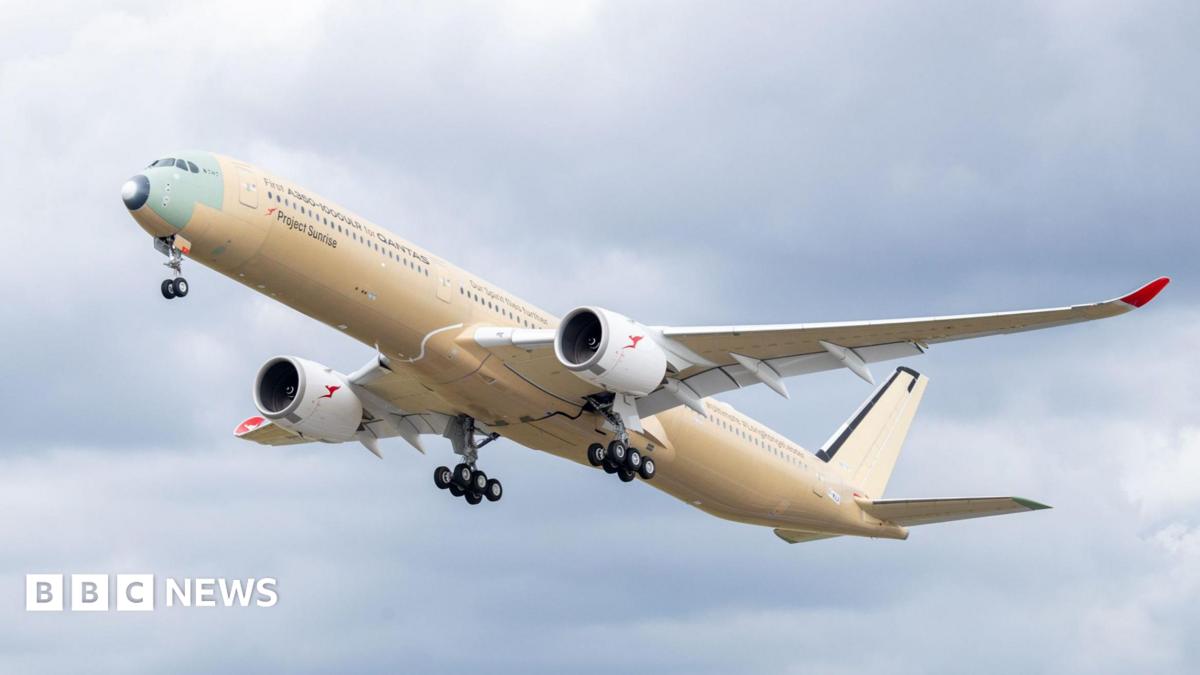
Qantas CEO Vanessa Hudson declared at an event at Airbus headquarters: "The tyranny of distance has finally been conquered." This was reported by Qazaqyia.kz citing BBC News.
The airline first flew the Kangaroo route between London and Sydney in 1947, a seven-stop, four-day odyssey. Stops have gradually been reduced, with Qantas now stopping only once in Singapore.
Eighty years later, the first non-stop flight between the two cities is set to take off from October 2027. Using specially designed ultra-long-haul Airbus planes, Qantas expects to shave about four hours off the current journey time, lasting around 22 hours.
The much-anticipated breakthrough comes after a turbulent few years in the airline's history. Bosses are banking on customers embracing the premium but marathon flight. "We feel really confident that this is going to be a success," Hudson tells the BBC.
Some analysts say it is a major milestone in aviation history. But is it really what people want?
Qantas has overcome some challenges to get this far and still faces others. The flight will save money on landing fees by eliminating a stop, but Hudson admits the longer flight has a higher relative fuel bill. There are also fewer seats, nearly half of which (40%) will be premium economy, business, or first class.
To counter the increased risk of deep vein thrombosis, Qantas has increased legroom in economy and created a dedicated "wellness" space where passengers can follow stretching exercises on a screen.
Hudson points to the success of the Perth to London route, saying "customers have been prepared to pay a premium" for that service.
Australian travel agent Karis Heemskerk is among fans of spending more time on one plane to get to their destination faster. The 41-year-old has taken the roughly 18-hour flight from Perth to London a couple of times, including with her husband and two children. "I think the direct flights cut time and there is no risk of missed connections and the stress of your luggage being lost," she tells the BBC. "Cons are that it can be gruelling and it is a long time for some individuals to be confined to a cabin. [But] overall, I'm a big fan of the direct flights."
However, some frequent fliers such as Tom Gill are less interested. The 33-year-old cultural consultant, originally from London but living in Melbourne, travels at least once a year to London plus other trips to Europe. "I don't mind an airport stopover at all: the idea of sitting in a plane for 20, 21 hours non-stop would be quite unbearable for me," he says. For Gill, the main factor is cost. Given the new route is expected to cost about 20% more than its current Sydney to London offering with a stopover, he doesn't think it will be a flight he'll catch anytime soon.
Research from ABTA suggests an increase in the number of people who travelled from the UK to Australia in the past year, particularly among 18-24-year-olds. "Australia is for many of us a bucket list destination," the UK travel industry body tells us.
But Bryan Terry, managing director of Alton Aviation Consultancy, says demand for this sort of service is narrow. "Qantas is targeting premium and time-sensitive travellers willing to pay a meaningful premium to avoid a Dubai, Singapore, or Los Angeles connection," he says.