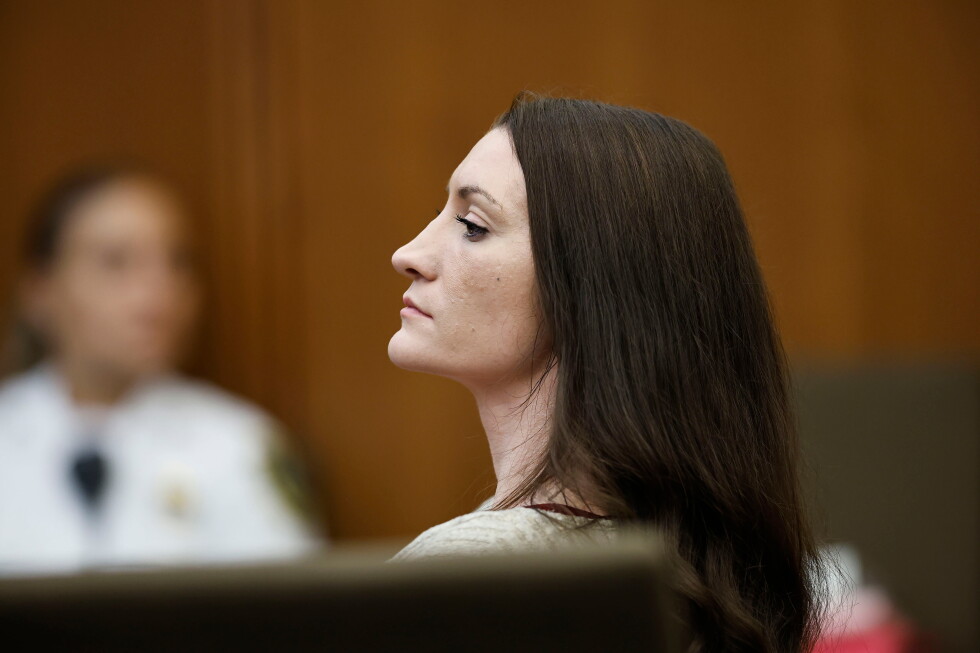
The murder trial of Lindsay Clancy has concluded, and the jury has begun deliberations. This was reported by Qazaqyia.kz citing Associated Press.
The trial lasted a month, featuring testimony about the deaths of her three children in 2023 and the psychiatric problems she experienced before killing them. Closing arguments concluded Thursday. The case has sparked online debate and demonstrations outside the courthouse over maternal well-being and the mental health system. The jury was sent off to deliberate at around 12:30 p.m.
Clancy, 36, is a Massachusetts woman charged with murder in the deaths of her children: Cora, 5, Dawson, 3, and Callan, 8 months. She hasn't disputed killing them but has pleaded not guilty by reason of lack of criminal responsibility.
Clancy was on maternity leave from her job as a labor and delivery nurse when the children were strangled on Jan. 24, 2023. The children were strangled with exercise bands in their home in coastal Duxbury, Massachusetts. Their father, Patrick Clancy, discovered them in the basement when he returned from errands Lindsay Clancy had asked him to run. He found her badly injured in the yard, where she landed after jumping from a second-story window. She remains paralyzed from the waist down and uses a wheelchair.
The trial hinges on Clancy's mental health and whether she understood that killing the children was wrong.
Prosecutors contend that she did and that she acted intentionally. They noted she was involved in everyday activities the day of the killings, such as taking her children to the doctor and playing with them in the snow. The prosecution claims she deliberately sent her then-husband on errands to get him out of the house, and prosecutors have questioned the seriousness of her suicide attempt.
Clancy's lawyer, Kevin Reddington, maintains that she was so mentally ill that she shouldn't be held criminally responsible. According to her defense, she had bipolar disorder and postpartum psychosis and, ultimately, it led her to believe she heard a voice telling her to kill the children so she could end her own life.
In diary entries Clancy wrote in the months before the killings, she described feeling anxious, overwhelmed, preoccupied with the details of her infant's care, beset by "brain fog," and "desperate to get a mental break from taking care of everyone."
Both the prosecution and the defense have drawn on expert testimony. One forensic psychiatrist, testifying for the defense, said Clancy was "clearly psychotic" and held a delusional belief that her children would be better off dying with her than being left behind. The prosecution's experts agreed that she had serious psychological problems, but said she wasn't psychotic. They also questioned Clancy's account of being commanded by a voice and asserted that she knew right from wrong and had control of her behavior.
Postpartum psychosis is a rare and serious condition that can cause disorganized thinking, delusions, hallucinations and other symptoms. It affects an estimated 1 to 2 out of 1,000 women after childbirth, but the risk is somewhat higher for people with certain mental health conditions such as bipolar disorder. Postpartum psychosis is different from postpartum depression, a more common mood disorder.
According to court testimony and exhibits, Clancy's psychiatric decline began about three months after Callan was born.