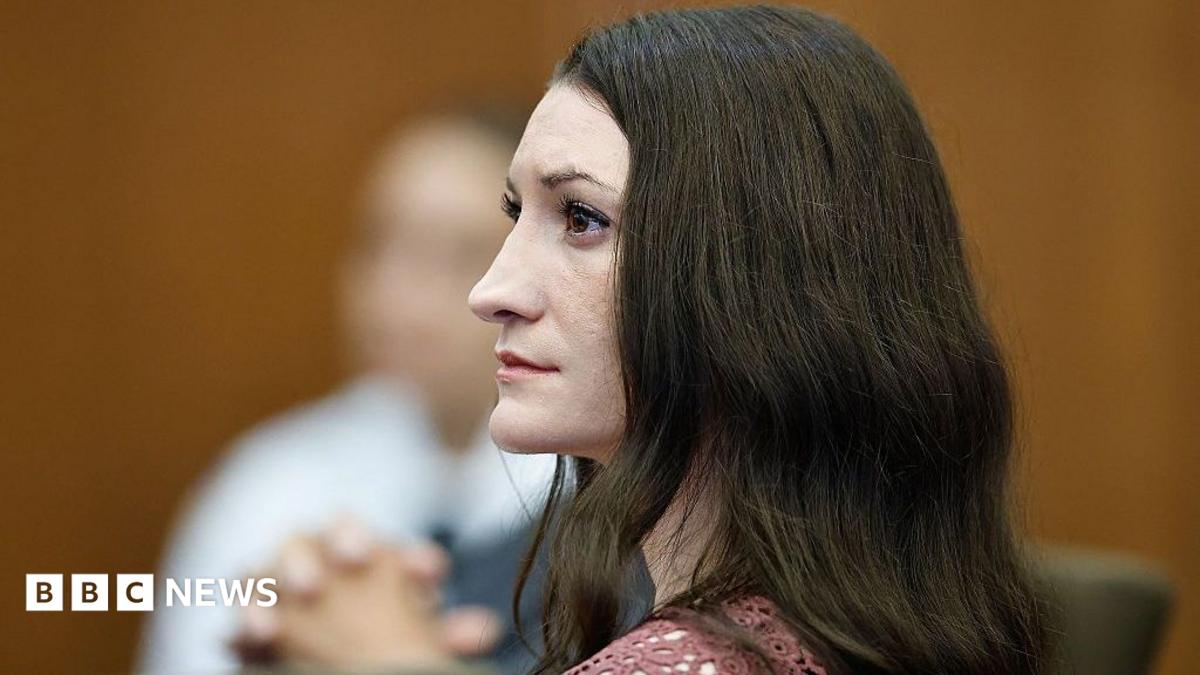
Lindsay Clancy, the US woman accused of murdering her three children, will return to a Massachusetts court on Monday as lawyers debate retrying the case. This was reported by Qazaqyia.kz citing BBC News.
Her defence team and Massachusetts prosecutors are expected to discuss how to move forward, with both parties seeking different outcomes.
Last week, in response to a defence request to dismiss the trial, prosecutors offered their clearest hint yet that they are seeking a new trial before a different jury. "The Commonwealth [Massachusetts] should be permitted to continue to pursue justice for Cora, Dawson and Callan Clancy," her three children, prosecutors said.
Prosecutors could also reduce the charges in a potential second trial or dismiss them altogether.
Clancy's first trial ended in a mistrial after a 12-person jury failed to reach a consensus.
The 36-year-old has not denied killing her children in 2023, but her defence team argues she was suffering from severe postpartum psychosis at the time. Prosecutors say the killings were intentional.
A jury first heard Clancy's case in August 2026, but failed to reach a unanimous agreement on whether the prosecution had proved Clancy was guilty "beyond a reasonable doubt" as required by US law.
A judge declared a mistrial in early September.
At a court appearance later that month, Clancy's lawyer, Kevin Reddington, argued the judge should dismiss her case. Meanwhile, prosecutors said the state had "met its burden" in proving her guilt.
But the hours-long back-and-forth ultimately didn't lead to a clearer answer about what might come next for Clancy - a dismissal of charges, retrial of the same charges, or retrial of lesser charges. These discussions will resume on Monday.
Judge William Sullivan seemed confident the case would be retried, saying in September he wanted to "get this thing moving".
He asked both sides to prepare to discuss possible trial dates at the November hearing.
Reddington said he would be unable to go to trial until at least June 2027 if the case was retried.
District Attorney Timothy Cruz said at the time that prosecutors had not yet decided whether to retry Clancy.
"We're doing our due diligence; we're going to continue doing that," he said. "We're going to do what we can for the children. That's what this case is about."
Fundamentally, Clancy's legal team - with Reddington at the helm - is pushing for the charges to be dismissed or dropped. They've explored a variety of legal avenues.
In September, he asked for her to be found not guilty under Rule 25 - a Massachusetts provision that states a defendant should be found not guilty if prosecutors do not present enough evidence at trial.
Judge Sullivan will hear arguments on several motions on Monday, but Heather Cucolo, a New York Law School professor and mental health law expert, told the BBC that the hearing will likely focus on a narrow point: was this an instance of a routine deadlocked-jury mistrial - in which the jury genuinely could not agree - or was this an improperly terminated trial?
She said Reddington may argue that a retrial could violate Clancy's Constitutional protection against double jeopardy - a legal standard that says a person cannot be tried for the same crime twice.
But legal experts agree that outcome is unlikely.
"The public attention that's been put on this trial and the need to have some conclusion in the near future, I think that the judge is going to say that this mistrial was appropriate, was legally accurate, and that they need to now look to set a date for a retrial," Cucolo said.
While the state's legal team has not explicitly said they will pursue a retrial, Cruz and the prosecutors who argued the case have consistently said they want justice for Clancy's children.
Last week, prosecutors asked Judge Sullivan to reject the motion to dismiss charges against Clancy on the grounds of double jeopardy.
They argue mistrial procedures were properly followed by the court, and thus they have a right to seek justice again on behalf of the children.
"Because a mistrial was properly declared due to the manifest necessity of a deadlocked jury, the defendant's motion to dismiss should be denied," prosecutors wrote in the motion.
Judge Sullivan could make a determination over whether the case can proceed on Monday or he could rule later in writing, criminal defence lawyer Elyse Hershon told the BBC.
And how the District Attorney's office wants to proceed could be determined ahead of Monday's hearing, during it or even days after, she said.