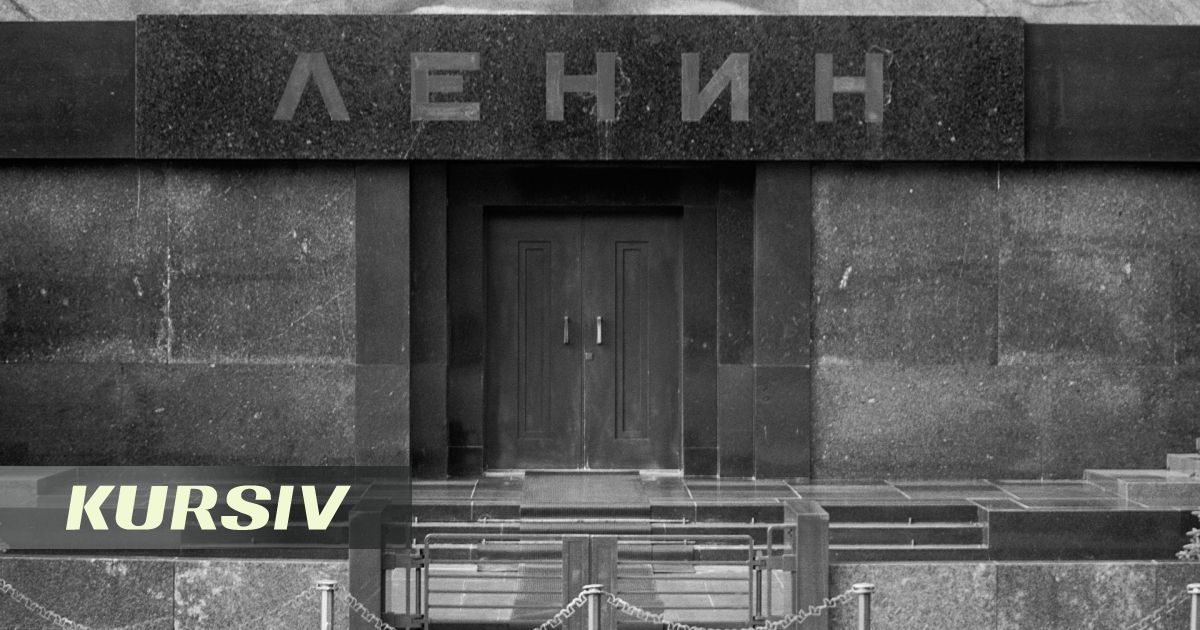
More than a century after his death, not much remains of Vladimir Lenin's body, which is preserved in the Mausoleum on Red Square. Experts estimate that original tissues make up less than a quarter of its volume. The rest consists of chemical compounds and artificial materials. This was reported by Qazaqyia.kz citing Kursiv Media.
How the body has changed
Lenin's body has been in the Mausoleum since 1924. Over this time, specialists have repeatedly carried out procedures to preserve the remains. As thanatopractitioner (a specialist in preparing the bodies of the deceased for burial) Vasilisa Kuznetsova explained, it is now more of a complex museum exhibit on a biological basis than an ordinary embalmed body.
"Only about 20–23% of the original, 'native' tissues remain there. The rest of the volume is long-term chemical impregnation and wax 'patches' that were applied over decades to maintain the usual shape," the expert said.
Burial difficulties
According to the thanatopractitioner, it is no longer possible to simply move the body into the ground and bury it. A sharp change in storage conditions could lead to unpredictable consequences for the tissues and the environment.
"If it is abruptly placed in the ground, a chaotic process will begin: the chemicals will be washed out by groundwater, and the tissues may not decay in the classic way but, for example, turn into adipocere or simply become moldy," Kuznetsova noted.
According to Kuznetsova, even obtaining full-fledged genetic material from Lenin's remains is now practically impossible: a century of exposure to chemical compounds has damaged the DNA structure.
Lenin's life and death
Vladimir Lenin died on January 21, 1924, at the Gorki estate at the age of 53. In the last years of his life, he was seriously ill and suffered several strokes. According to the official medical report, the cause of death was a cerebral hemorrhage against the background of atherosclerosis. After his death, Lenin's body was embalmed and placed in the Mausoleum on Red Square in Moscow, where less than a quarter of it remains to this day.
Earlier, Kursiv LifeStyle wrote that a pensioner from the Aktobe region installed a bust of Lenin in the yard of her house, making it an unusual place for selfies.