Sweltering nights in Havana are becoming unbearable for Cubans. Months of blackouts, shortages of food and water, and a crumbling infrastructure system are bringing many islanders to the breaking point. This was reported by Qazaqyia.kz citing Associated Press.
As reported by Associated Press journalists Ariel Fernández and Milexsy Durán, the hardships of daily life are taking a heavy psychological toll, and many are struggling to cope.
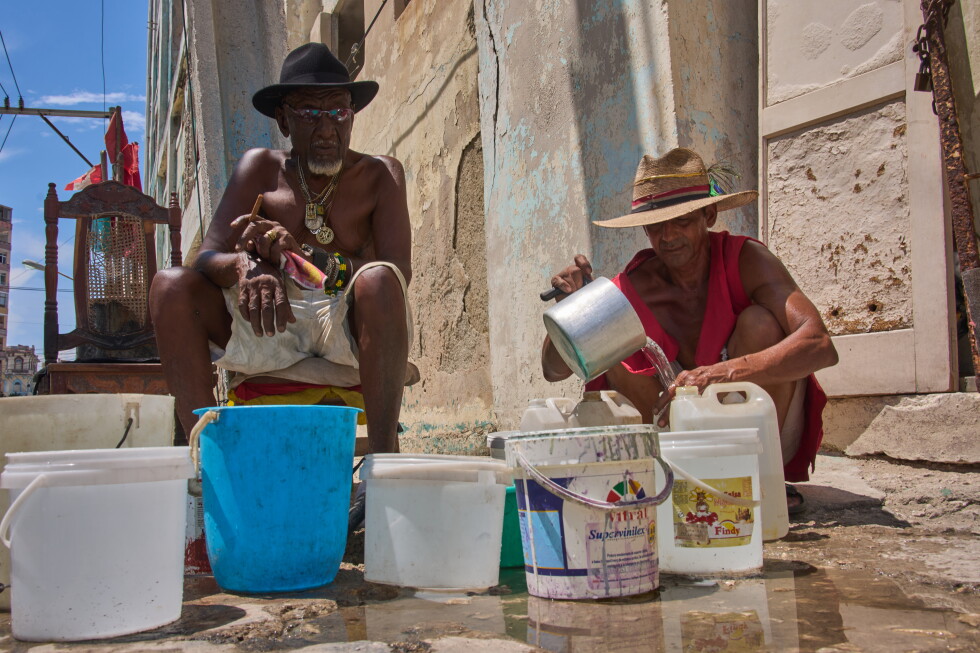
Oscar Joaquín López and his housemate Wilfredo Cisneros Duarte collect water from a street pipe in Havana. This scene is just one example of the daily struggle of city residents.
Teresita del Rosario González Ricardo, accompanied by her son José Manuel Borroto, poses for a photo at her home in Havana. She too is enduring difficult times, coping with heat and power outages.
Children attend a workshop to make gift bags and perfume in Havana. This is a moment showing that life goes on despite the difficulties.
Foreign Minister Bruno Eduardo Rodríguez Parrilla speaks to the press and presents Cuba's report on the impact of the US embargo policy on the island. This report is a step aimed at conveying Cuba's dire situation to the international community.
Photographs taken by Associated Press photographer Ramon Espinosa depict the struggle of Cubans in their daily lives. The images show people collecting water from pipes, standing at the entrances of their homes, and children working in a workshop.
The crisis in Cuba is not only economic but also psychological. Many residents endure prolonged hardships, but their patience is running out. Heat, blackouts, water and food shortages—all of this severely affects people's mental health.
Associated Press attempted to describe this situation and show the difficulties of everyday life for Cubans. As stated in the article, this applies not only to Havana but to the entire island.
The Cuban government considers the US embargo the main cause of the situation. The foreign minister's report supports this stance. However, according to residents, the problem may lie not only in the embargo but also in internal governance shortcomings.
According to Associated Press, the psychological state of Cubans is deteriorating. Many suffer from insomnia, anxiety, and depression. These are invisible but very severe consequences of the crisis.
On the streets of Havana, long queues of people can be seen at water pipes. Water scarcity is one of the most acute problems. Residents are forced to store and conserve water.
Power outages also complicate daily life. At night, the city plunges into darkness, and in the heat, it is impossible to sleep without a fan or air conditioner. This is especially hard for the elderly and children.
The Associated Press article pays special attention to the resilience and struggle of Cubans. Despite everything, people continue to live, children study, adults work. But this struggle is exhausting their strength.
The crisis in Cuba is not only economic but also humanitarian. The international community must pay attention to this situation and provide assistance. Otherwise, the situation may worsen further.
By publishing this article, Associated Press attempted to show the world the real picture of the situation in Cuba. The photographs and testimonies in the article are evidence of this crisis.