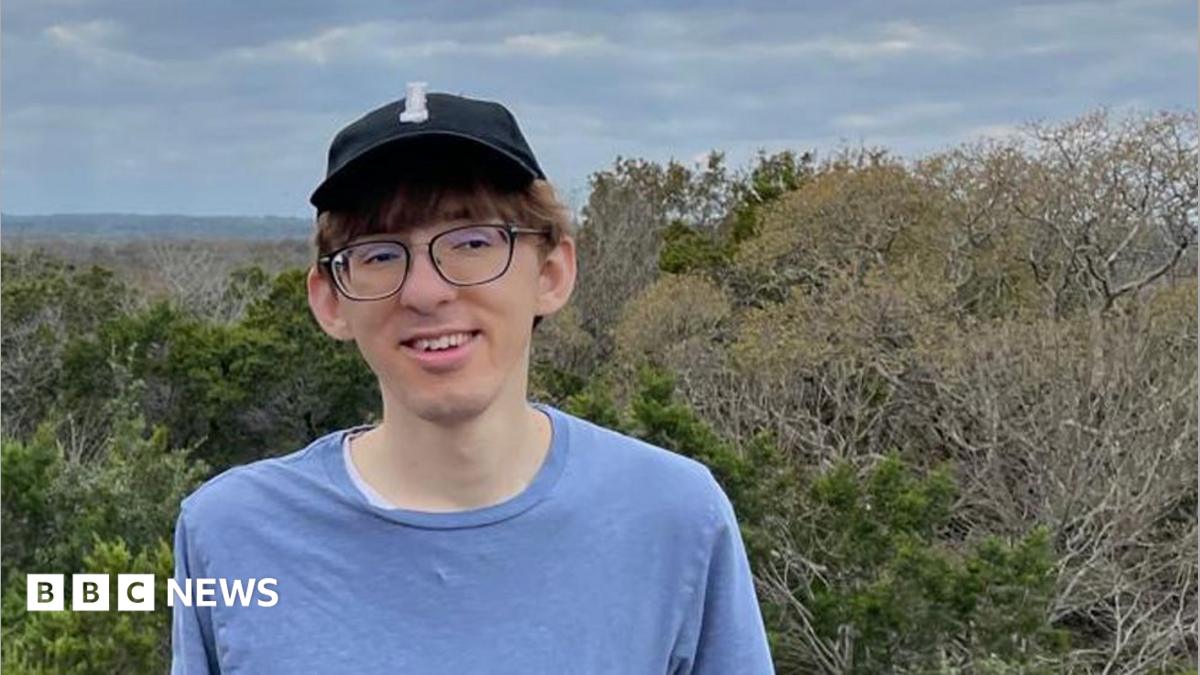
In August this year, 26-year-old Isaac Valdez had an epileptic seizure while browsing in his local library, causing him to convulse and strike his head against the ground. He lost consciousness. Later, in hospital, it transpired Isaac had hit his head with such force it had led to a brain haemorrhage. Treatment was seriously complicated by the fact that, as a Jehovah's Witness, Isaac carried a "No Blood" card, an indication that he would not accept treatment involving any form of blood transfusion because of his religious beliefs. This was reported by Qazaqyia.kz citing BBC News.
As a result, a procedure to drain fluid from Isaac's brain did not take place. But his family, from Waxahachie, Texas, were encouraged by the fact that he regained consciousness and even started to talk again. He was able to confirm that he stood by his "no blood" beliefs. The family's relief at his apparent improvement was short-lived. Isaac slipped into a coma and his condition worsened rapidly. A neurosurgeon told Isaac's family the only way to save his life was an emergency operation, but that it was one that required blood transfusion. His family took the decision to abide by Isaac's wishes as a lifelong Witness not to accept such a procedure. Isaac - who his twin brother Jacob Valdez describes as an intelligent man who loved volunteering and helping the elderly - died on 26 August 2026 when doctors turned off his life support.
Just 23 days later, the Jehovah's Witnesses' Governing Body announced a seismic change in teaching that would, in effect, have given Isaac the religious green light to have the life-saving treatment he had refused. The change suddenly means the vast majority of medical procedures using donated blood are no longer prohibited to followers. Now, decisions on whether to accept such treatments are to be left to individuals. Jacob, already dealing with the death of his twin, was angered at the Jehovah's Witnesses' leadership for not coming to their conclusion sooner. He told BBC News he believes Isaac could well still be alive if they had.
The original rule on blood transfusions dates back to 1945, towards the very end of a war during which the use of blood transfusions had been increasingly widespread. The leaders of Jehovah's Witnesses announced that their believers were not permitted to accept transfusions. This was based on their interpretation of Bible verses from both the Old and New Testaments prohibiting the consumption of blood, including one from the Book of Acts that instructs believers to abstain from blood, from food offered to idols, and from things that had been strangled. So, why has the Jehovah's Witnesses' Governing Body, based in New York state, now decided to change the rules, 81 years after introducing them? It comes after years of pressure from both within and outside the faith, but that is not how leaders of the faith describe the decision. "The change is basically the application of Bible principles to modern medicine and its methods," says the Jehovah's Witnesses international spokesperson, Paul Gillies, who described it as both a fresh look at scripture and at medical advances.
We meet Gillies at the Jehovah's Witnesses UK headquarters set in 85 acres of Essex countryside. It is a vast modern complex where hundreds of volunteer followers of the faith live and work without pay. He insists the basic teaching has not changed and that the transfusion of whole blood is still prohibited. However, for decades, most transfusions have not used whole blood, instead using the specific components of blood that are needed by the patient. The change is being justified by permitting the use of blood components, like plasma and red blood cells and platelets, in the huge numbers of medical procedures that were previously banned. Gillies says the Bible references "abstaining from blood" but not "various components that could be extracted from blood". He says the Governing Body felt it their duty to avoid scriptural "overreach" and only apply what was specifically described in the Bible. But that explanation has stunned many and led them to ask if it was not a huge overreach 81 years ago to ban blood transfusions in the first place, when transfusions are not specifically mentioned in the bible. Others are then also asking why it has taken so long to come to this landmark decision, given that transfusions that do not use whole blood have been the norm for decades. These are questions Jacob asked as soon as the ban was lifted, just days after a memorial service for Isaac. Jacob, who had already left the Jehovah's Witness faith he was brought up in, texted prominent figures from Isaac's congregation in Texas after Isaac's death. The messages are full of angst, and painful to read.