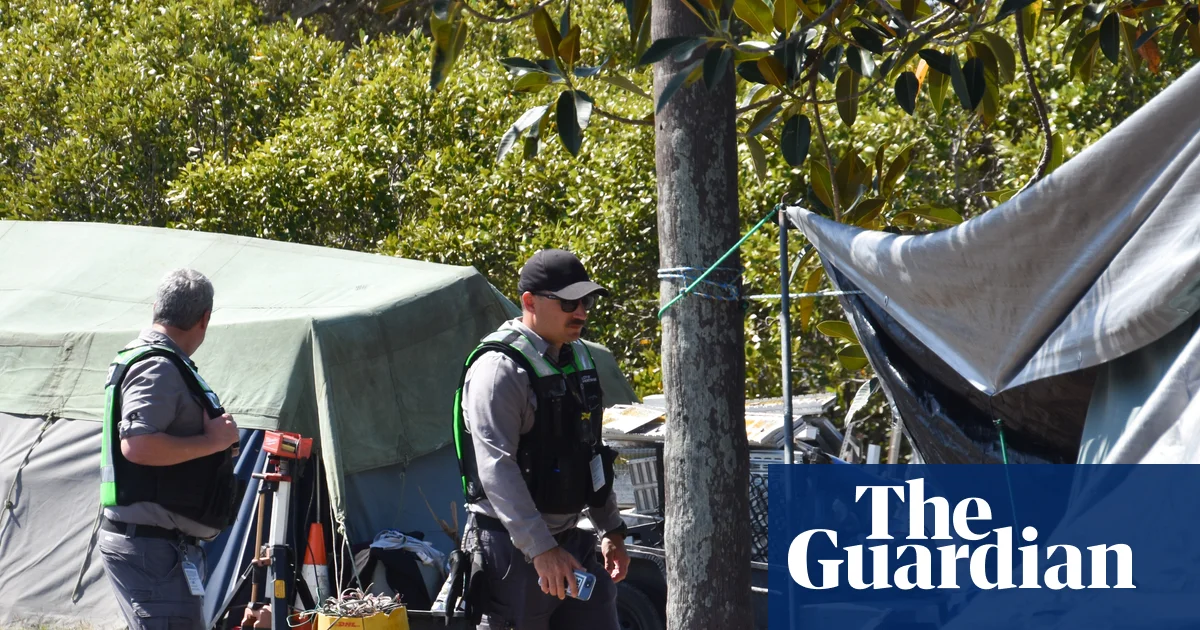
A homeless man was shot with a Taser by police after attempting to take his own life during a tent city clearance, sparking calls for mental health considerations when dealing with move-on orders amid Queensland’s homelessness crisis. This was reported by Qazaqyia.kz citing The Guardian.
On 1 September, Moreton Bay city council rangers gave six homeless residents 24 hours to leave Pelican Park north of Brisbane, where Martin* had been living in a camper trailer, to make way for a kite festival this weekend.
The 48-year-old said he was unable to comply with the move-on order because he had lost his driver licence due to a drink-driving conviction.
“I was under the understanding that they were coming to basically take my shit,” he told the Guardian. “In times gone past, I’ve complied.
“This time I can’t, and they told me that basically they’re going to impound everything.”
The homeless man, who has prostate cancer, told the rangers he would rather die than lose his few possessions.
“I said, ‘All right, well, if this is what you wish to do, then not a problem. Bring an ambulance and a body bag for me,’” Martin said.
He then stabbed himself in the neck with a knife. Moments later he was shot with a Taser at least twice by police.
He said he had not threatened anyone else before injuring himself.
A spokesperson for the Queensland police said its officers had attempted to de-escalate the situation and disarm Martin, but were unsuccessful.
“Immediate first aid was applied by officers to the man, who had sustained a serious self-inflicted injury,” they said.
“The QPS remains committed to providing officers with mental health training, focusing on an informed awareness of different categories of mental illness and the application of appropriate strategies to safely respond to persons experiencing mental health distress.”
Local homeless advocate Beau Haywood, founder of charity Nourish Street, said the incident showed what can go wrong if councils continued their enforcement-led approach to the state’s homelessness crisis. He said Moreton Bay should halt homeless clearances until they could show they were both safe and legal.
Martin, whose camp is part of a small tent city of about a dozen residents near the waterfront in Clontarf, is a former security guard who lost his job during the pandemic. He has lived homeless in the Moreton Bay area for more than three years, and is on the social housing waiting list.
He’s not alone: Moreton Bay has the state’s longest social housing waiting list – 5,146 at last count in 2025 – and a major rough sleeping problem. Several tent cities in the area house hundreds of people.
He said after it happened he woke up in an ambulance on the way to the Royal Brisbane and Women’s hospital. He had surgery to patch up his injuries, saw a mental health worker, and asked to be discharged so he could get back to his camper trailer to protect his belongings.
The next day, the hospital booked him a taxi back to the park.
He had not been seen by any health professional since his discharge, he said.
A spokesperson for the Metro North health service said it was “unable to comment on the specific details of a patient’s situation to respect their privacy and confidentiality”.
Moreton Bay was the first of many councils across the country to turn to enforcement as the solution to Australia’s worsening homelessness crisis. It made national headlines when it bulldozed a tent city in Lawnton, which the Queensland supreme court ruled a violation of the state’s Human Rights Act.
Haywood said the council had halted clearances during and after the court case, but had recently restarted them after announcing it would designate a park for the homeless.
Haywood said during clearances, homeless people like Martin could feel backed into a corner and it was inevitable that people would eventually snap.
“I’ve seen it time and time again. Every move brings [someone’s mental health] down even further. And I think for that gentleman, he reached his point,” he said.
“I think that if council were aware of his mental health and physical health, that maybe some more precautions should be taken. Some mental health treatment should have been offered at the time.”
Haywood said the clearances should be halted until they could be done safely.
Martin said he loved old movies, motorcycles and a long chat. He has refused treatment for his prostate cancer. He said before he died he wanted to see friends in Townsville and South Australia. He said one of his greatest joys was to cook for his homeless friends.