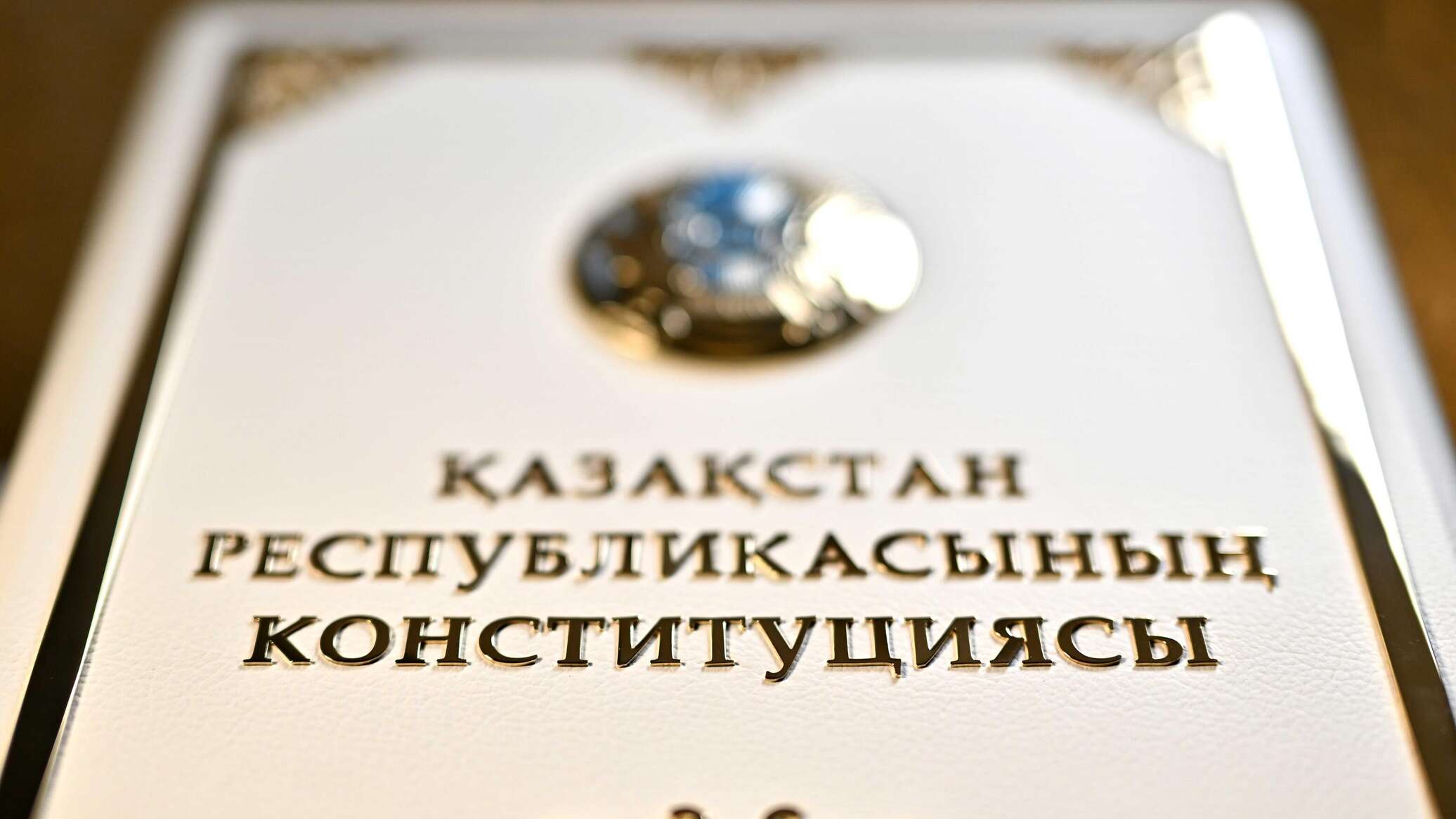
Starting this year, August 30 is no longer a national holiday in Kazakhstan. Constitution Day is now celebrated on March 15. This is because a new version of the Basic Law was adopted at a nationwide referendum on that day. This was reported by Qazaqyia.kz citing Sputnik Kazakhstan.
Why the First Version Was Changed
The very first Constitution of independent Kazakhstan was adopted on January 28, 1993. Before that, the 1978 Constitution of the Kazakh SSR was in effect. Although the first Basic Law of the sovereign country was adopted, this document contained many old administrative-command provisions. In particular, personal rights and freedoms, forms of government, and the functioning of democratic institutions were not clearly defined.
Two years later, on August 30, 1995, a nationwide referendum was held. As a result, a new Constitution consisting of 9 chapters and 98 articles was adopted. Last year, Kazakhstan's Basic Law, which has a 30-year history, was one of the youngest constitutions in the world.
How Many Amendments Were Made Under Nazarbayev
Under Kazakhstan's ex-president Nursultan Nazarbayev, the Constitution was amended five times.
- 01**May 21, 2007.** Majilis deputies began to be elected entirely by party lists, and an amendment was introduced: "one person cannot be elected President of the Republic more than twice in a row. This restriction does not apply to the First President of Kazakhstan – Elbasy."
- 02**February 2, 2011.** The definition of "Elbasy" was introduced into the Constitution, and he was given the authority to call early elections. The Basic Law named Nazarbayev "the founder of the new independent state."
- 03**March 10, 2017.** The Security Council became the main constitutional body of Kazakhstan, and the government became accountable not only to the president but also to the parliament.
- 04**March 23, 2019.** The Constitution changed the name of the capital of Kazakhstan – Astana to "Nur-Sultan". However, three years later, the city was returned its former name.
Thus, a super-presidential form of government was formed in Kazakhstan. After the January events of 2022, Tokayev began to change this system.
Changes Introduced by Tokayev
On June 5, 2022, a nationwide referendum was held in Kazakhstan. As a result, the super-presidential form of government was removed from the Constitution. Priority was given to a presidential republic with an accountable government and an influential parliament.
Key changes:
- 01The provision on the first president as the founder of independent Kazakhstan and his status as Elbasy (leader of the nation) was removed.
- 02Close relatives of the president were deprived of the right to hold positions of political civil servants and heads of quasi-state sector entities.
- 03A mixed electoral system for the Majilis was introduced, and the number of deputies was reduced from 107 to 98.
- 04The head of state was banned from leading any party.
- 05The president is elected for a seven-year term only once.
- 06A Constitutional Court was also established, which citizens can apply to independently.
- 07In addition to commissioners for human rights and children's rights, commissioners for the rights of vulnerable categories of the population and business ombudsmen were created.
How the New Constitution Was Adopted
In 2025, during the president's address, a proposal was made to create a unicameral parliament – the Kurultai. To implement such an initiative, it was necessary to make further amendments to the Constitution. Subsequently, commission members came to the conclusion that a new Constitution needed to be adopted, as 84 percent of the Basic Law would have to be updated.
Key changes:
- 01creation of a new unicameral Parliament – the Kurultai;
- 02introduction of the institution of vice president;
- 03creation of the People's Council of Kazakhstan;
- 04first-time enshrinement of a special article on advocacy and the bar;
- 05ensuring protection of intellectual property rights;
- 06strengthening guarantees of citizens' rights (non-application of retroactive force to laws imposing new obligations or worsening their situation, non-application of double jeopardy);
- 07obligation of adult children to care for disabled parents;
- 08enshrining the "Miranda rule".
In addition, the parliament cannot amend the Constitution. Such decisions are made only through a nationwide referendum.
Responsibility to Future Generations
According to the president, the new Constitution is a modern continuation of the steppe laws that have guided our ancestors since ancient times, a manifestation of continuity between generations.
"We adopted the People's Constitution with a deep sense of responsibility to future generations. The Basic Law is a new Charter of a powerful, strong, competitive Kazakhstan. The main document, modernized in line with the times, testifies to the centuries-old history of our statehood. The current Constitution is worthy of being called a true Law of the Nation."