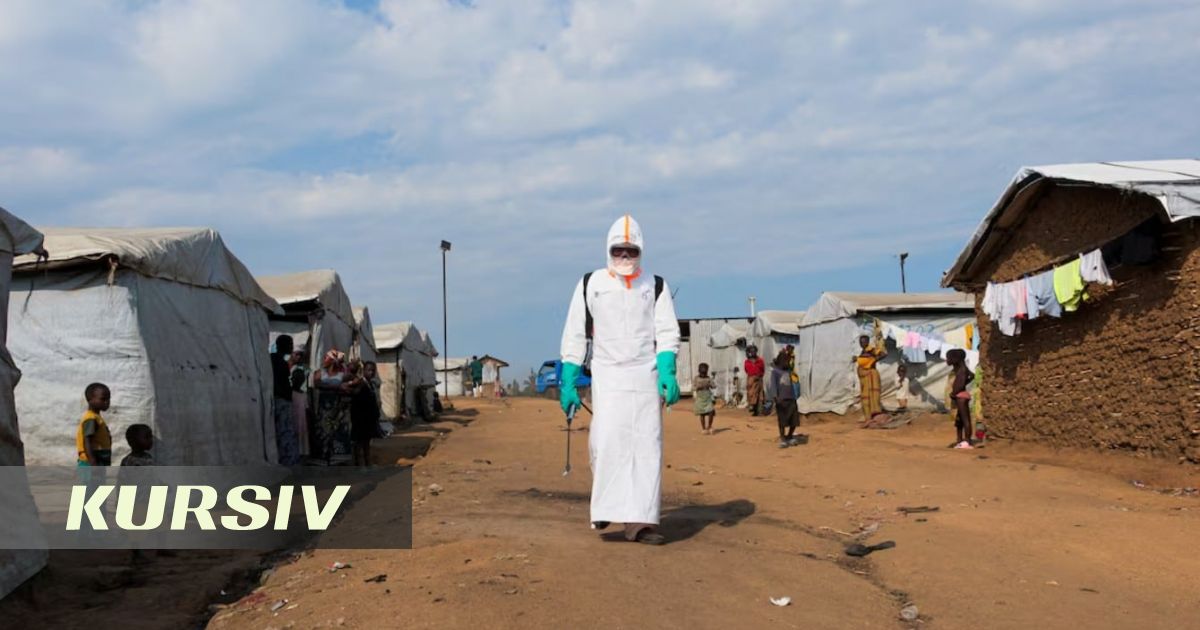
A large-scale Ebola outbreak continues in the Democratic Republic of Congo (DRC). The number of cases has exceeded one thousand, and the virus has spread to a third camp for internally displaced persons. Official data confirms 254 fatalities. This was reported by Qazaqyia.kz citing Kursiv Media.
The outbreak was declared over a month ago after the detection of a rare strain of the Bundibugyo virus. The rate of infection spread in three eastern provinces of the country is causing serious concern among experts. African health officials warn that the current epidemic could become one of the largest in the continent's history.
According to Reuters, citing an internal medical report, on June 14, an 18-month-old girl was tested for Ebola virus at the Hungbe displacement camp. The child died before the test result was received, which confirmed infection the next day.
Congolese authorities reported that the girl had a high fever for over a week. She was taken on foot to two medical facilities, where antibiotics were initially prescribed, and an Ebola test was performed only later. After the infection was confirmed, at least 107 people who had contact with the child, including relatives, medical workers, and residents of other camps, were placed under observation.
The situation is complicated by a shortage of isolation facilities for patients. Dr. Emmanuel Musingsusi Bulemu, a representative of the Congo Ministry of Health in the Nizi area, stated that the medical system is under severe strain.
"We need to isolate these patients from society because they risk infecting others, but where can we put them?" he noted.
Two more cases of infection have been confirmed in the Kpangbe camp, which houses people displaced by years of armed conflict. Additionally, at least 30 people have died in another displacement camp in the Bunia area.
According to preliminary data from UNICEF, nearly 20% of confirmed cases are children. Isolated cases of infection have also been registered in neighboring Uganda.
Experts fear further spread of the virus amid the humanitarian crisis, lack of medical resources, and high population density in displacement camps. Authorities and international organizations are stepping up measures to identify cases and trace contacts.