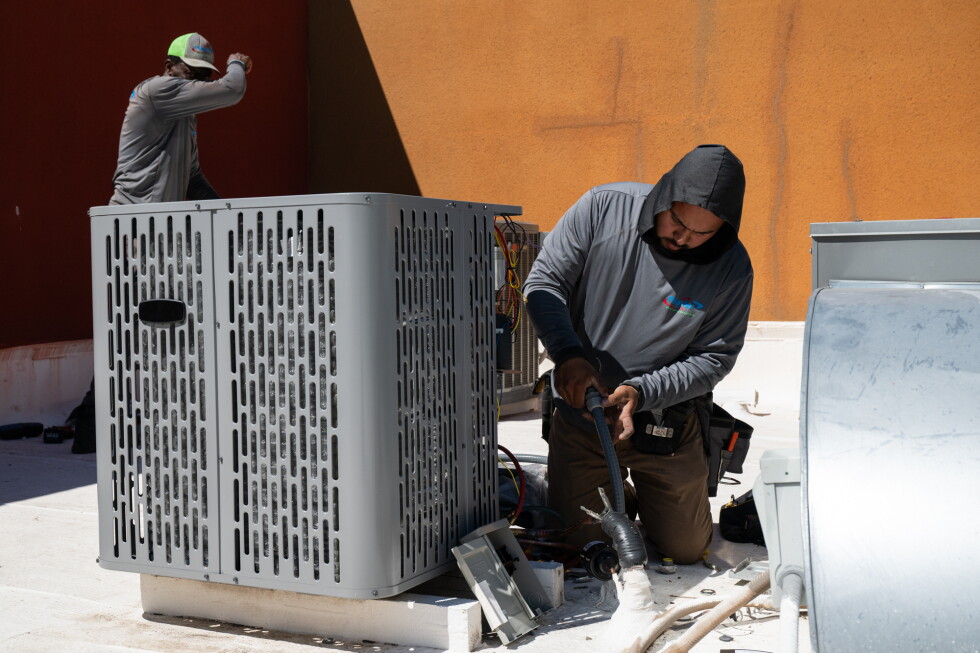
Cooling from air conditioning saves lives — more than 5,000 a year in the United States alone — but it also heats up the planet and taxes our electrical grid. This was reported by Qazaqyia.kz citing Associated Press.
As the world warms, heat waves strike nearly every continent and United Nations officials estimate that about half a million people die a year from heat, air conditioning is needed and being used more than ever. A study in Nature Health reported Monday that air conditioning saved nearly 58,000 lives between 2010 and 2020 in the U.S. Air conditioning use is skyrocketing around the world, with electricity demand from cooling expected to triple, according to the International Energy Agency and the United Nations Environment Programme.
It’s also more of a problem than ever. Because most of the electricity for cooling comes from the burning of fossil fuels, the U.N. projects the amount of heat-trapping gas spewed into the atmosphere from air conditioning use to rise from 4.5 billion to 7.2 billion tons in the next 25 years or so. That 7.2 billion tons is almost as much as the carbon pollution from the United States and Europe now.
“Everyone knows air conditioning works, but air conditioning from a climate change perspective is not an ideal,” said Kai Chen, an epidemiology professor at the Yale School of Public Health who was the senior author on the new study. “It leads to more carbon emissions ... then it accelerates the climate warming problem.”
Because of a global energy crunch triggered by the war in Iran, eight countries — Bangladesh, Cambodia, Jordan, Malaysia, the Philippines, the Seychelles, Singapore and Sri Lanka — have limited how cool air conditioning can be in offices or even mandated one day a week for public offices to switch it off, according to the IEA. In 2025 the Indian government proposed limits on how cool air conditioners can go.
Experts from 75 countries and 250 cities are trying to walk the tightrope of creating more cooling to reduce deaths from the rising heat, but without worsening climate change. The Global Cooling Pledge will meet in September in Singapore.
One measurement experts use to tally accumulated heat as related to potential air conditioning use is something called “cooling degree days,” a calculation of how much energy is needed to cool buildings when it’s hot outside. The number of cooling degree days in the United States has increased by 28% since 1990, with 2024 setting a record, according to the U.S. Energy Information Administration. Through May, 2026 has been on pace to beat 2024 for the m