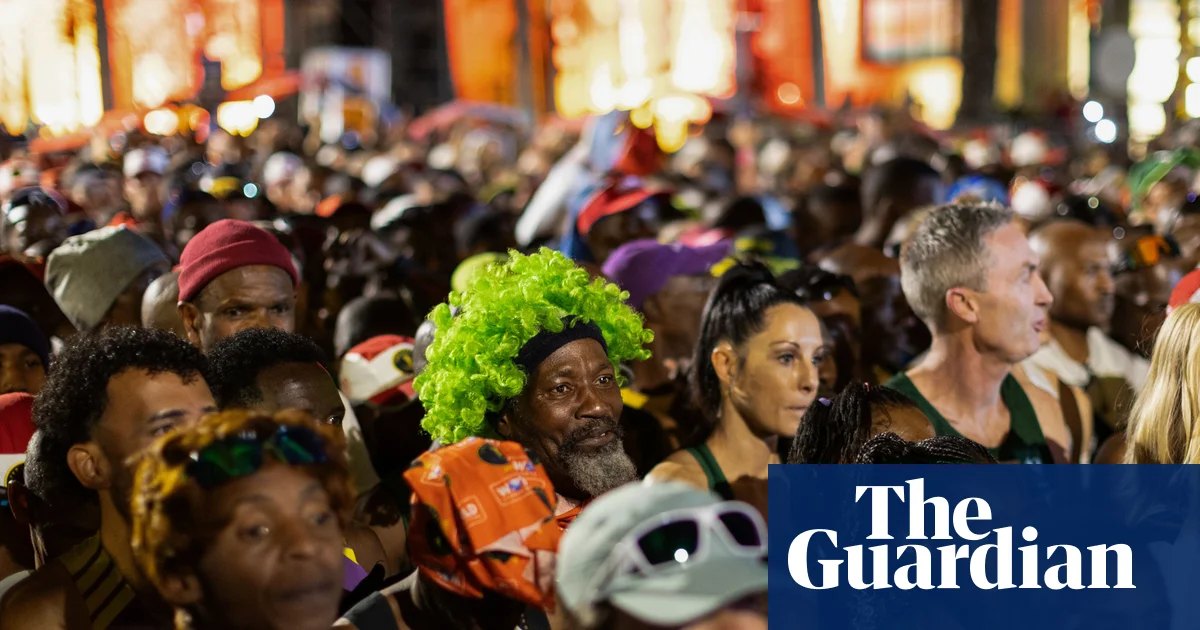
For one day every June, South Africa's searing racial inequality seems to melt away at the Comrades race. This was reported by Qazaqyia.kz citing The Guardian.
In the early morning dark, thousands of runners waited, jostling with anticipation. South Africa's national anthem rang out. Then the haunting swell of Shosholoza, first sung by Zimbabwean migrant workers in South Africa's goldmines. Finally, that unmistakable, spine-tingling piano: Chariots of Fire.
5am. A cock crowed. A gun fired. The runners streamed across the start line of the Comrades marathon.
The Comrades is the world's oldest and largest ultramarathon. The first race in 1921 took the runners 54.6 miles (88km) from Pietermaritzburg downhill to Durban on the coast. The following year the race was run in reverse, uphill back to Pietermaritzburg, and it has changed direction every year since, pausing only for the second world war and the Covid-19 pandemic. Over its 99 iterations, the route distance has averaged just under 55 miles.
That first year, 34 runners, all white men, lined up for the race, conceived by the first world war veteran Vic Clapham as a way of honouring his fallen comrades. Sixteen of them finished. More than a century later, on 14 June, more than 20,000 people stood outside Durban city hall, hoping to make it to Pietermaritzburg before the 12-hour cutoff.
What started as an all-white, all-male test of physical endurance has become part of the fabric of South African life, something so ordinary that you would be hard-pressed to find someone here who does not know a Comrades finisher.
Running clubs bus in from all over the country. Security guards and shop workers line up alongside bankers and celebrities. And, for one day, every June, South Africa's searing racial inequality seems to melt away.
You hear it all around the race: every runner has their reason. William Seleka started running in March 2025, amid a deep depression after the break-up of his marriage. "I thought for me to stay alive, I had to keep myself busy," he said, as he stretched before a run, outside the single room he rents in the Johannesburg township of Alexandra, two weeks before Comrades. Seleka was persuaded to join Run Alex, a local club. Six months later, having never run further than 10km, he finished a 50km ultramarathon, from Johannesburg to Pretoria.
"I used to hear people saying, 'This is Comrades, you are running from Durban to Pietermaritzburg.' I said, 'It's insane, you can't do that.' But now we are facing reality – I'm doing that as well," he said.
To train, Seleka ran at least 10km every weekday evening, after a day spent repairing appliances for fridge-maker Smeg. On Saturdays, the 38-year-old would run up to 50km with Run Alex. "Recovery," he said, was a half marathon. Seleka said he wanted to create a legacy for his 15-year-old son and three-year-old daughter. "I can't wait to have my red cap and the medal to show my kids."
On a Comrades "up run", runners must climb about 1,800 metres (5,900ft) on their journey to Pietermaritzburg, 650 metres higher than Durban. This year, runners started in three batches, at 5am, 5.15am and 5.30am.
About 12 miles into the race, the sun began peeking above the horizon in Pinetown, a suburb above Durban. "Let's go! Let's go!" spectators shouted. Seleka appeared up the hill. "Good to see you," he beamed, sweeping in for a glancing hug.
In 1923, Frances Hayward became the first woman to start and finish the Comrades. In 1935, Robert Mtshali was the first black man to complete the race. Nonetheless, with only white men officially allowed to compete, the Comrades seemed fated to stay what most ultramarathons remain today – a niche, elite pursuit.
That changed in 1975 when the privately run race was desegregated and also opened to women. South Africa at the time had been shut out of all major global sporting events in response to apartheid, driving the sport-obsessed country mad.
"Some people in the sporting world in South Africa had the idea that if they start desegregating some minor sports … it'll show that South Africa is not as backward and racist a place as it's made out to be," said Ryan Lenora Brown, a journalist who has been covering the Comrades since 2017.
Then there was the introduction of TV in 1976. The single, heavily censored state channel started showing Comrades highlights. In 1986, it broadcast the entire, all-day race in full. South Africans were mesmerised by the sight of delivery driver Hoseah Tjale going toe to toe with Bruce Fordyce, a professional athlete who won eight Comrades in a row from 1981.
"You would have these scenes in the 1980s of a white runner sharing a bottle of water with a black runner, which was such a small gesture, but such a huge thing in that society that was so divided," said Brown.
Apartheid had forced black South Africans on to the lowest rungs of society. But Tjale and Sam Tshabalala, the first black man to win Comrades in 1989, were proof that they could do anything.
As the runners left Durban, they wound their way upwards through lush trees, open fields and small towns.