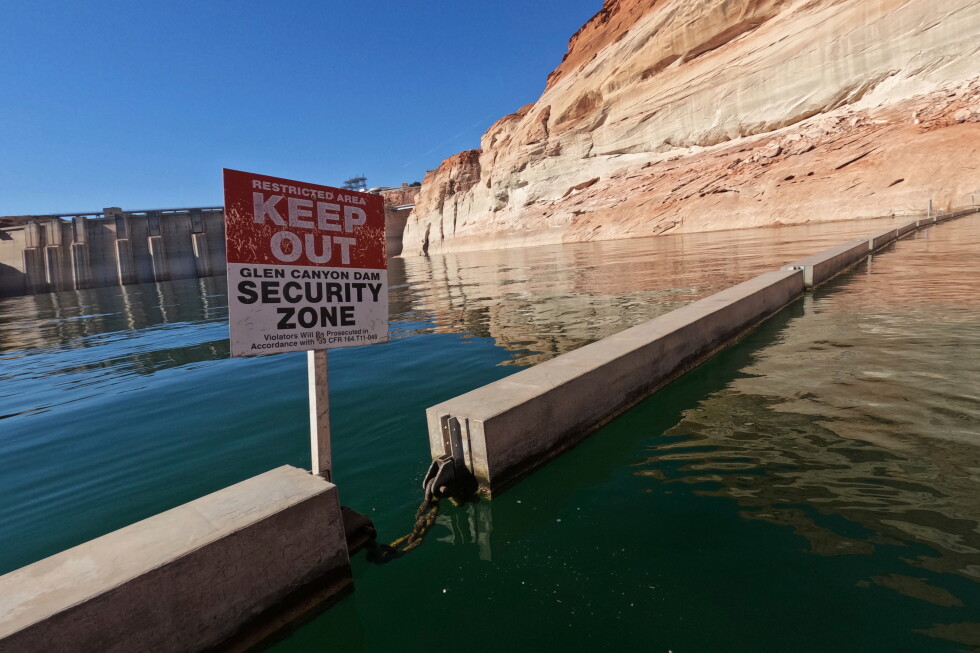
Federal officials said Thursday they will not release cool water this year from one of the Colorado River's major reservoirs, which would have protected a threatened native fish downstream but put more strain on already struggling hydropower production. This was reported by Qazaqyia.kz citing Associated Press.
In an email obtained by The Associated Press, the Bureau of Reclamation told various groups that water from Glen Canyon Dam in northern Arizona would not be released "due to significant hydropower generation concerns under already strained system conditions."
As the Colorado River and its once massive reservoirs shrink from overuse and climate change, officials were faced with a decision that pits conservation of the humpback chub — a threatened fish native to the river — against ratepayer costs for electricity.
The decision comes after the worst snowpack on record for the Colorado River Basin, relied upon by farmers, industries, wildlife, hydropower and more than 40 million people in seven U.S. states, tribal nations and Mexico. It also comes a week after federal officials announced a proposal to stave off a crisis in the beleaguered waterway.
Officials stepped in after states that rely on the river — California, Colorado, Arizona, Nevada, New Mexico, Wyoming and Utah — failed to reach an agreement on how to share the dwindling resource long-term. Under the proposal, California, Nevada and Arizona would share water cuts.
A "cool mix flow" is when cold water is released from deep in a reservoir — in this case Lake Powell — to cool the river below. There are no hydropower turbines in the cool, deep section, so significant power generation would have been lost.
Lake Powell is about 23% full after decades of overuse and evaporation of water as average temperatures rise because of climate change. With such a low reservoir, warm water near the surface gets sucked through the generators and sent downstream.
Smallmouth bass, introduced in Lake Powell in the 1980s for sport fishing, live at that warm surface and also get sucked through the hydropower generators and into the river below, and if it's warm enough, they spawn. That's a problem for the humpback chub and other federally protected fish farther south on the river.
Officials say cool water releases from Lake Powell in 2024 and 2025 successfully prevented smallmouth bass spawning.
The river downstream of the dam is about 69 degrees Fahrenheit (20.5 degrees Celsius). The Bureau says it considers recommending cold water releases when the average daily temperature there exceeds about 60 F (15.5 C) for three consecutive days.