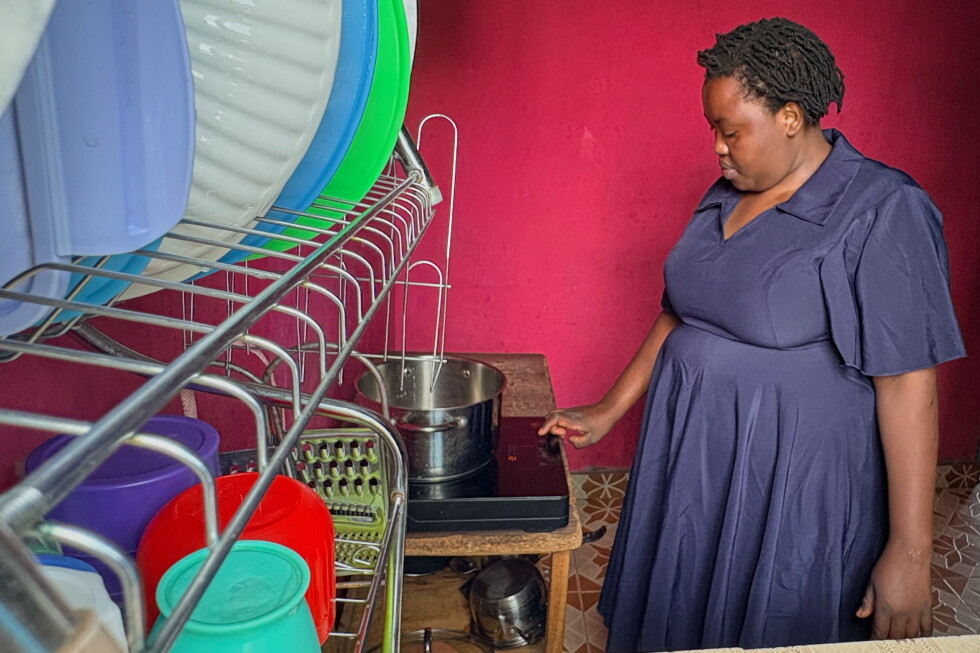
Nairobi resident Mary Kavutha prepares breakfast every morning using an induction cooker. Two years ago, she relied on a charcoal stove that filled her kitchen with smoke and cost about $1.15 in fuel each day. Now, she says, for 80 cents in electricity tokens she can cook several meals. This was reported by Qazaqyia.kz citing Associated Press.
"It cooks much faster, and is much safer because I have young children," Kavutha said. "With charcoal there was always smoke in the house. Now I can cook indoors comfortably, and I spend much less."
Nearly 1 billion Africans still rely on charcoal or firewood for everyday cooking. The International Energy Agency (IEA) estimates that household air pollution from these fuels contributes to about 850,000 deaths annually.
Kenyan company BURN manufactures fuel-efficient cookstoves. Mary Kavutha uses one of these stoves. At BURN's factory, workers assemble efficient stoves. These stoves are financed through carbon credits.
Carbon credits are a financial instrument that allows investment in projects that reduce greenhouse gas emissions. In Africa, this mechanism is emerging as the biggest hope for expanding clean cooking.
BURN officials are trying to lower the price of stoves and make them affordable by selling carbon credits. This method is becoming the main way to finance clean cooking solutions in Africa.
Thousands of people like Mary Kavutha are improving their health, saving time and money thanks to new stoves. Transitioning to clean cooking benefits not only health but also the environment.
According to the IEA, investing in clean cooking in Africa could reduce deaths and help preserve forests. Carbon financing is seen as an effective mechanism to accelerate this process.
BURN produces millions of stoves annually at its factory in Kenya. These stoves are not only used by local residents but also exported to other African countries. The company uses funds from carbon credits to expand production.
Mary Kavutha's story is one example of the real impact of carbon financing. She cooks on a clean stove every day, protecting her children's health.
Clean cooking programs in Africa are expanding thanks to carbon credits. These initiatives improve the quality of life and contribute to the fight against climate change.
Experts believe carbon financing could become the main tool for developing clean cooking in Africa. This mechanism allows attracting investment and spreading technology.
BURN's success can serve as a model for other regions. Effective use of carbon credits can make clean cooking accessible.
Mary Kavutha now prepares breakfast every morning on an induction cooker. She shares her experience and encourages others to switch to clean stoves.
Transitioning to clean cooking in Africa is an important step for health, economy, and ecology. Carbon financing is becoming an effective way to support this process.