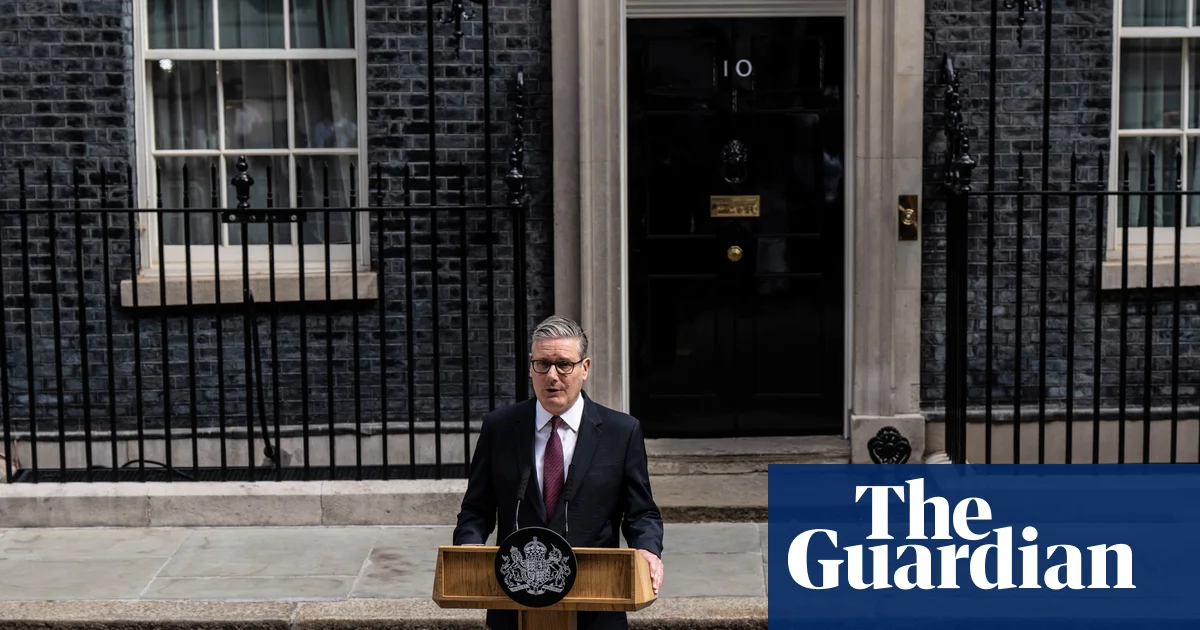
Britain is to get its fifth prime minister in four years after the current incumbent of Downing Street, Keir Starmer, announced on Monday that he would resign. This was reported by Qazaqyia.kz citing The Guardian.
It was widely expected and comes after months of mounting pressure on Starmer, who led the Labour party to a landslide victory in the 2024 UK general election but who has faced months of pressure to go from members of parliament (MPs) for the centre-left party.
The announcement sets the scene for him to be replaced within weeks by Andy Burnham, who was a minister in the 2007-2010 government of Gordon Brown and, from 2017 until last week, the mayor of Greater Manchester.
Burnham is seen by many in Labour as the party's best hope of defeating the challenge posed by the populist-right Reform party, led by Nigel Farage.
Starmer, a softly spoken former human rights lawyer, had been hailed as a pragmatic and serious leader who could restore stability after years of political chaos and infighting that resulted in two changes of prime minister by the rightwing Conservative party after the 2019 general election.
But although he was elected with the biggest parliamentary majority in 100 years, there was a sense even among Labour supporters that Starmer lacked political nous and conviction. This was underlined by missteps including cutting some winter fuel subsidies for pensioners and a U-turn on welfare in the face of a parliamentary rebellion last year.
Starmer's judgment was called into serious question after his decision to appoint a controversial former Labour minister, Peter Mandelson, as Britain's ambassador to the US despite the latter's known links to the child sex offender and financier Jeffrey Epstein. After the true extent of Mandelson's ties to Epstein became known in September 2025, Starmer sacked him – but it was too late to prevent the prime minister and his government from becoming embroiled in one of the worst political scandals since the second world war.
All the while, and amid deep unpopularity among voters, panic has continued to grow in Labour ranks that he has been unable to meet the challenge from Reform UK, the anti-immigration party headed by the divisive Farage. Farage's party routed Labour and the Conservatives in municipal elections last year and again last month, which was a catalyst for the draining away of support for Starmer and resignations by ministers in his government.
Both they and others who stayed in Starmer's cabinet had privately and publicly urged him to resign, with backers of Burnham advocating for an orderly transition of power rather than a damaging leadership contest.
A veteran of the Labour governments of Brown and Tony Blair, 56-year-old Burnham has served since 2017 as the mayor of Greater Manchester, a newly created role which he was elected to after two failed bids to become Labour leader, in 2010 and 2015. He has thrived in the position, earning the nickname "the King in the North" for his high-profile interventions in the distinctive politics of north-west England and for presiding over an economic boom in UK's fastest-growing city region.
Burnham has long been regarded by many in Labour, including those on the moderate left, as the answer to the party's woes and in particular to the draining away of its support in traditional working-class strongholds.
In January he was blocked by allies of Starmer from returning to parliament when a vacant Westminster seat in the Manchester area became available. But they could not prevent him from becoming the Labour candidate in a fresh special election this month in the north-west of England, after the local MP stood down. His victory in the constituency of Makerfield has paved the way for his return to the Westminster parliament, where he is eligible to become the Labour leader and consequently prime minister.
However, it was the manner of Burnham's win that underlined his credentials as the answer to the conundrum faced by Labour after its support collapsed in two previous special elections for vacant seats in Westminster. Not only did he did see off the Reform UK candidate last week, but he did so by a significant margin, resurrecting his party's support in an area where the populists had made sweeping gains during local elections in May.
Starmer had already informed King Charles III of his intention to resign, as is required by convention, before he announced the news to the British public on Monday morning. During his resignation speech, the Labour leader said he would ask his party's ruling national executive committee to set out a timetable for a contest to replace him, with 9 July the date from which contenders can seek nominations by their fellow Labour MPs. A process of hustings, where candidates would make their case to fellow Labour MPs, would be intended to be completed by 16 July, the last day before the UK parliament breaks up for its summer recess.
If more than one person reaches the nominations threshold, there would be a contest. That would take place when parliament is not sitting, among an electorate comprising hundreds of thousands of members of the Labour party and trade unions and affiliated bodies. Starmer would stay in post in the interim, with a new leader in place by the resumption of parliament on 1 September.
However, a contest is almost certain to be avoided after Wes Streeting, another influential Labour MP who resigned last month as England's health secretary, made a U-turn on his previous position.