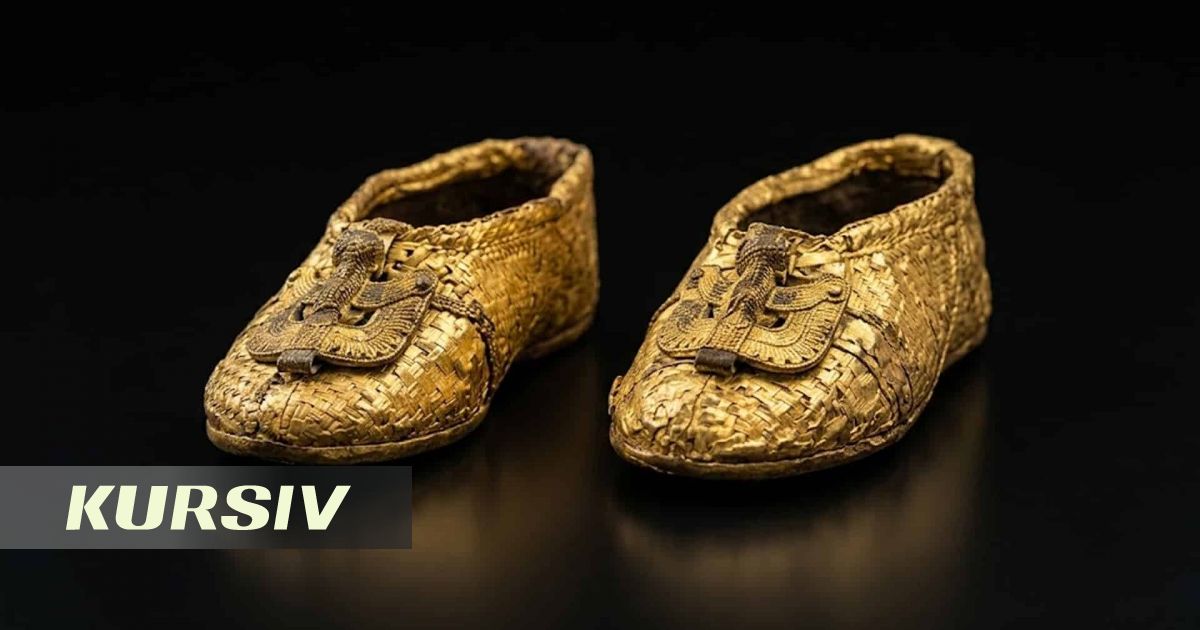
A pair of "gold shoes" dating back about 1,500 years has been found in a burial of a noblewoman on the shore of the Caspian Sea. This was reported by Qazaqyia.kz citing Kursiv Media.
The discovery was made in the Karakabak necropolis on the Mangyshlak Peninsula near Aktau. Metal parts with a thin gold coating have survived from the shoes. Along with them, decorations for a belt and headdress were found in the grave. Thanks to the gold overlays, the shoes look as if they were entirely made of precious metal.
Archaeologists have established that a young woman was buried in the grave. She was dressed in an unusual ceremonial costume that, apparently, was meant to emphasize her high status. On the woman's head was a headdress with round gold plaques and a diadem made of red fabric. The central plaque on the forehead repeated the shape of a gorgoneion — an image of Medusa's head from the ancient tradition. Some other gold-coated decorations presumably date back to more ancient Scythian traditions.
However, the outfit was likely not intended for everyday life. The buckles on the shoes and belt lacked necessary fastenings, so researchers believe they were made specifically for burial. Such a costume was meant to create the image of a noble person and emphasize the woman's status after her death.
The burial dates to the second half of the 5th century — first half of the 6th century. The artifacts are attributed to the so-called Shipovsky horizon, associated with the late Hunnic and post-Hunnic periods. Similar items have been found in neighboring Altynkazgan.
Researchers suggest that the gold parts could have been produced right in Karakabak. Traces of metallurgy, jewelry making, glassmaking, and pottery production were found in the ancient settlement. This may indicate the existence of local workshops that produced luxury items for nomadic nobility.
Karakabak itself, according to archaeologists, was an important craft and trade center on the eastern coast of the Caspian Sea. Trade connections between Central Asia, the North Caucasus, the Volga region, the Southern Urals, and other territories passed through the region.
Earlier, Kursiv LifeStyle wrote that archaeologists told what was hidden under the headdresses of women of the Golden Horde.