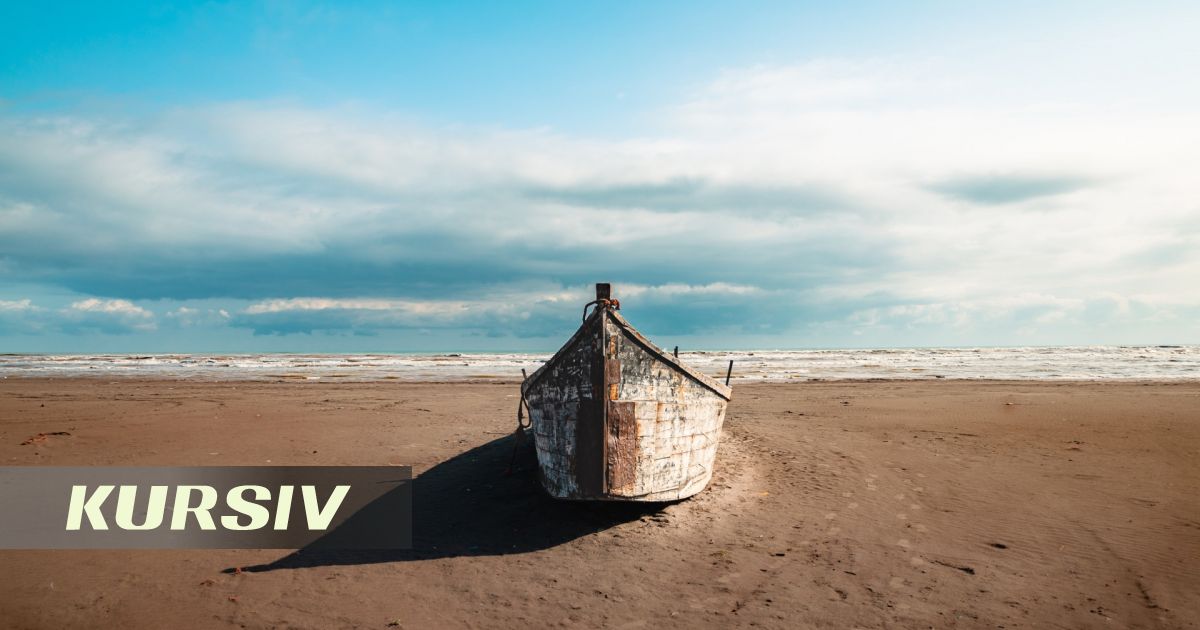
Mazhilis deputy Düsenbay Turğanov addressed Prime Minister Oljas Bektenov with a proposal to adopt a set of measures in connection with the ongoing decline in the level of the Caspian Sea. This was reported by Qazaqyia.kz citing Kursiv Media.
According to the parliamentarian, the problem has already gone beyond ecology and is beginning to directly affect territorial management, natural resource use, and the economic development of the Caspian regions.
"According to the Ministry of Ecology and Natural Resources, during the period 2006-2025, the coastline of the Caspian Sea off the Kazakh coast in some areas receded by 30-35 kilometers. The average water level in the northeastern part of the sea is about minus 29 meters. According to the advisory long-term forecast of RSE Kazhydromet, the trend towards a decrease in sea level will persist under all considered climate scenarios, and by 2050 the projected level will be minus 34 meters. Thus, the decline in sea level is stable and long-term," the deputy stated.
Of particular concern, according to Turğanov, is the discrepancy between the actual and legal coastline of the Caspian. Today, the sea's boundaries are simultaneously accounted for in several state systems – hydrological, land cadastre, and subsoil use.
Moreover, each of them is maintained by separate state bodies and updated independently. As a result, the real contours of the coast are increasingly diverging from the officially fixed boundaries.
As the deputy noted, some geological exploration and investment projects that continue to be considered marine or shelf on paper are actually already on land or in the coastal transition zone. However, regulation of such facilities is still carried out according to the rules provided for marine territories. In addition, the retreat of water opens up new areas for geological exploration.
According to the parliamentarian, involving such territories in economic circulation corresponds to the tasks of expanding the country's mineral resource base, but for this it is necessary to determine their legal status in a timely manner. Environmental safety issues are raised as a separate block in the request.
"Since April of this year, mass strandings of Caspian seal carcasses have been recorded in the Mangystau region. Previously, similar cases were observed in the fall of 2024, when about two thousand dead individuals were found on the Kazakh coast. The regular recurrence of such cases requires not only establishing the direct causes of animal deaths, but also assessing long-term risks for the conservation of the population and the ecosystem of the Caspian Sea as a whole," he said.
In this regard, the Mazhilis member proposed that the government create a unified digital contour of the Caspian coastline based on satellite, hydrological, and geodetic data.
It is also proposed to integrate this contour into the state land cadastre and subsoil use system, develop a unified interdepartmental procedure for regulating coastal territories, and accelerate the creation of an automated sea level monitoring system.
In addition, the deputy considers it necessary to develop a unified algorithm for the actions of state bodies in the event of mass deaths of seals, fish, and birds on the Caspian coast. The government has also been requested information on the causes of mass mortality of Caspian seals, the risks of further population decline, and measures being taken to prevent such cases.
In the Caspian Sea, seal mortality is both regular (isolated cases due to storms or diseases) and periodic in the form of mass strandings, when tens to hundreds or even thousands of individuals are found per season.
The exact number of deaths each year is difficult to determine, as many carcasses remain in the water, decompose, or wash ashore long after death. However, the scale of the tragedies is confirmed by data from relevant agencies. For example, in a few days of April 2026, more than 100 carcasses were found on the coast of the Mangystau region. In the fall and winter of 2024, a massive die-off was observed, when over 1,000 seal deaths were confirmed on the Kazakh coast alone, and earlier in the Russian sector, up to 2,500 dead Red Book-listed individuals were counted.
In February 2026, the government of Kazakhstan allocated 1.1 billion tenge from the reserve for monitoring the Caspian Sea to the Kazakh Research Institute of the Caspian Sea.
Ministry of Ecology employee Daulet Yesmagambetov noted that in 2024, the water level in the Kazakh part of the Caspian decreased by 26 centimeters, reaching minus 29.12 meters on the Baltic system. By 2050, researchers predict a sea level drop of 3-5 meters.
President of Kazakhstan Kassym-Jomart Tokayev last fall stated the need to develop an international program to save the Caspian. The Research Institute of the Caspian Sea was also established in 2025. In addition to environmental monitoring, its tasks include joint work with other Caspian states and reproduction of the reservoir's natural resources.
Mazhilis deputy Düsenbay Turğanov also calls for saving the Zhayik (Ural) and Kigash rivers, which feed the Caspian Sea, from shallowing.
Earlier, Kursiv wrote that Kazakhstan will ask neighbors for help to save the Caspian.