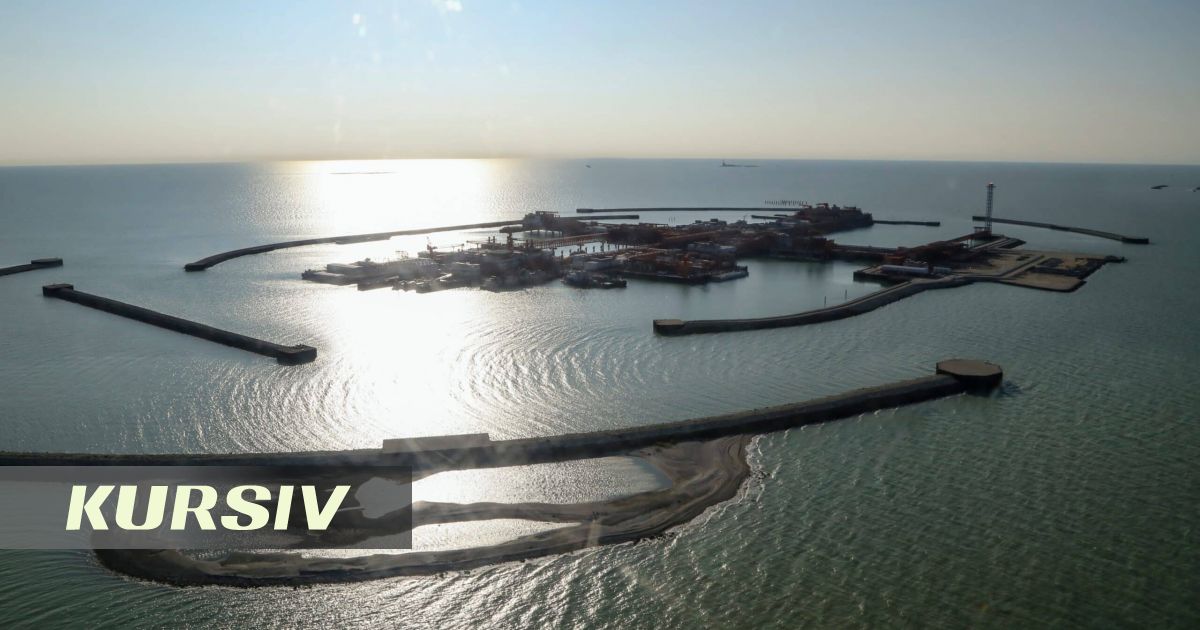
The Kazakh government has alleged that contracts totaling approximately $10.7 billion signed during the development of the Kashagan oil field may have been linked to corruption, conflicts of interest, and unjustified cost increases. This was reported by Qazaqyia.kz citing Kursiv Media.
The claims were made in a closed international arbitration, according to the International Consortium of Investigative Journalists (ICIJ). The matter concerns about a dozen contracts that the consortium of companies developing Kashagan signed in the 2000s with international engineering and construction firms.
According to ICIJ, the Kazakh side believes that possible violations in the signing of these agreements and subsequent inefficient management could have affected the project's timeline. Kashagan was supposed to reach full production in the mid-2000s, but full-scale production only began in 2016. Kazakhstan claims the delay caused multi-billion-dollar losses for the state.
According to the Kazakh side, alleged corruption violations in the signing of contracts could have been one of the reasons for the project's delay. This, in turn, postponed the start of the profit-sharing phase, which is most beneficial for the state. Meanwhile, oil companies continued to recover development costs. Estimates put their volume at about $60 billion.
Kashagan is considered one of the world's largest oil discoveries. Development is complicated by high pressure in the oil reservoirs, high sulfur content, and harsh winter conditions in the Caspian Sea.
North Caspian Operating Company (NCOC), the operator of Kashagan, told ICIJ that consortium members believe their actions are in line with contracts, Kazakh law, and international standards. However, the company declined to comment in detail, citing the confidentiality of the arbitration proceedings.
The shareholders of the NCOC consortium developing Kashagan are KMG Kashagan B.V. (16.877%), Shell Kazakhstan Development B.V. (16.807%), Total EP Kazakhstan (16.807%), AgipCaspian Sea B.V. (16.807%), ExxonMobil Kazakhstan Inc. (16.807%), CNPC Kazakhstan B.V. (8.333%), and Inpex NorthCaspian Sea Ltd. (7.563%).
The corruption allegations are part of a larger international arbitration dispute. Kazakhstan's total claims are estimated at about $160 billion. They also include claims for lost profits and environmental damage. The case is registered with the Permanent Court of Arbitration in The Hague. No final decision on the corruption allegations has been made yet. If the parties do not reach an agreement, a final decision on the dispute is expected no earlier than 2028.
The dispute over Kashagan is unfolding against the backdrop of Kazakhstan's tougher stance in relations with major international oil companies. Earlier, Kazakhstan secured a favorable ruling in the Karachaganak arbitration. In addition, on July 21, authorities froze NCOC's assets in the country as part of a separate dispute over a $5 billion fine for environmental damage.
Kashagan, Tengiz, and Karachaganak are developed under production sharing agreements. Under this model, investors first recover development costs through oil sales, then begin sharing profits with the state.
According to ICIJ, during negotiations on Kashagan, a possible option to abandon the existing production sharing agreement and move to a new form of joint venture for further development was discussed.
Earlier, Olzhas Baidildinov, a member of the public council of Samruk-Kazyna and author of the Telegram channel "Baidildinov. Oil," expressed the opinion that Kazakhstan could exchange the environmental fine of 2.356 trillion tenge against NCOC for shares in major oil and gas companies.