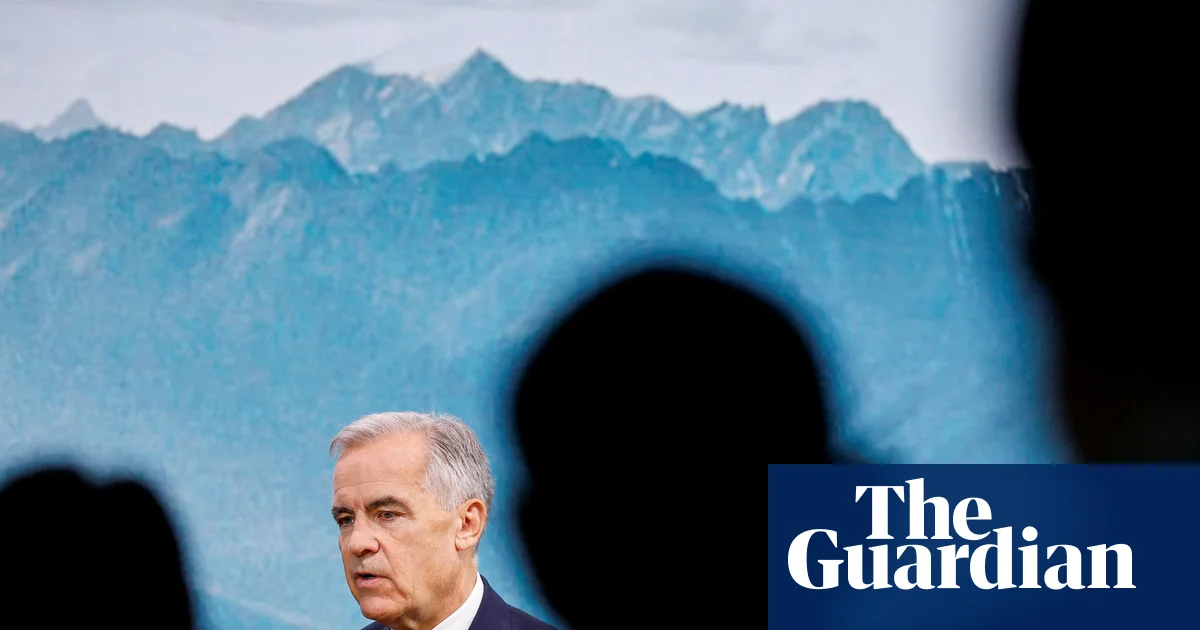
Mark Carney said Canada will pursue a "unique security and economic alliance" with Europe as he positions his country as a base to build in the "new global economic order". This was reported by Qazaqyia.kz citing The Guardian.
Speaking to investors, company executives and government ministers at the inaugural Canada Investment Summit on Tuesday, the prime minister pitched Canada as a "safe harbour" and lucrative home for foreign capital as his government looks to reduce its reliance on trade with the United States.
Over the last 18 months, the relationship with the US has fractured, leaving Canada searching for ways to avert economic devastation.
"The world is becoming more divided and dangerous. Sovereignty and openness are now in tension. Economic integration is being weaponised. Tariffs are used as leverage," Carney said – a nod to Donald Trump's penchant for trade levies.
"Canada recognised the rupture earlier than most. Our response reflects the two lessons we have taken from it: First, we must take care of ourselves, and second, we must take care of each other. Taking care of ourselves means building our strength at home and diversifying our partnerships abroad."
While Carney has referred to the trade spat as a "war", there was a duelling sense of optimism at the summit among senior Canadian officials that the country's more global perspective could usher in hundreds of billions in fresh investment into the country.
That shift has been exemplified in recent weeks by Carney's effort to strengthen Canada's economic and political ties to the EU. Noting in his remarks at the summit that Canada is the only non-European member of Europe's defence procurement initiative, the prime minister said his government will pursue a "unique" relationship with the bloc. He mused about the range of possibilities, including the prospect of visa-free travel and work between the two that has been raised in recent days, but said Canada and the EU were in early stage of talks.
Carney will be the guest of honour at the European parliament's plenary meeting in Strasbourg this week. He will attend European Commission president Ursula von der Leyen's annual state of the union speech on Wednesday, where she is expected to sketch out new areas for EU-Canada cooperation. On Thursday, Carney will address MEPs in von der Leyen's presence. The commission president hastily changed her plans to stay in Strasbourg, after being criticised over her initial "unacceptable" decision to skip Carney's speech and return to Brussels.
European officials are seeking to bring Canada as close as possible to the EU short of membership. But it will not be called associate membership, as the EU seeks to maintain a clear distinction between members and nonmembers. The long experience of Brexit negotiations cemented the EU's preference not to split the four freedoms of its single market – free movement of people, services, goods and capital – so any deepening of the Canada relationship will be built around this red line. More immediately, the EU hopes to improve ties on raw materials and energy.
Javier Moreno Sánchez, a Spanish socialist MEP, who leads the European parliament's Canada delegation, said he wanted to hear "concrete steps" from von der Leyen on how to improve the EU-Canada relationship, calling for greater mobility for professionals, more student exchanges, joint work on defence and artificial intelligence.
"Canadians are the most European people outside Europe and that is the key point for the development of our relationship," he said. "Due to the difficult geopolitical geoeconomic situation in the world and the difficult relationship we have, both Canada and the European Union, with our traditional partner, the United States, I think it is the moment to have a closer relationship with Canada."
The EU and Canada already have a wide-ranging relationship, including a free-trade agreement and separate deals on digital cooperation, raw materials, research and a shared green alliance. Earlier this year, Canada became the first non-European country to join the EU's €150bn defence loans scheme, meaning greater opportunities for Canadian defence firms to supply Europe.
But irritants persist. Ten EU member states, including France, Italy and Poland, have not ratified the landmark EU-Canada Comprehensive Economic and Trade Agreement (Ceta) nearly a decade after it was signed, meaning parts of the deal are yet to enter into force.
French lawmaker Valérie Hayer, Emmanuel Macron's ally in the European parliament, acknowledged the problem. "In the French parliament this agreement has yet to be ratified, notwithstanding the [trade] figures which are extremely good. That is why I call on political leaders [in France] to do their bit to act responsibly as elsewhere to make sure that we [the EU] can count for more in world affairs."
Hayer's centrist Renew group, only the fifth-largest in the European parliament, is calling on EU member states and the commission to speed up Ceta ratification and launch an awareness-raising drive so European and Canadian companies have better knowledge of the trade opportunities. But ahead of a year of big elections – in France, Italy and Poland – progress on ratifying the 10-year-old agreement looks uncertain.
EU-Canada's trade in goods and services hit €130bn in 2025, an 80% increase since 2016 when Ceta was signed. But this pales in comparison to tra