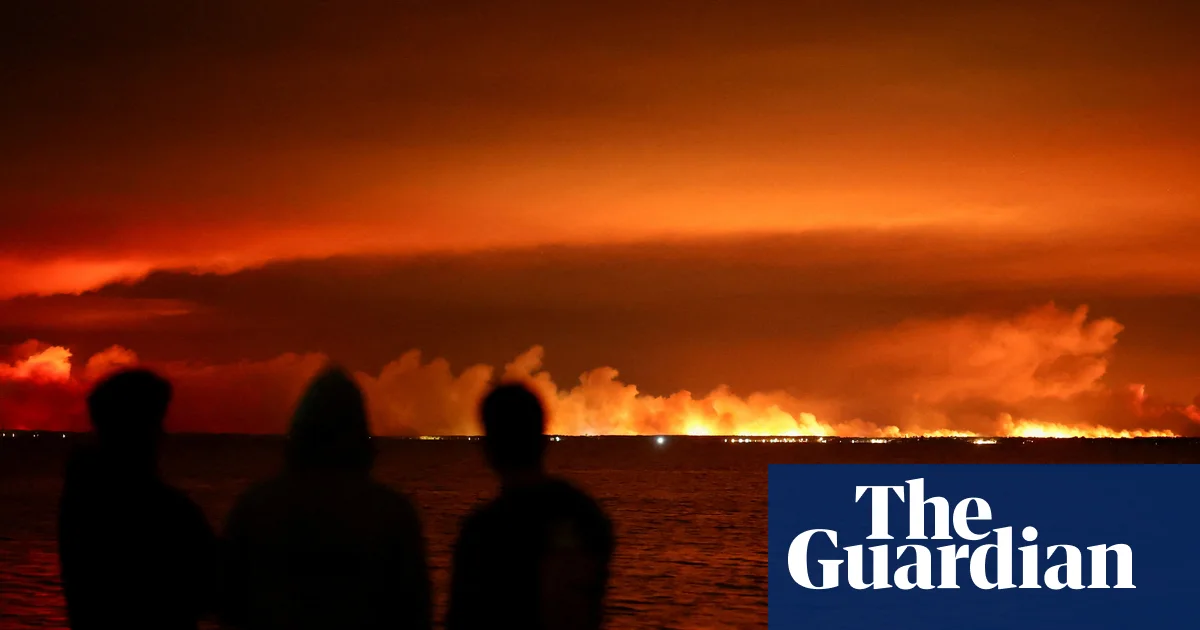
Authorities in south-western France have ordered the total evacuation of the Cap Ferret peninsula on the Atlantic coast by land and sea as an 'intense and highly unpredictable' wildfire advances on one of the country's best-known holiday spots. This was reported by Qazaqyia.kz citing The Guardian.
Spain's government has also taken the exceptional step of declaring a national emergency as a series of out-of-control wildfires threatened areas near Madrid, as extreme climate crisis-driven heat and drought persist in much of southern Europe.
The Cap Ferret fire had burned more than 10,000 hectares (24,700 acres), France's interior minister, Laurent Nuñez, said on Friday, with 40,000 people already or about to be evacuated, including thousands of tourists from campsites and rental homes.
Boats began ferrying holidaymakers and residents off four piers on the peninsula early on Friday after the Gironde prefecture ordered its progressive evacuation, 'village by village', by sea or by the only road linking the area with the mainland.
Scientists say climate breakdown is triggering more frequent and more extreme weather events, evaporating soils and waterways, fuelling wildfires and leading to thousands of excess deaths. Europe is heating at about twice the global average rate.
About 800 firefighters and four water-bombing planes were battling the Gironde blaze north of Arcachon Bay, but the fire, which began on Wednesday near the village of Saumos 25 miles (40km) west of Bordeaux, was not yet stabilised.
Numerous roads in the area, including those leading to Cap Ferret – popular with French and international holidaymakers and home to the villas of many celebrities and millionaires – were closed to all but essential traffic. Eighty houses had burned.
A second fire raging in the region, farther south near the popular holiday resort of Biscarrosse, had also burned through more than 2,500 hectares, the Landes prefect, Gilles Clavreul, said on Friday, and led to the evacuation of about 25,000 people. More than 600 firefighters were struggling to contain that blaze, Clavreul said. 'The fire front looks very bad,' he added. 'There are a great many new fire starts ahead of the main blaze. The situation is highly dynamic and unfavourable.'
In 2022, a wildfire burned more than 30,000 hectares in the south-west, forcing 50,000 people to be evacuated. In tinder-dry conditions and fanned by strong winds, the two latest blazes have torn through coastal pine forests with flames up to 10 metres high.
France's president, Emmanuel Macron, said he had activated the EU's civil protection mechanism as the country, which has endured three almost back-to-back heatwaves since May, battled several wildfires mainly in the south-west and south-east. 'We will soon be able to count on reinforcements from two Croatian aircraft, two Portuguese planes, as well as two heavy helicopters from the Czech Republic and Slovakia,' said Macron, who described the situation as 'extremely intense'.
Nuñez said on Friday that 32 wildfires of varying size and intensity were burning across France, with 50,000 hectares scorched already so far this year – nearly four times the total by the same date last year.
The severity of fires in the EU has broken records for the time of year, data from the European Forest Fire Information System shows, with about twice as much land burned by 22 July than the average for that date over the past two decades.
Spain's government declared a national emergency on Thursday night after wildfires threatened communities near the capital and in the neighbouring province of Ávila, forcing more than 10,000 people to evacuate. The interior ministry said the decision was taken because of the simultaneous outbreak of several fires, adverse weather conditions and the need to mobilise extensive resources from several public administrations. A national emergency, which allows central government to assume overall control of powers and responsibilities that are usually the domain of Spain's self-governing regions, has only been declared once before, during the nationwide blackout in April 2025.
The regional government of Madrid requested assistance, describing the situation as one of 'extreme gravity'. It said at least four active fires could advance 'beyond current extinguishing capacity'. The fires remained uncontained on Friday. Spain's prime minister, Pedro Sánchez, chaired an emergency response meeting at the Moncloa palace on Friday morning as the state meteorological office warned that the danger of more fires remained very high or extreme across much of the country.