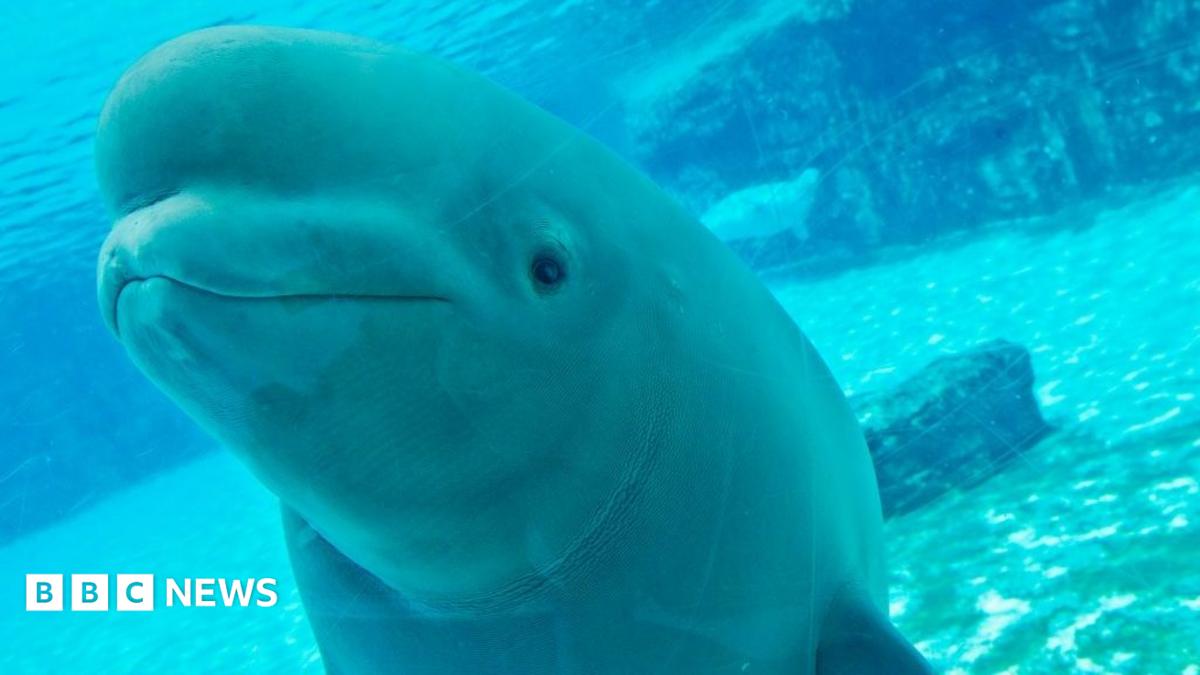
Thirty belugas and four dolphins were transferred from Canada's closed Marineland park to aquariums in the US and Spain. This was reported by Qazaqyia.kz citing BBC News.
Marineland, a shuttered sea park near Niagara Falls, needed to find a new home for its whales. When the Canadian government rejected its plan to sell them to China over concerns about animal welfare, the park's operations said they would have to be euthanised.
That spurred an international rescue operation by several aquariums, leading to the largest ever transfer of captive whales this summer. But hopes that the animals were headed to a better life have been dampened by a number of deaths in the group.
Photographer Carlos Osorio documented the move, which involved whales being flown to Chicago, Atlanta, San Diego, San Antonio, and even Valencia, Spain. Osorio recalls watching footage from a drone overhead as Tofino appeared to say his own goodbyes. Tofino was the last captive whale in Canada. The country banned cetacean captivity and breeding seven years ago.
Despite the rescue operation, tragically, five of the belugas have since died, as well as one dolphin. Chicago's Shedd Aquarium has seen the most deaths. Peekachu, 23, Rain, 20, Orisis, 26, and Caspian, 27, were all transferred from Marineland, while longtime Shedd resident Beethoven, 34, also died after eight Marineland belugas were brought there over the summer. Necropsies found chronic inflammatory disease in the gastrointestinal systems in Peekachu and Rain. Foreign objects were also discovered in their stomachs, including feathers, large rocks and flecks that appear to be paint – objects Shedd believes were ingested before they were moved to Chicago. Osiris's preliminary examination identified chronic liver disease.
Europe's largest aquarium, Oceanogràfic València in Spain, recorded the death of one beluga, Jelly Bean, and one dolphin, Echo. The dolphin arrived with "serious vision problems" and other health issues, it said, and "began having difficulties swallowing and respiratory problems" in the hours before she died.
Experts say it is too early to judge the outcome of the transfers, especially considering the whales were facing euthanasia and had been living in an ageing facility. According to a tally by the Canadian Press, about 20 whales died at Marineland between 2019 and September 2025.
Once the country's most popular amusement park, Marineland closed in 2024 after years of animal welfare concerns and financial woes, and following the death of its longtime owner. Public attitudes towards keeping whales in captivity have also changed drastically since Marineland opened in 1961. Like Canada, more countries are moving to ban or restrict the practice, including France and Mexico.
Melissa Matlow, a spokeswoman for World Animal Protection Canada, says that worldwide there are about 3,600 captive cetaceans – a group of marine mammals which includes whales, dolphins and porpoises. But there are few alternatives for whales raised in captivity without the skills to survive in the wild. Matlow says that leaves a "growing animal welfare crisis on our hands". Still, her organisation had concerns about the relocation of the Marineland whales. "If an animal was not healthy enough to withstand the stress of transport, it should not have been transported," she said in a statement.
In early October, Shedd said it knew some of the Marineland belugas "could have substantial, longstanding medical needs". Assessments before the move "informed our planning but could not reveal every underlying condition or predict how each whale would respond to the transition. The rescue offered a path to continued, specialised care". They said the remaining rescued belugas show positive signs, including eating well.
World Animal Protection Canada had suggested two alternatives: repurpose Marineland into a hospice-style facility for the remaining captive whales and dolphins, or fast-track development of a proposed seaside sanctuary in Nova Scotia, the Whale Sanctuary Project.