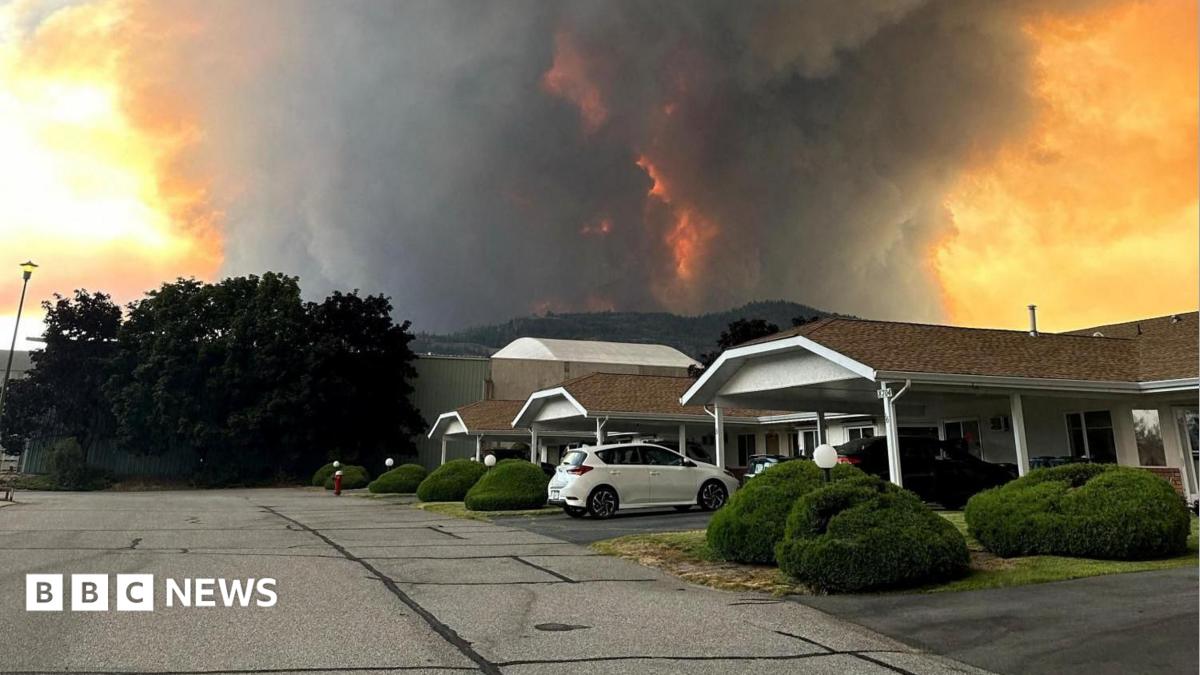
Residents affected by the Bald Range wildfire in Canada's British Columbia are wondering whether their homes have survived the blaze. This was reported by Qazaqyia.kz citing BBC News.
Earl Kurz and his wife have lived in Peachland, a town overlooking Okanagan Lake, for 30 years. In the last 10, he has grown used to wildfires threatening his community, but this is the first time he has been forced to flee. The Bald Range fire, which broke out on Friday, grew within hours to 53 square miles (136 sq km) in size.
"It's total incinerated destruction," Kurz said. "The hot spots are just barren areas of nothing except 12 inches of ash."
Officials in British Columbia are still trying to determine how many homes were lost to the fire, which remains out of control as of Monday.
More than 12,000 residents in the area are still under an evacuation order. On Sunday, police reported the death of an 80-year-old woman who died while trying to flee.
The Okanagan area, known for its vineyards, has been grappling with extreme drought. As of July, the level of Okanagan Lake was at its lowest since 1992.
The Bald Range fire is one of more than 100 burning in British Columbia as of Monday, 70 of which started in the last week alone. Premier David Eby declared a state of emergency over the weekend, urging residents to heed evacuation orders.
Keegan Radomski, 18, from Summerland, barely escaped with her mother's ashes before the fire breached her property. The home was built by her grandmother in 1996. "We've had a lot of close calls before, but it's never been like this," she said. "You always think it's not going to be you, and then it's you."
On Friday evening, the family noticed smoke from a distance. Less than four hours later, Radomski was scrambling to get everyone out as she saw a hill on her property begin to burn. She is still unsure if her home survived.
The Bald Range fire comes on the heels of another fire in the Okanagan, called Bradley Creek, which is believed to have destroyed more than 200 homes. Officials said it is now being held.
Drought conditions have also contributed to fires in Washington state, where more than 65,000 people were forced to flee. Devastating fires have also burned this summer in Spain and France. France has seen its worst fires in two decades, while Madrid officials say theirs are the worst the region has ever experienced.
Experts say climate change has made fires more intense and frequent. In 2023, Canada saw its worst wildfire season in history in terms of total area burned.