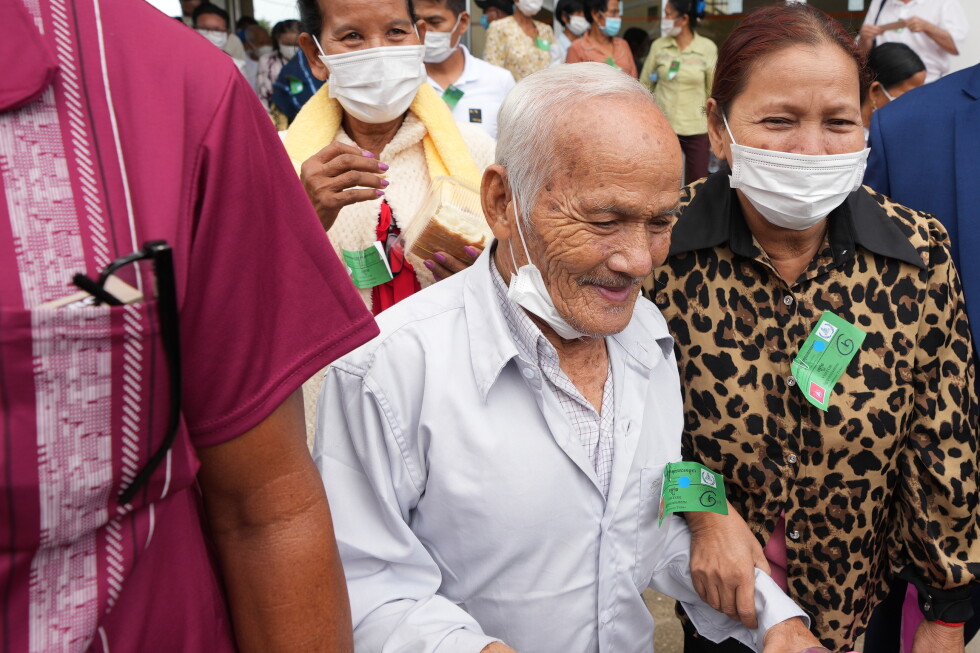
Cambodian artist Bou Meng, one of only seven people known to have survived a notorious Khmer Rouge torture center in the Southeast Asian country in the late 1970s, has died. He was 85. This was reported by Qazaqyia.kz citing Associated Press.
His ability to paint portraits of the then-leader Pol Pot was why he was kept alive.
The Extraordinary Chambers in the Courts of Cambodia, a U.N.-backed tribunal that sought to try Khmer Rouge leaders for genocide and other crimes against humanity, said he died late Friday due to age-related illness.
"The passing of Mr. Bou Meng represents the loss of an important historical witness to the grave crimes committed during the brutal Khmer Rouge regime, particularly to the history and tragedy that took place at the former S-21 Security Centre," referring to the prison, also known as Tuol Sleng, where he had been held for almost two years starting in 1977.
The Khmer Rouge group that ruled Cambodia from 1975–79 was accused of genocide for causing the deaths of so many of their countrymen from executions, starvation, and lack of medical care due to its radical policies. An estimated 1.7 million Cambodians died from forced labor, starvation, medical neglect, and executions.
An estimated 16,000 women and children were kept at S-21 over the course of nearly four years before being killed. Now it serves as the Tuol Sleng Genocide Museum, named after the high school it had been before the Khmer Rouge takeover.
Bou Meng, along with two other survivors, artist Vann Nath and mechanic Chum Mey, testified in 2009 at the trial of Kaing Guek Eav, also known as Duch, who had been the S-21 commandant.
Duch was found guilty of crimes against humanity, torture, and murder in 2010 and ultimately received a sentence of life imprisonment. He died in prison in 2020 at the age of 77.
In 2010, Bou Meng testified that painting larger-than-life images of Pol Pot and portraits of other communist icons helped save his life.
It took three months to complete his first outsized work. Kaing Guek Eav then ordered him to make three more Pol Pot paintings and po