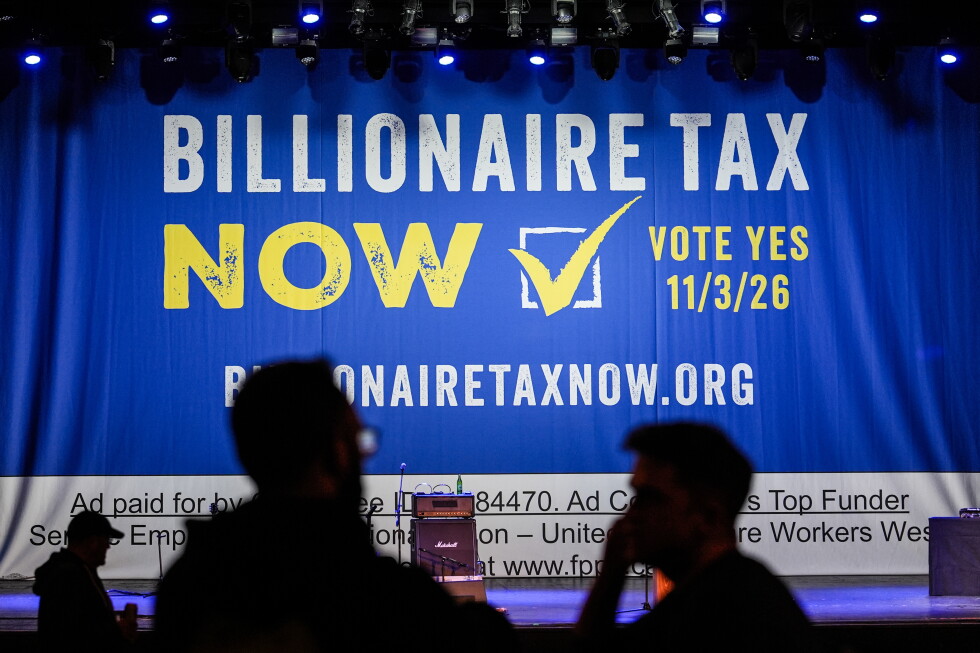
California voters will consider a controversial proposal in November to temporarily raise taxes on billionaires. This was reported by Qazaqyia.kz citing Associated Press.
The labor union backing the measure announced Thursday it would forge ahead despite pressure from critics to withdraw it. The proposal, backed by the Service Employees International Union Healthcare Workers West, would impose a one-time 5% tax on individuals whose net worth exceeds $1 billion and who were living in the state as of Jan. 1, 2026. The goal is to generate $100 billion in revenue, mainly to fund the state's Medicaid system after federal cuts.
"I am all in on this," union President Dave Regan said on a Zoom call, adding that opponents of the proposal are "totally out of touch."
Democratic Gov. Gavin Newsom and many traditional allies of the union oppose the measure. They argue it is a temporary fix for an ongoing problem and that it would push the ultrawealthy to leave the state, taking the money they would contribute in income taxes with them. Newsom, who is considering a presidential run as he prepares to leave office in January, has generally opposed tax increases during his time as governor.
A coalition of healthcare, education and housing groups — including the California Medical Association and California School Boards Association — banded together last week to fight the tax.
"The dangerous wealth tax directly threatens vital funding for education and schools, healthcare and clinics, public safety, and infrastructure projects by making California's revenue even more volatile," the coalition said in a statement.
Brian Brokaw, a Newsom political adviser who is leading a political committee opposing the tax, said it would "make California's biggest challenges worse." "Driving away the state's sustainable tax base for a one-time grab is bad policy and an even worse deal for 40 million Californians who will be left holding the bag," he said in a statement.
Under the proposal, the state would spend the money generated from the tax over multiple years. The nonpartisan Legislative Analyst's Office estimates that the proposal would generate tens of billions of dollars in the first few years, but that income tax revenues would subsequently decline by hundreds of millions of dollars annually.
Many of the Silicon Valley tech moguls who oppose the measure have already moved their assets to other states or threatened to do so to avoid the possible tax. They have also spent millions to try to defeat it.