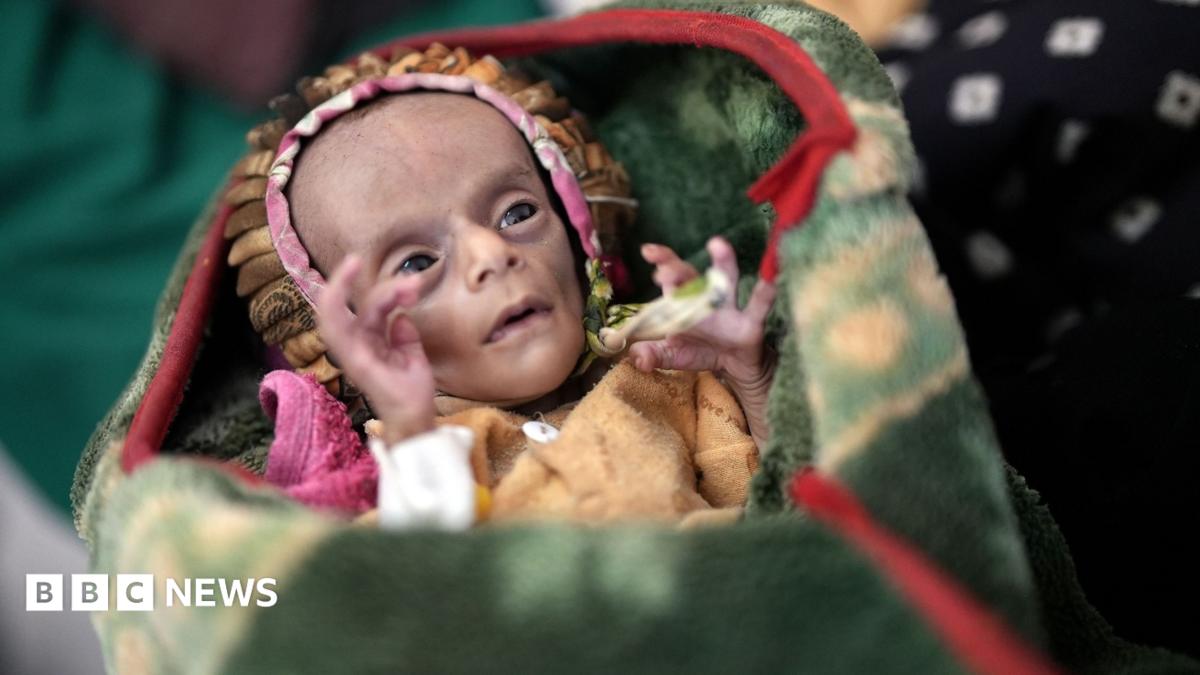
Newborn twins Raghad Hassan and her brother Raad have been battling for survival since birth, born prematurely as fighting surged in Yemen's civil war. This was reported by Qazaqyia.kz citing BBC News.
When the Houthis reached their village in the Kahboub mountains in south-west Yemen, their family of seven was forced to flee amid bombs, missiles, and drone attacks – the twins protected only by blankets.
What followed was three days on foot heading for the port city of Aden. "It was very difficult," says their father, Bajash Ali Sagir Hassan, a softly spoken shepherd. "We didn't find cars or transportation. One kind person brought us here [on the fourth day] while others refused."
As the family walked, the twins got weaker, according to their mother Lina. "They were exhausted… there was cold and dust. Their vomiting and diarrhoea got worse."
By the time the newly homeless family arrived at al-Sadaqah hospital in Aden, the twins were barely clinging to life. "Just skin and bone," said a doctor, shaking his head, as he looked at their wasted limbs.
Raad was the sicker of the two - his ribs visible and his chest heaving as he took rapid, shallow breaths. He was barely bigger than the hands of the nurse who carried him gently to be weighed and measured.
Bajash looked on, worry etched on his face. He told us the twins were fed twice a day, but sometimes he could only give them water - after the war drove up the price of baby milk.
The diagnosis came quickly - severe acute malnutrition. That can be as deadly as a bullet.
Malnutrition in Yemen is a crisis within a crisis - another frontline in a devastating civil war. Hunger did not arrive with conflict, but it's spreading with the latest bloodshed.
The United Nations says around 800,000 people can no longer receive lifesaving aid and more than 250,000 have been displaced, after an informal ceasefire collapsed in the summer.
Since then the Houthis have made a lighting advance along the Red Sea coast, and they have now completely cut off Yemen's third largest city, Taiz.
The UN says civilians there are "at grave risk" and lacking food due to soaring prices.
The internationally-recognised government is fighting back against the Houthis - or trying to - with the help of Saudi air strikes.
Caught in the middle of all this are fathers like Bajash, fighting to get help for their children. We saw another mother with a malnourished baby being turned away.
We followed Bajash as he rushed through the corridors, trying to get the all-important admissions slip. He found an ally, a forceful supervising nurse, Aisha Ragab, who had run from the war herself, back in 2018.
"I feel for them," she said, "because I have already lived through the situation myself."
Two beds could not be found, but Aisha was undeterred.
"I will settle this by having the twins share a bed... so that we can save them. By God, I will convince them [the doctors]."
Within an hour the twins were lying on a single bed, their tiny bodies taking up little space.
Lina was feeding them sips of fortified milk from a tiny bottle, but Raad could not keep it down. He was cradled in her arms - his eyes wide and his cheeks sunken. Asked if she thought her twins would recover, Lina replied quietly, "God willing."
As we walked through the unit with its pink walls, some doors were padlocked shut.