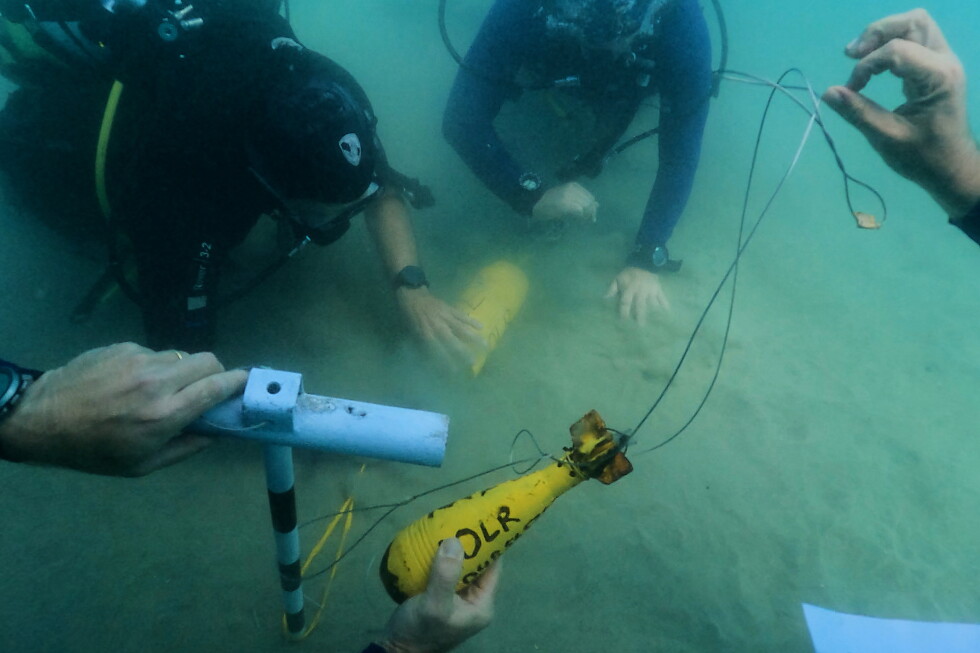
Israeli researchers are testing new methods to locate and remove unexploded munitions from the Mediterranean Sea. The project aims to reopen part of the coastline near the central city of Rishon Lezion to the public. This was reported by Qazaqyia.kz citing Associated Press.
Roy Jaijel, a researcher in the marine geology and geophysics department at Israel's National Institute of Oceanography, co-leads the project. The project aims to return some 2 kilometers (1.2 miles) of shoreline to residents of Rishon Lezion, an area used as a firing range for decades.
During a diving trip in June, divers could not find dummy mortar and artillery shells they had planted months earlier, foreshadowing challenges ahead. "It's really hard to find things in the sea," Jaijel said after emerging from a dive.
The initiative is the first of its kind in Israel and coincides with a global push to protect the world's waters. Experts say interest in clearing underwater munitions has grown in recent years due to the boom in artificial intelligence, which requires millions of kilometers of underwater fiber-optic cables for global connectivity.
Munitions can end up dumped into waters after wars, fall into seas during conflict, or accumulate from firing practice. Erosion from seawater can lead toxic and explosive chemicals, along with heavy metals, to seep from the munitions, causing environmental contamination. There is also the risk of explosion if people step on them or children play with them.
Two years ago, Europe launched a project to detect and clear non-military unexploded ordnance. In 2024, Germany piloted a program to recover and dispose of military waste from the North and Baltic Seas, where some 1.6 million tonnes of unexploded munitions from two world wars lie, according to the German government.
However, less focus has been on clearing waters in the Middle East, such as the Mediterranean. Israel's project may help fill this gap.