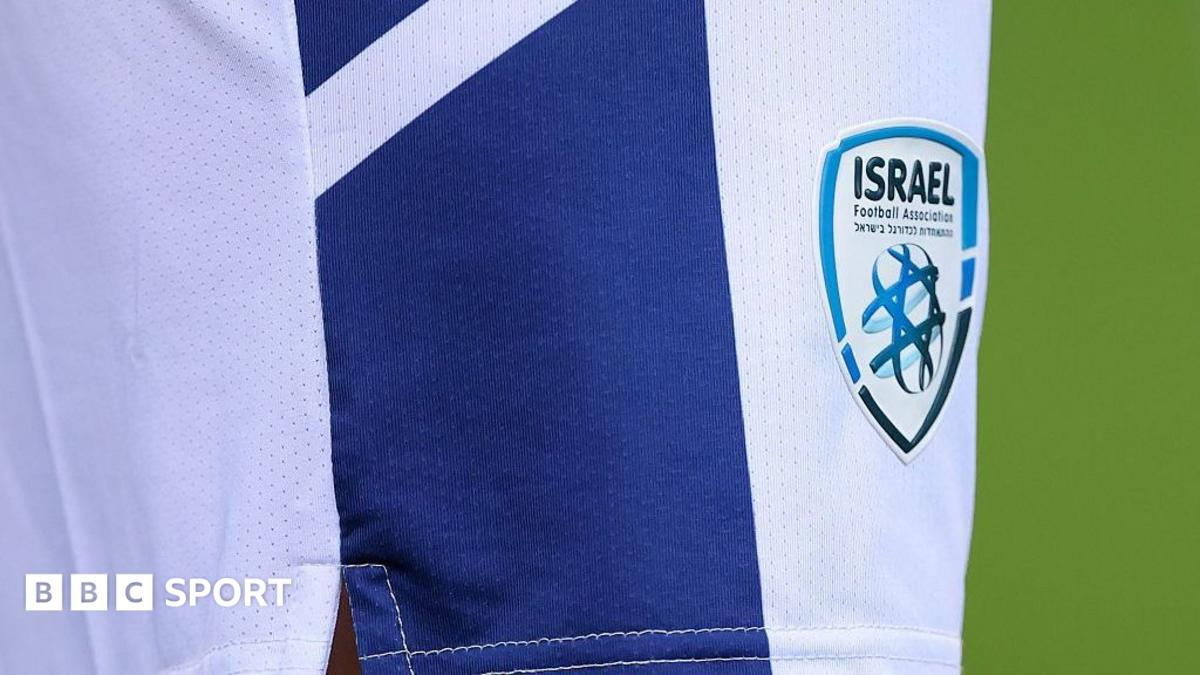
A Uefa Nations League match between Israel and the Republic of Ireland will be played at a neutral stadium, with no away fans and reduced television coverage. This was reported by Qazaqyia.kz citing BBC News.
The match's taking place had been in doubt — one side had to vote on a motion confirming whether or not they would participate amid significant opposition from fans, pundits and politicians. The vote confirmed the fixture would go ahead. Now the Republic of Ireland will travel to Debrecen, Hungary, for a Uefa Nations League away match against Israel, played against a backdrop of ongoing and increasingly volatile disagreement between the two countries about Israel's military offensive in Gaza.
On 4 October, the Republic will face the same opponents in a home match in Backa Topola — a small town in Serbia. No tickets have been sold to Irish fans for either fixture, and Irish public broadcaster RTE will air a stripped-back version of match coverage, with no commentators, pundits, or half-time analysis.
As soon as the Republic of Ireland were placed with Israel — plus Austria and Kosovo — at the Nations League draw in February, the Football Association of Ireland (FAI) faced calls from some to boycott the matches because of Israel's military action in Gaza. The FAI eventually took a vote of its delegates in July, in which 75 members voted to play the matches and 32 voted to boycott.
Not playing the matches could have harmed Irish football in the long run, the FAI said, amid the possibility of Uefa sanctions for refusing to fulfil the fixtures and the potential loss of millions of euros in income.
As well as curtailing its coverage, RTE will not take advertising or sponsorship income from the matches, saying it will only meet its contractual obligations to broadcast the fixtures.
No tickets are being sold to Irish fans for either the home or away matches, with a small allocation available for Israeli fans for the first fixture, which has been the case at multiple previous Israel home games held in Hungary.
Hungary has been deemed a suitable host nation for Israel matches because the two nations enjoy stronger diplomatic ties than those between Israel and many other European nations, and it has been willing to provide the necessary policing and security arrangements for matches to operate smoothly.
The FAI decided in the summer to play its home fixture against Israel at a neutral stadium, citing operational challenges that could impact on the delivery of the game on home soil. Reports have claimed the FAI was concerned protests could prevent the match from taking place in Dublin.
The FAI gave no official reason for the selection of Backa Topola, but choosing a venue in Serbia — in a town so remote — in theory renders security management easier and reduces the possibility of protest.
In 2025, Serbian foreign minister Marko Duric described Israel as one of Serbia's closest friends and strategic partners. Serbia has also purchased military equipment, including drones and missiles, from Israel in recent years.
The decision to play in neutral stadiums has not curtailed opposition. Fans of various Irish clubs have demonstrated against the matches during domestic fixtures in recent weeks, and on Monday more than 160 Irish athletes signed an open letter by the Irish Sport for Palestine group urging a boycott. The signatories include boxer Tyrone McKenna and former European champion athlete Ciara Mageean.
FAI CEO David Courrell said last week Uefa had rejected a request for the teams to be kept apart in future draws. Director of football John Martin described the games as a very uncomfortable situation for everyone. Manager Heimer Hallgrimsson, meanwhile, said playing the match did not constitute legitimisation of Israel's genocide.
We're not playing with genocide, we're playing against genocide, Hallgrimmson said. We're playing against Israel, we're not playing with Israel.
In response, the Israel Football Association accused Hallgrimsson of ignorance, hypocrisy and stupidity.
The Republic of Ireland faced Israel in Women's EuroBasket qualifiers last autumn and earlier this year after extensive deliberations.
The Republic of Ireland has been among the European countries to most keenly show support for Palestinians since the start of Israel's military offensive in Gaza in October 2023.
More than 73,000 people have been killed in Israeli attacks, according to the territory's Hamas-run health ministry, whose figures are considered reliable by the United Nations (UN).
In May 2024, alongside Spain and Norway, Ireland officially recognised a Palestinian state, and later that year joined South Africa's Gaza genocide case against Israel in the International Court of Justice.
The country has also boycotted Eurovision since 2025 because of Israel's ongoing participation in the song contest, was the first EU country to ban goods from illegal Israeli settlements in the West Bank, and has issued travel bans for Israeli government ministers.
On Monday, Irish foreign minister Helen McEntee said: Ireland's view is clear — international law is being breached. We are seeing an attempt to erase a population.
Israel has criticised Ireland's standpoint and claims its actions in Gaza constitute self-defence, after the armed Palestinian group Hamas attacked Israel on 7 October 2023, killing about 1,200 people and taking 251 hostages.