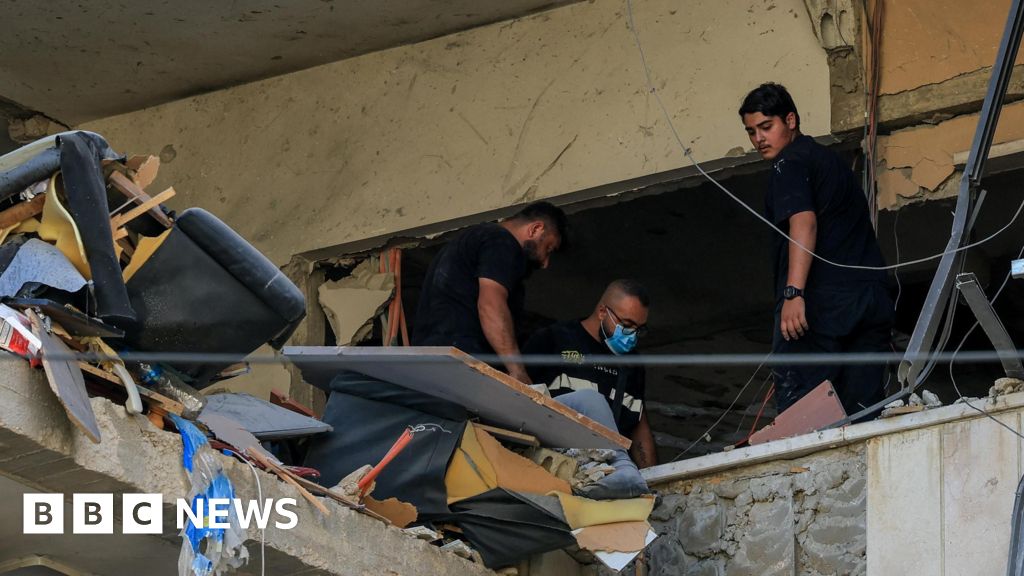
Israel strikes Beirut suburb
Israel carried out an airstrike on a southern suburb of Beirut. This is the first attack on the Lebanese capital since a US-brokered ceasefire last week. This was reported by Qazaqyia.kz citing BBC News.
According to the Lebanese Health Ministry, two airstrikes on two residential buildings in the stronghold of Iran-backed Hezbollah killed two people and wounded at least 20, including women and children.
Prime Minister Benjamin Netanyahu said Israel struck "terrorist headquarters in the Dahieh area of Beirut in response to shelling of Israeli territory by Hezbollah."
Earlier, Israel had limited attacks on Beirut under US pressure due to fears that strikes there could jeopardize a broader peace deal. However, on Sunday evening, Iran launched missiles at Israel, saying it was a response to intensified Israeli attacks in southern Lebanon and Beirut's suburbs.
Sunday's strike tore through the lower floors of a residential building, exposing apartments and scattering concrete and twisted metal across the street.
Social media videos showed crowds rushing to the scene to help the wounded. Lebanese health officials said among the wounded were four women and four children.
A statement from the Israeli army spokesman in Arabic, posted on X, said "Hezbollah terrorist infrastructure" was targeted, and suggested further strikes would follow.
Israeli military said it intercepted two projectiles crossing from Lebanon into Israeli territory.
Later on Sunday, Hezbollah said it fired rockets at Israeli artillery positions in the Yiftah barracks and at troops near the al-Marj pond. Hezbollah called the shelling a response to "Israel's violation of the ceasefire and attacks on villages in southern Lebanon."
A representative of the Iranian parliament's foreign policy and national security committee, Ebrahim Rezaei, promised a "decisive and painful response" to the Israeli attack on Beirut.
A week before the June 3 ceasefire, Israel threatened a large-scale offensive on Dahieh, triggering a mass exodus from the suburb and a frantic round of American diplomacy.
Later, President Trump wrote on Truth Social that "no troops will be in Beirut" after a conversation with Netanyahu, and the US told Qatar, which had been mediating de-escalation, that they had instructed the Israelis to pull back.
However, in an interview on NBC's Meet the Press on Sunday, Trump said he was not demanding that Lebanon be part of any peace deal with Iran, separating the two tracks even as the attack on Dahieh threatened to destabilize both.
Lebanon was drawn into the war on March 2, when Hezbollah fired rockets at Israel in response to an Israeli strike that killed a top Iranian leader.
Israel responded with an air campaign across Lebanon and a ground invasion in the south, which intensified in recent weeks.
The ceasefire regime has been in effect since April 17 - only nominally - as it has been repeatedly violated by both sides.
Although Israel continued to intensify airstrikes in the south of the country over the weekend, Sunday's attack was the third strike on the capital since the ceasefire regime came into effect - the first two targeted Hezbollah commanders.
Lebanese Parliament Speaker Nabih Berri - leader of the Amal movement and a figure closely tied to Hezbollah - this week rejected a US-brokered deal announced after rare talks between Israeli and Lebanese governments. Berri called the agreement a "trap" because it does not mention a parallel withdrawal of Israeli troops from occupied territories in the south of the country.
Hezbollah itself has no place at these talks, and its leader Naim Qassem, in a written statement on Thursday, said that disarming the group would be tantamount to fulfilling "the enemy's goals."