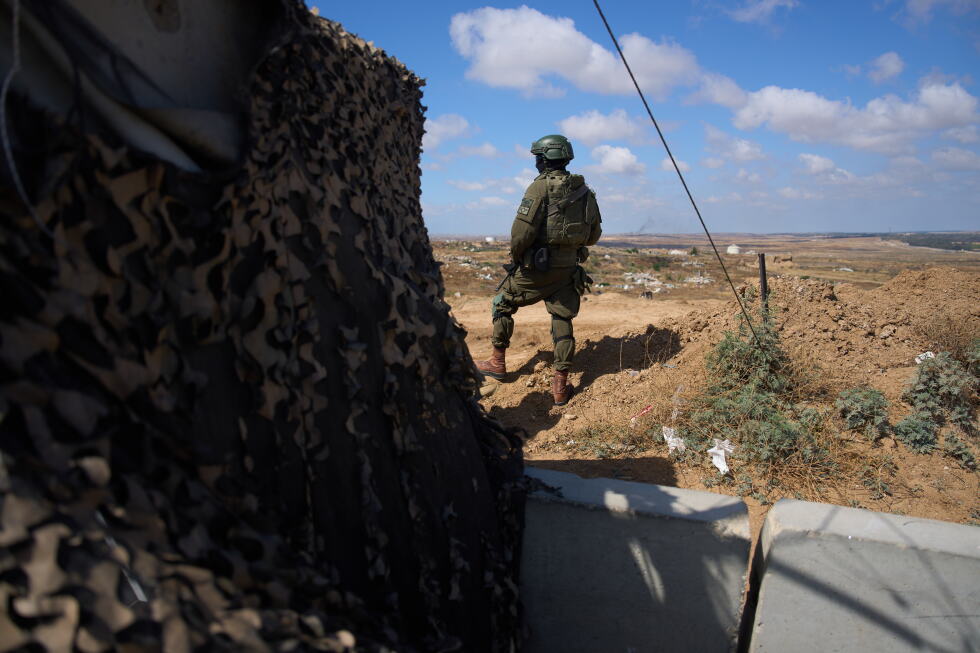
Over the past two and a half years, Israel has taken control of swaths of Gaza, Lebanon and Syria that amount to its biggest expansion of militarily occupied lands in decades. It is an area larger than many major cities — roughly 1,000 square kilometers (386 square miles) — and Israel has said it plans to stay indefinitely. This was reported by Qazaqyia.kz citing Associated Press.
The land seizures began in the aftermath of Hamas' 2023 cross-border attack, which ignited wars on multiple fronts. The Israeli military took over large portions of Gaza as part of a broad invasion, and later seized control of chunks of Lebanon and Syria. Israel calls these areas "buffer zones" and says they are needed to prevent future attacks by militant groups.
In Gaza and Lebanon, Israeli land seizures and evacuation warnings have pushed out more than 3 million people, and troops have demolished towns and neighborhoods, creating large, depopulated zones. The "buffer zones" — equivalent to roughly 5% of Israel's area soon after its founding — are not new borders, which require an agreement between two countries. But many fear these changes could become long-lasting.
In Lebanon, Israel now holds 608 square kilometers (234 square miles), according to experts with the Carnegie Middle East Center. Evacuation warnings have forced about 1.2 million Lebanese to flee, and Israel has warned civilians against returning. Hezbollah has condemned Israel's presence inside Lebanon, and the Lebanese government has called for Israel to withdraw.
In Gaza, when the ceasefire went into effect in October 2025, Israel withdrew its troops to a zone demarcated by the so-called "yellow line," giving it control of just over half the strip. Almost the entire population of Gaza, more than 2 million people, has been squeezed into vast, squalid tent cities dependent on international aid. The military has bulldozed or demolished wide swaths of the zone, and the area is inaccessible to Palestinians. With the ceasefire process stuck, Israel has since moved the line west and expanded its control to more than 60% of Gaza — 194 square kilometers (75 square miles), according to rights group Gisha. Prime Minister Benjamin Netanyahu says Israeli control of Gaza will increase to 70%.
Israel captured the Golan Heights from Syria in the 1967 Mideast War and annexed them in 1981. After the 2023 attack, Israel seized areas beyond the former divided zone and now controls 1,200 square kilometers (463 square miles) of the Golan. Israeli troops have expanded the buffer zone, moving closer to Damascus. The U.N. has condemned Israel's actions, warning of regional instability.
Israel's expansion has drawn international condemnation, with Iran making Israel's withdrawal from Lebanon a condition for ending its war with the U.S. U.N. Secretary-General Antonio Guterres called Israel's actions a violation of international law.