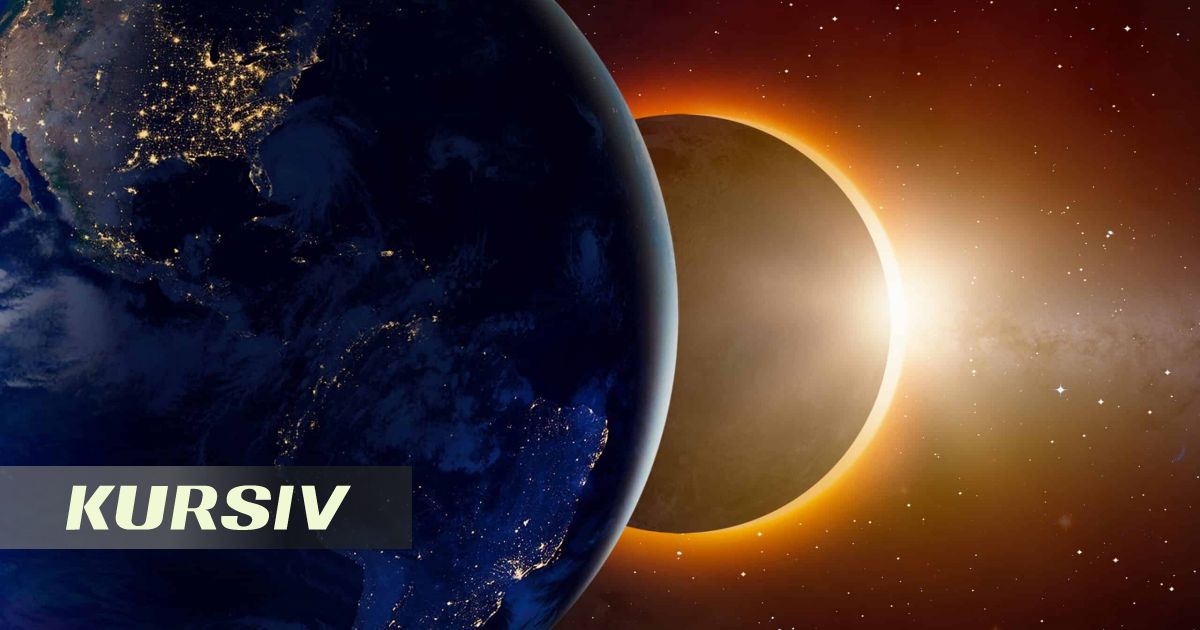
Yesterday's solar eclipse became an event that attracted hundreds of thousands of Europeans and tourists from around the world, who specially came to the country for this rare astronomical phenomenon. This was reported by Qazaqyia.kz citing Euronews.
The first point where the Moon completely covered the Sun was the remote Arctic northeast of Russia, then the ominous shadow covered parts of Greenland and Iceland.
Then the eclipse passed over mainland Europe — in Spain, Iceland and Greenland it was total.
Mainland Europe had not seen a total solar eclipse for 20 years, and in Spain it had not been observed for more than a century.
The capital of Iceland, Reykjavik, had not seen a total solar eclipse since 1433.
According to Euronews, Spain was gripped by a real 'eclipse fever': according to government estimates, more than 446 thousand tourists could bring up to 347 million euros to the economy.
'The corridor of the total phase is very narrow, its width is only a few hundred kilometers,' British astrophysicist and science popularizer Graham Jones told AFP on Tuesday from Fontanil de los Oteros in northern Spain.
Another total solar eclipse will pass over southern Spain and northern Africa in August 2027, and in 2028 the Iberian Peninsula will see an annular eclipse, when the Moon's disk is not large enough to completely cover the Sun, leaving a so-called 'ring of fire' in the sky.