Spain's foreign tourist arrivals have reached record levels, with 97 million visitors in 2025. This was reported by Qazaqyia.kz citing BBC News.
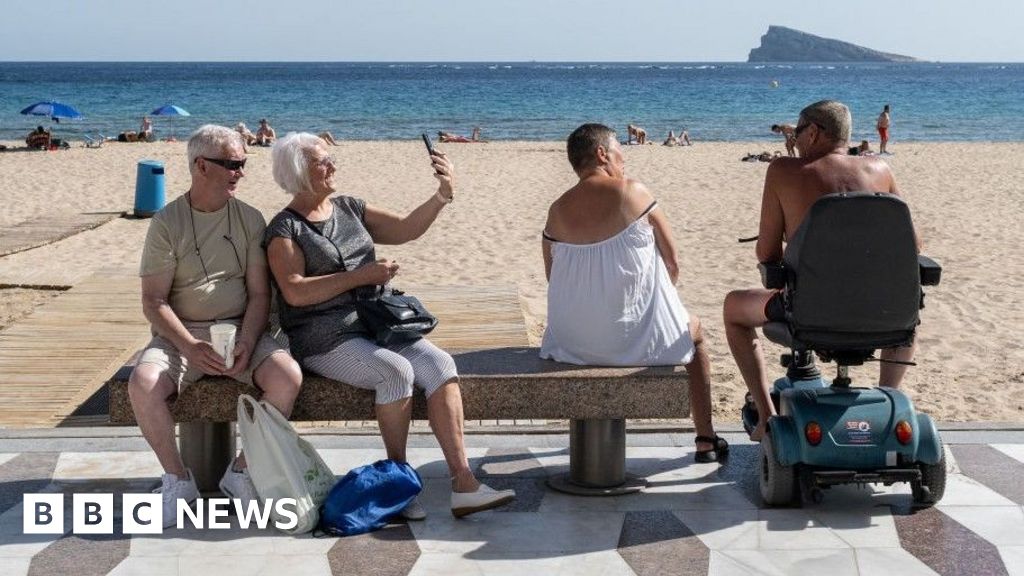
From the rooftop terrace of a hotel in Benidorm, Fede Fuster looks out at the high-rise buildings and the town's famous beach. He is president of the local tourism association, and his family built one of the first hotels in this Mediterranean city in the 1950s. Benidorm's population is still only 77,000, but it swells to around five times that number in summer due to its status as a prime tourism draw.
Since the Covid pandemic left resorts like Benidorm virtually deserted, the Spanish tourism industry has recovered remarkably. Foreign arrival numbers have broken records each year, totalling 97 million in 2025. Currently the world's second-biggest tourist destination behind France, Spain is expected to consolidate its success in 2026.
"I think this is going to be a great year," Fuster says. "I'm optimistic, we're talking about reaching 100 million tourists in Spain. If we keep growing like this we're going to be number one very soon."
Industry experts had originally expected more modest growth in 2026. But the outbreak of the US-Israeli conflict with Iran has made Spain an attractive alternative to Middle Eastern destinations like Dubai, and eastern Mediterranean countries such as Turkey and Cyprus.
"In these moments of crisis, of strikes or wars, the bookings always increase," says Fuster, recalling a similar phenomenon in 2011 during the Arab Spring, though he insists he would prefer to compete without this advantage.
"Any time that you have a crisis in the eastern Mediterranean or the Middle East, Spain is seen as a secure place to go," says Francisco Femenia-Serra, a lecturer in geography at Madrid's Complutense University. He explains that "part of the tourists that would normally go to Turkey or Egypt because of the low prices might end up in Spain".
Spain's official tourist arrival figures appear to bear this out. The country received 9.1 million international visitors in April, a new high for the month. This was 5.2% more, or 450,000 additional people, than April 2025.
Meanwhile, Dubai International Airport saw its passenger numbers drop by 66% in March as flights and bookings were significantly reduced due to the Iranian situation.
With tourism directly contributing 13% of Spain's GDP, the industry has been a crucial component in the country's growth, outstripping France, Germany, Italy and the UK.
However, two major concerns loom: rising fuel costs could curtail Europeans' foreign travel, and growing anger among local residents at tourism's negative impact.
Since 2024, Barcelona and many other tourist hubs have seen summer protests against perceived excessive visitor numbers. A Europe-wide YouGov poll in September 2024 found that 28% of Spaniards had a negative view of foreign tourism, the highest percentage of any country. Two-thirds of Spaniards sympathised with the protests.
Locals' grievances include congestion, environmental impact, and above all, the idea that tourism exacerbates Spain's housing crisis. A new wave of protests over soaring rentals has begun.
In a bookshop in Valencia, local tenants meet regularly to discuss housing problems. Jordi Vila, a representative of the Sindicat de Llogateres, says: "We have on the one hand the tourist accommodation market and on the other the residential market. When renewing rental contracts, owners set rents according to salaries of people visiting from abroad, which might be three or four times higher. So local people end up getting pushed out."
He points to Barcelona as the epitome of this phenomenon, describing the city centre as "a kind of theme park" where tourist accommodation has displaced locals.
In Asturias, graffiti has appeared on holiday rental properties with the slogan: "Your business, our ruin."
The left-wing coalition government has identified tourist accommodation as a problem. In 2025, Prime Minister Pedro Sánchez warned that "there are too many Airbnbs and not enough homes". In December, his government fined the holiday rental platform €65m for advertising unlicensed apartments.
Local governments have also announced measures. Barcelona plans to revoke all tourist apartment licenses by 2028, and the Balearic Islands have imposed a moratorium on new tourist accommodation.
The tourism industry remains a vital part of Spain's economy, but local discontent is rising. Industry representatives are seeking ways to balance sustainable tourism with the interests of local communities.