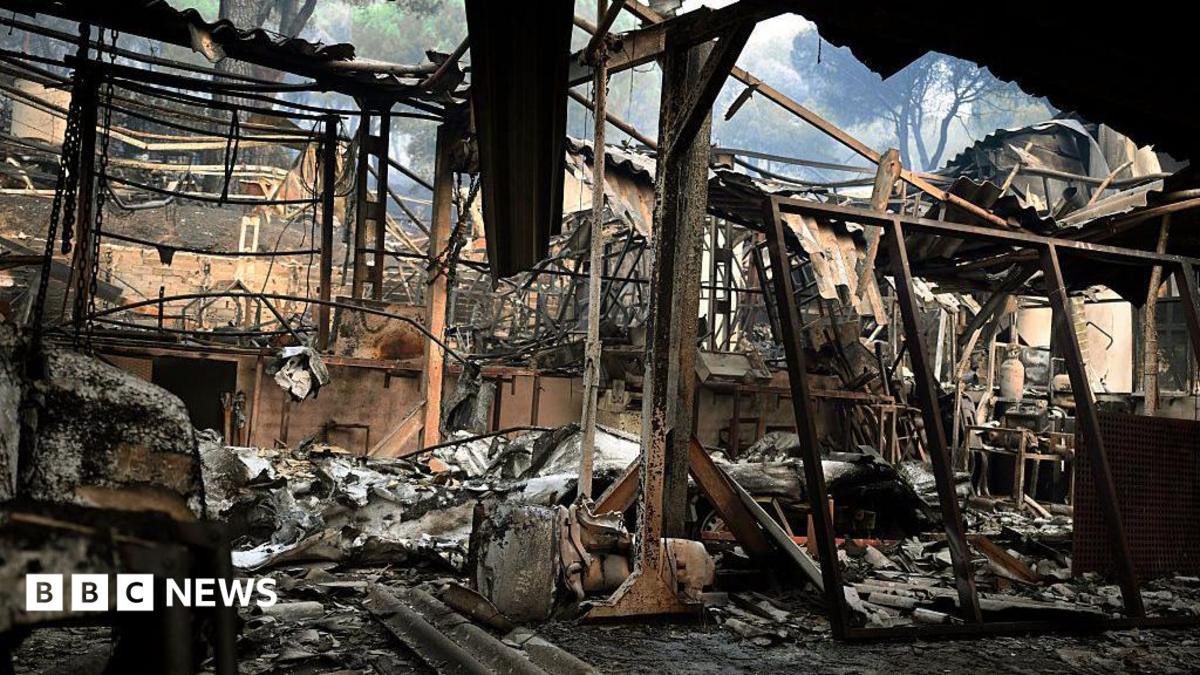
Wildfires raging across Spain for the past week have threatened dozens of communities and forced more than 90,000 people to evacuate their homes. This was reported by Qazaqyia.kz citing BBC News.
Three fires in the Madrid region have caused particular concern, with a new heatwave expected to hit Spain from Wednesday, fuelling fears that firefighting efforts could be hindered.
"It's a hell of a situation," said Madrid regional leader Isabel Díaz Ayuso as she visited affected areas on Monday alongside Prime Minister Pedro Sánchez.
Sánchez spoke on Tuesday of highly challenging hours and days ahead, but of light beginning to appear "at the end of the tunnel".
Temperatures are expected to approach 40C in some regions in the coming days, with the heatwave forecast to last at least until Sunday.
Spain's state meteorological agency Aemet has warned the "fire danger level will continue to rise to extreme levels, hindering firefighting efforts".
Regional authorities began lifting some evacuation and lockdown orders on Tuesday as conditions improved - including in parts of the Madrid region - but restrictions remain in place in the worst-affected areas.
In the Madrid region alone, more than 56,500 people have been evacuated since the fires broke out last week. A further 27,797 people have been ordered to stay at home.
Further evacuations have taken place in Ávila, Toledo and Valencia.
Ayuso had earlier described the wildfires as "the biggest natural catastrophe in the history of Spain".
She wrote on X that the situation was now "improving little by little" and some residents may soon be allowed to return home.
Interior Minister Fernando Grande-Marlaska told Spain's La 1 TV channel that firefighting efforts on Monday night had resulted in "relatively positive progress".
"This morning, we are very satisfied with the work done. We are going to consolidate the work that has been done," he said.
He maintained that "we must be positive; we have the emergency under control" but conceded that "weather conditions are not helping us at all".
Prime Minister Pedro Sánchez announced on Tuesday that areas affected by the wildfires have been declared "disaster zones".
"The climate emergency is worsening year after year, and we are required to be united to fight against fire, as well as in prevention and reconstruction," he told reporters during a briefing in Madrid.
"Therefore, I make an explicit request, a single appeal to all regional governments: Climate denial is the worst fuel for the fight against the climate emergency."
Spanish journalist Juan Navarro, who is in Cebreros - a town around 40 miles west of Madrid – told the BBC that people were looking with fear to the next heatwave.
When you drive through villages in the area around Cebreros, "everything is black", he said.
The mayors of two of the evacuated towns in the Madrid region described the fire as "a kitten by night and a lion by day".
Robledo de Chavela mayor Fernando Casado said his community would continue fighting "with their knives out".
Echoing his sentiments, Valdemaqueda mayor Ricardo Meneses added that "we can't let our guard down and we're on high alert because now is the time to stop the fire".
A psychologist visiting shelters has told El Mundo there is a growing sense of anxiety among the evacuees.
"We've seen cases of people who come in relatively relaxed on the first day because they think this situation might only last a day," said Sara Casado, of the Citizen Services Department of the Madrid region.
"But then they see how the hours and days go by. That uncertainty of being here without knowing when they'll be able to return increases their anxiety."
The Madrid region is currently under a red weather warning, with temperatures expected to reach 35C in mountainous areas and 38C in other parts of the community.