Spain is redoubling its efforts to push its tourist appeal beyond the familiar "sun and sand and coast" model as it prepares for another record-breaking year in which the number of foreign visitors could reach 100 million for the first time, the country's tourism minister has said. This was reported by Qazaqyia.kz citing The Guardian.
Speaking to the Guardian, Jordi Hereu rejected suggestions that Spain was now saturated with tourists but said it had become clear that the "old formulas no longer work", especially amid growing concerns about overtourism and the effects of the climate emergency.
Hereu, the minister of industry and tourism, said the steady growth in tourist numbers – which could be further boosted this summer by uncertainty over Middle Eastern destinations after the US and Israel's war on Iran – could be managed sustainably and responsibly.
Last year, the number of foreign tourists rose by 3.2% to 96.8 million, while the value of their spending grew by 6.8% to hit €134bn (£116bn). Figures from the first quarter of this year show tourist numbers up by 3.4% and revenue up by 6.7%.
"With that growth, we could reach 100 million," Hereu said. "But I'd like to point out that that doesn't worry us or obsess us … [We favour] what I call calm growth – in other words, growth that can be easily managed. And this year, despite what's happening and the demand diversion effect, I think that in general, for the moment, our forecast is for moderate growth."
While tourism has long been a pillar of the Spanish economy, making up more than 12% of its GDP, its rapid and unchecked growth in many parts of the country over recent years has triggered protests and a furious backlash. Overtourism, not least the proliferation of tourist flats, has changed the face of entire neighbourhoods and cities, priced locals out of the housing market and increased pressure on public services and natural resources.
Asked if the current rates of tourism were sustainable, Hereu said: "Yes, if we do our homework, and no if we don't do anything." The minister, a former mayor of Barcelona, praised his successor in that role, Jaume Collboni, a fellow socialist, for pushing ahead with a decision to ban tourist flats in the Catalan capital by 2028, but he said Spain's highly decentralised nature made it hard for the central government to drive local change. He also contrasted the different approaches of leftwing and rightwing administrations.
"I think there are places in Spain that are now seeing the effects of not regulating anything," he said. "But I also want to be very clear, because this is also influenced by political stripes. The left is more in favour of regulating tourism than the right, because the right holds the view that we should allow freedom because the market will self-regulate, which isn't true, and in many places it's clear that it isn't self-regulating."
Hereu said that while he believed anti-tourism feeling was "very much a minority thing" in Spain, it was becoming increasingly clear that a new approach was needed and that local and regional authorities needed to properly limit, regulate and tax their tourist offerings.
"What I do believe is that in some places there's a demand for better tourism in the sense of a better model," he said. "But the culture I see throughout Spain is a culture of a country that knows how to welcome people. Our key principle is that we're in favour of transforming the model to keep ahead and that we're working humbly to transform that model because the old formulas no longer work."
Although he defended traditional beach tourism, which still makes up 37% of all visits, and said Spain had to be open to "all sectors" of the market, he noted that people were now seeking experiences beyond their sun loungers.
"It's very interesting to see in the qualitative surveys that people who come basically because 'hey, I'm here to relax, sun and beach, etc,' also start asking for add-ons – like 'beach plus'," Hereu said. "I think this is also a good trend, because what we need is to add value."
The minister said Spain's socialist-led coalition government was committed to the socially, economically and environmentally sustainable principles set out in its 2030 tourism strategy.
"One is decentralising destinations over time and we're also working towards deseasonalisation," he said. "The third, very clear principle is the diversification of our offering away from all those decades of sun and sand and coast, which is where the [Spanish tourist industry] was born, and which is still the dominant offering."
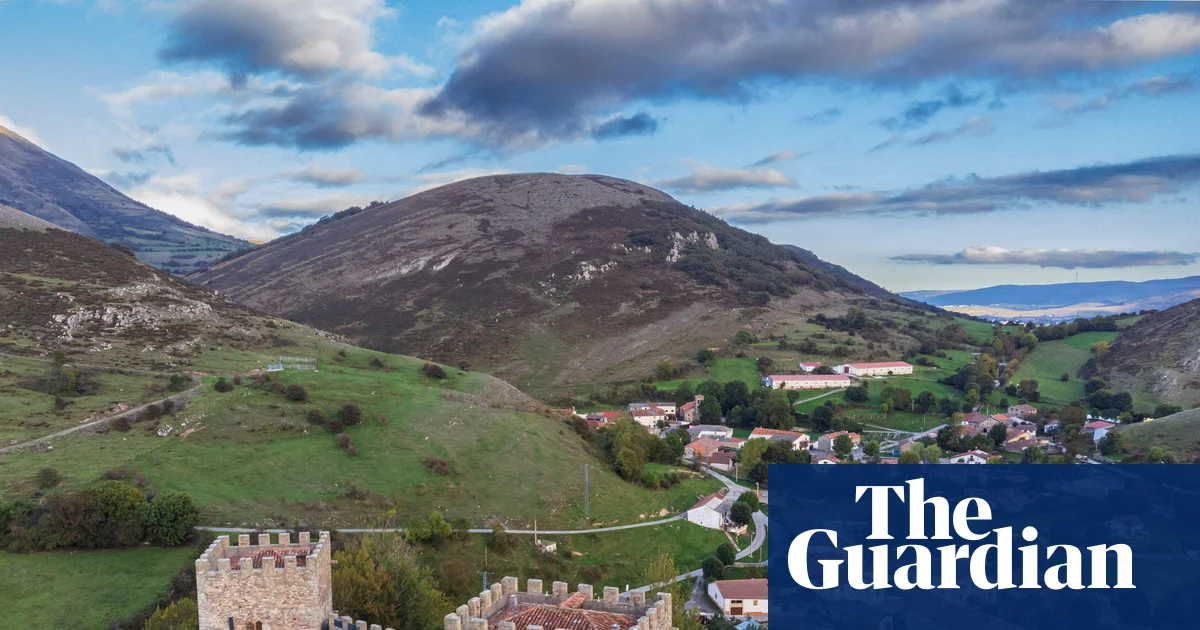
Although Spain has been pushing the summery charms of its eastern and southern coasts for decades, Hereu argues that the key to sustainable tourism lies in making it less seasonal, less beach-fixated and more geographically and culturally diverse.