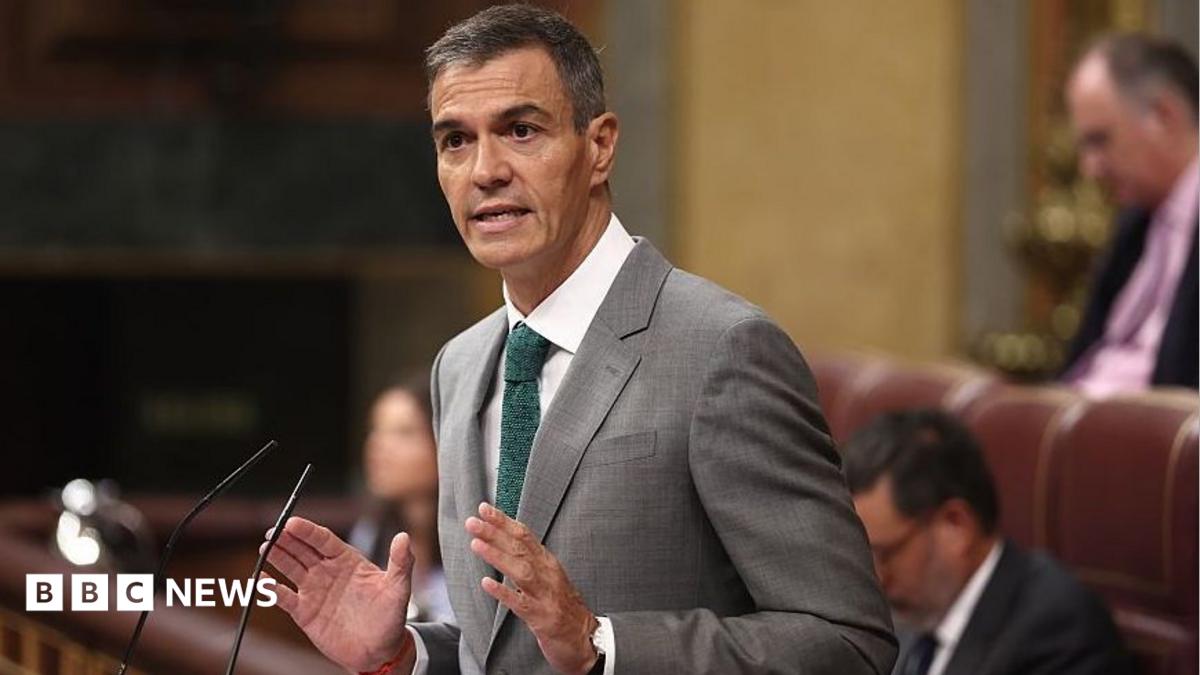
Spanish Prime Minister Pedro Sánchez has said no-one foresaw the influx of 72,000 migrants in the exclave of Ceuta, as pressure mounts over his handling of the crisis. This was reported by Qazaqyia.kz citing BBC News.
"It's absurd to think that the government knew and did nothing," Sánchez told Spain's parliament on Thursday, hours after tens of thousands of people joined protests across the country backed by opposition parties.
Sánchez also maintained there was no evidence Morocco was behind the mass crossing and there had been "close co-ordination" between the two countries.
A Spanish police report has highlighted the "total permissiveness" of Moroccan security forces, although senior officials insist it does not point the finger at Rabat.
Although most of the migrants have been sent back to Morocco, some 5,000 remain on the streets and beaches of Ceuta, on the North African coast, including as many as 1,400 children.
There have been several reports that Spanish officials had been warned of a rise in sea arrivals over the border at Ceuta, following a Spanish court ruling that many migrants misunderstood to mean they would not be pushed back if they swam across.
Sánchez has been careful until now not to criticise Morocco, but he complained of "unacceptable" statements by two Moroccan ministers about Ceuta and its fellow Spanish exclave of Melilla. The two cities have the EU's only land borders in North Africa.
Spain's handling of the migrant influx angered some of its European partners, and Italy responded by imposing border restrictions on arrivals from Spain.
"Ceuta is not the border of Spain, it is Spain on the border [of Europe]," Sánchez told parliament.
He praised the response of Ceuta police who had chosen to "defend human life" when the influx took place, rather than defend the border. He also highlighted close co-operation with Moroccan authorities over the return of more than 90% of the migrants in the following 72 hours.
He addressed the "difficult times" faced by the residents of Ceuta, as he explained the "complexity" of what had happened on 30 and 31 July.
He spoke of an "episode in which numerous actors and interests converge", doubling down on his assertion that hoaxes and rumours spread by social media had sparked the crisis.
He has already blamed trafficking gangs and angered Russia and Israel for highlighting social media linked to both countries along with "an international far-right movement". He told MPs that there was no evidence of state actors being involved but doubled down on his allegations of accounts linked to the two countries.
Ceuta was "a humanitarian crisis and also an administrative challenge within the city itself", he added.