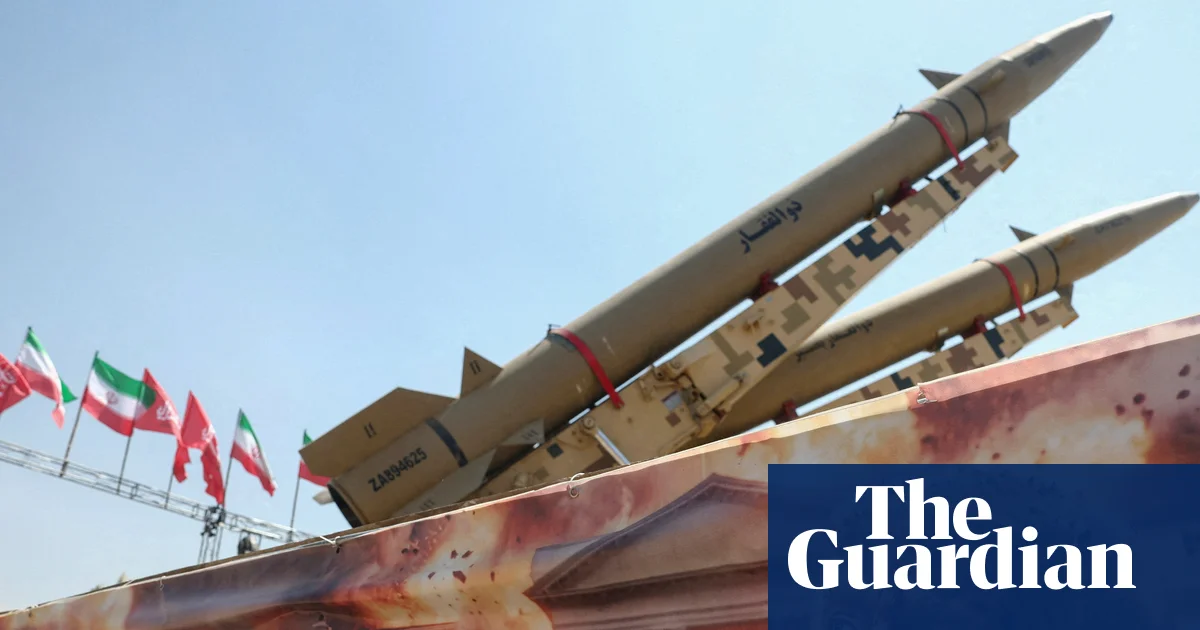
Iran, in the middle of an escalating five-month war with the US, continues to stumble from one internal crisis to another – whether it is over public executions, the rising cost of living, the alleged bias of the state broadcaster or even the post-midnight destruction of pavements outside liberal-leaning Tehran cafes. Very little that happens in Iran, cultural or political, momentous or trivial, does so uncontested. This was reported by Qazaqyia.kz citing The Guardian.
But there is now a growing threat of a long diplomatic deadlock, forged by mutual distrust in which neither side believes the other will stick to any agreement. That impasse has occurred as the war broadens, drawing in Yemen, Iraq and now Egypt. In Iran, at least, the advocates of escalation are winning. As a result, a convergence of Iran's conflicts, internal and external, becomes more likely.
Parts of the Trump administration and the Iranian opposition – including Reza Pahlavi, the son of the former deposed Shah – have never abandoned the belief that the Iranian government is on the brink of collapse.
What is true is that the picture of cohesive if brittle society presented by the millions attending the funeral of the supreme leader Ali Khamenei earlier this month revealed only one side of the public mood.
Masoud Pezeshkian, Iran's president, rarely tires of warning that the conditions that led to the bloody protests in January remain. At a recent meeting of the supreme judicial council he argued: "Iran is engaged in a full-scale war. Today's war is not just a war of missiles; the enemy has come to the conclusion that it cannot force the Iranian nation to surrender through military attacks. The most important battlefield today is the economy and livelihood of the people. If economic pressures cause social discontent to form and this discontent spreads, the enormous social capital that the people have created in support of the system will be lost."
Undoubtedly dissent, in the form of despair, exists. Golshan Fathi, a Tehran human rights activist, recently wrote on her social media page: "The same sick cycle repeats … morning … the call to prayer, news of an execution … noon with power cuts, afternoon the water stops … dusk, the anxiety of war and renewed attacks on cities, and at midnight, the earth trembles. And tomorrow, the same story again. Caught between natural disasters, management failures, and man-made crises … every day we don't live, we just practise enduring. Repetition, repetition, repetition … until a weary land no longer asks: 'What will tomorrow bring?' It just waits to see: 'When will the next crisis arrive?'"
Dissent in the form of political protest also exists, whether it is those inside jails or citizens in the squares of Isfahan protesting against the current wave of intimidatory public executions. Many critics ask why the punishment of the accused takes place in public gallows, yet their trials are held in secret courts.
On Monday the political bureau of the Nation's Union party warned that ignoring the protests over the wave of executions could have "devastating consequences", and urged academics and religious scholars to intervene to end this state violence.
Azar Mansouri, once a close reformist ally of Pezeshkian, warned last week at the annual meeting of the Iranian reformist front about a small but vocal group that seemed determined to portray negotiated agreements with the US as retreats or defeat. War, she warned, "is not just a confrontation between military forces and armies. It is the destruction of the economy, the erosion of social capital, the spread of despair, the emigration of elites, the increase in poverty and the loss of opportunities for development. Ultimately, it threatens the future of the nation."
Similarly a "we do not want war" statement signed by 268 political activists this month said they believed the overwhelming majority opposed war, and this should be tested in a public vote. Another letter from 1,000 activists linked with the former president Mohammad Khatami warned "the contemporary experience of Iran is that war has no winners. Those who advocate negotiations should not be slandered."
What unites these initiatives is a fear that diplomats are losing, and Iran is being edged into a forever war that can be portrayed as an Iranian-Arab war, a war that would be to Israel's advantage.
Yet opposition to the whole principle of negotiation with America – fuelled by Donald Trump's own erratic behaviour – is being voiced by hardliners, in street rallies and more recently on unofficial billboards.
The sway of the hardliners lies less in their strength in parliament – many were elected on low turnouts and anyway have been deposed from key committees in parliament – but in the belief that a network of deep-state support exists in the military and in the office of the supreme leader.