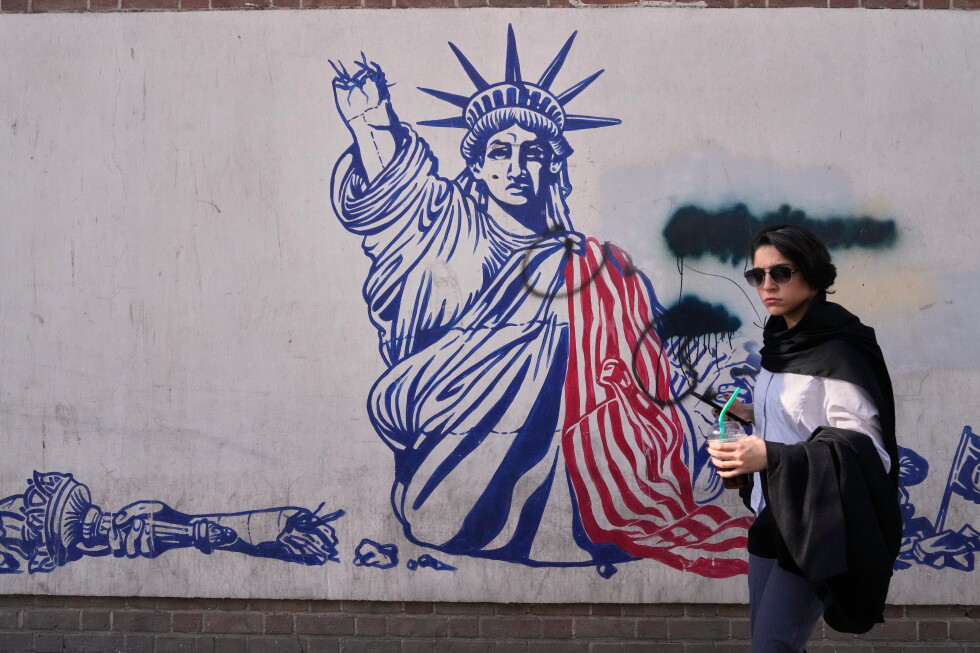
The United States and Iran have reached an interim deal aimed at ending the war and reopening the Strait of Hormuz. A signing of the deal is planned for Friday in Switzerland. However, previous announcements fell through, and what the deal contained remained in dispute Monday. This was reported by Qazaqyia.kz citing Associated Press.
Here's a timeline of the tensions over Iran's atomic program:
1967 — Iran takes possession of the Tehran Research Reactor supplied by America under the "Atoms for Peace" program.
1979 — U.S. ally Shah Mohammad Reza Pahlavi, fatally ill, flees Iran as popular protests against him surge. Ayatollah Ruhollah Khomeini returns to Tehran and the Islamic Revolution sweeps him to power. Students seize the U.S. Embassy in Tehran, beginning the 444-day hostage crisis. Iran's nuclear program goes fallow under international pressure.
August 2002 — Western intelligence services and an Iranian opposition group reveal Iran's secret Natanz nuclear enrichment facility.
June 2003 — Britain, France and Germany engage Iran in nuclear negotiations.
October 2003 — Iran suspends uranium enrichment under international pressure.
February 2006 — Iran announces it will restart uranium enrichment following the election of hard-line President Mahmoud Ahmadinejad. Britain, France and Germany walk out of stalled negotiations.
June 2009 — Iran's disputed presidential election sees Ahmadinejad reelected despite fraud allegations, sparking protests known as the Green Movement and a violent government crackdown.
October 2009 — Under U.S. President Barack Obama, the U.S. and Iran open a secret back-channel for messages in the sultanate of Oman.
July 2012 — U.S. and Iranian officials hold secret face-to-face talks in Oman.
July 2015 — World powers and Iran announce a long-term, comprehensive nuclear agreement that limits Tehran's enrichment of uranium in exchange for the lifting of economic sanctions.
May 8, 2018 — U.S. President Donald Trump unilaterally withdraws the U.S. from the nuclear agreement, calling it the "worst deal ever." He says he'll get better terms in new negotiations to stop Iran's missile development and support for regional militias. Those talks don't happen in his first term.
May 8, 2019 — Iran announces it will begin backing away from the accord. A series of regional attacks on land and at sea blamed on Tehran follow.
Jan. 3, 2020 — A U.S. drone strike in Baghdad kills Gen. Qassem Soleimani, the architect of Tehran's proxy wars in the Middle East.
Jan. 8, 2020 — In retaliation for Soleimani's killing, Iran launches ballistic missiles at two Iraqi bases housing U.S. troops. No U.S. soldiers are killed, but dozens suffer traumatic brain injuries. Later that day, Iran's military accidentally shoots down Ukraine International Airlines Flight 752, killing all 176 people on board.