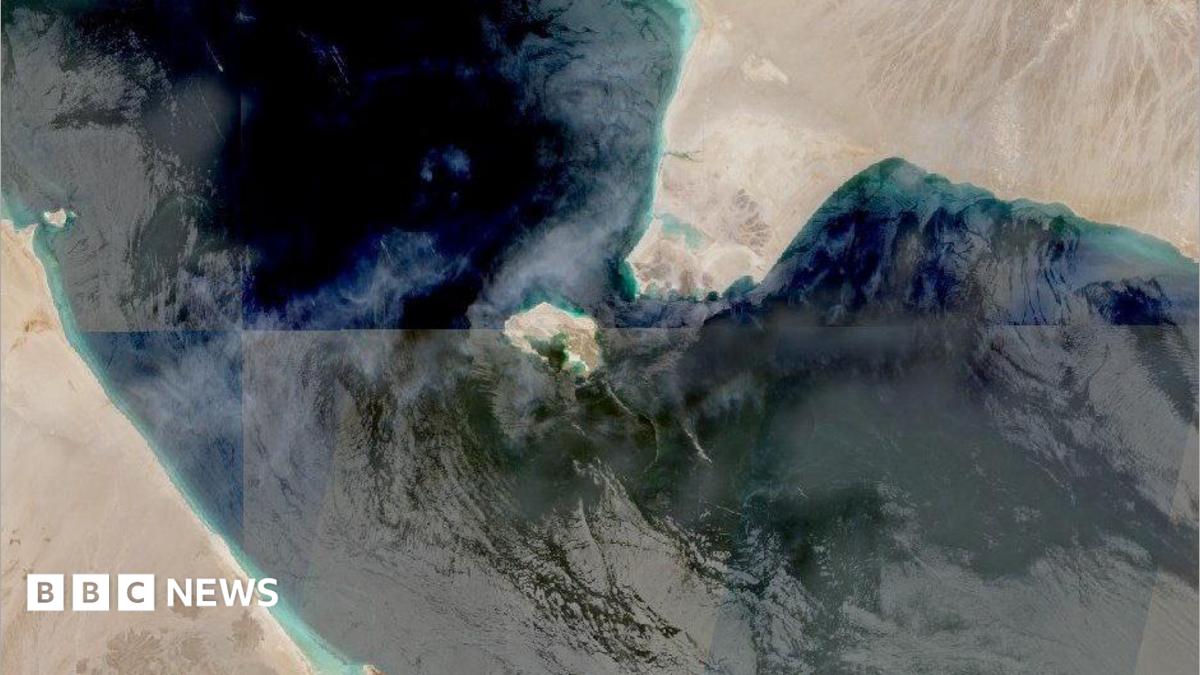
Yemen's Houthi fighters claim to have attacked shipping in the Red Sea, a move that threatens to further escalate the already volatile situation in the Middle East. This was reported by Qazaqyia.kz citing BBC News.
By forcing ships to turn back from the narrow Bab El Mandeb strait, they have threatened to choke off the main maritime route from Europe to Asia. It comes as US-Iran strikes continue and while a deal to develop Saudi Arabia's nuclear industry prompts fears of an arms race.
So far, 2026 is proving to be one of the more violent years for parts of the Middle East. For 12 consecutive nights, US Central Command (Centcom) has carried out air strikes on Iranian coastal radar, drone and missile bases. The Gulf Arab states are having to learn to live with constant attacks from Iran.
Now the Iran-backed Houthis of Yemen have entered the fray, after a 2022 ceasefire with neighbouring Saudi Arabia appeared to have broken down. Two Saudi vessels were hit by missiles in the Red Sea this week, while the Houthis claim to have turned back 10 others after warning ships to avoid Saudi ports.
This matters because, on top of the ongoing disruption to global energy and fertiliser supplies caused by Iran effectively closing the Strait of Hormuz, it is a further obstacle to vital maritime trade. Saudi Arabia has been trying to distance itself from the Iran-US war and has been largely spared the attacks that have rained down on Bahrain, Kuwait and Jordan. With the Strait of Hormuz closed, the Saudis have been able to partially mitigate the disruption to their oil exports by shipping millions of barrels a day through the East-West Pipeline to the Red Sea export terminal at Yanbu' Al-Bahr. From there, they shipped oil to Asia via tankers passing Yemen and the Bab El Mandeb Strait. But not anymore, at least while the Houthis are threatening vessels.
US President Donald Trump has vowed to "take care of the Houthis" but that has not worked before. The Houthis are a Shia tribal group from the far north of Yemen, based around the city of Saada. In 2014, they took over the capital, Sanaa, and later most of the populated parts of Yemen, including the strategic port of Hodeidah. The Saudis went to war with the Houthis in 2015 but failed to defeat them. For two years, from 2023 to 2025, the Houthis attacked what they claimed was Israeli-linked shipping in the Red Sea, and launched missiles at US and British warships. This caused a major diversion of global shipping and higher shipping costs.
As for the wider region, Iraq and Syria are now largely peaceful and stable compared to where they were. The Gaza War is technically in a ceasefire, although Gazans continue to be killed in air strikes. Israel's war with Hezbollah in Lebanon is on hold as the two countries continue negotiations.