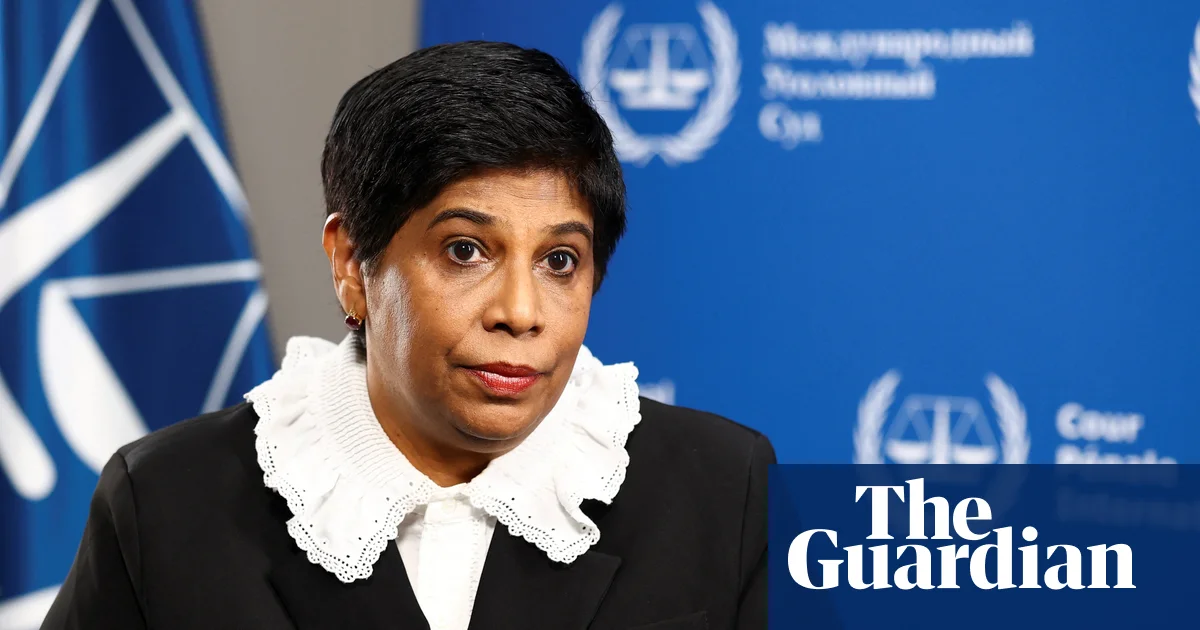
The deputy prosecutor of the International Criminal Court has said new US sanctions are beginning to take effect on its staff but insisted they have not hindered the court’s work. This was reported by Qazaqyia.kz citing The Guardian.
The US secretary of state, Marco Rubio, announced the sanctions this month, accusing the ICC – a frequent target of the Trump administration – of being a “rogue court” and declaring: “Either the ICC will end its threats, or we will end the ICC.”
Nazhat Shameem Khan, who is co-running the office pending the appointment of a new chief prosecutor, said the court was so far continuing its work. She said the Gaza war investigation and others had made “significant progress” since war crimes arrest warrants were issued in November 2024 for the Israeli prime minister, Benjamin Netanyahu, and his former defence minister, Yoav Galant. Further applications from the prosecutor were being kept secret by order of the court, she said.
Some ICC staff had however encountered banking problems, she said, even though the US sanctions on the court were not due to take effect until six months from 9 October, the date of their announcement. She said the banks were “over-complying” to minimise risk while there was uncertainty over the ultimate scope of the measures.
“These are sanctions imposed on the institutions and, in principle, our individual members should not be impacted directly,” the Fijian deputy prosecutor said in an interview with the Guardian. “But again, what I am hearing from members of our staff is that some of them are experiencing difficulties in banking.”
The court is working on insulating itself from sanctions imposed by a hostile administration in Washington. It has switched its software from Microsoft to European alternatives, and is negotiating with relevant service providers over banking and health insurance.
“All the investigations across all situations continue. We haven’t made any decision based on the sanctions to reduce our capability or reduce our output,” Khan said, acknowledging that it was impossible to anticipate the full impact of sanctions when they officially took effect.
The new sanctions target the whole institution of the ICC, but the US first targeted 13 ICC staff in February 2025. Khan was one of them, so is accustomed to dealing with sanctions, which affect aspects of everyday life.
“Life without a credit card is inconvenient. It’s amazing how many things now we cannot do around the world, particularly in relation to travel, without a credit card,” she said, but added that her inconvenience was put into perspective when she visited refugee camps or sites of mass atrocities.
“We see the faces of our victims for whom sanctions and credit cards are completely irrelevant. They just want justice.”
American sanctions are not the only disruption to the ICC prosecutors’ work. Formal investigations began in late November 2024 into allegations of sexual harassment against the former chief prosecutor, Karim Khan. The British jurist (who is no relation to the deputy prosecutor) denied the charges. He was removed in July this year after a vote by member states.
No further charges over the Gaza war have been announced since late 2024. Khan insisted that investigative work on the Israel-Palestine file had only gone quiet because of the court’s ruling earlier this year that all charges and applications for warrants should be kept secret until the judges decide they can be made public.
“Even if we reach a stage of the investigations where it might be imminent, we may not discuss it publicly,” she said. “And so while there might be an appearance that nothing is happening, I can assure you that there’s significant progress in that particular situation as well as others.”
When announcing the sanctions, Rubio gave the ICC a six-month grace period “to negotiate and present a solution to address our concerns” but it is unclear what would satisfy the Trump administration, which has exhibited a longstanding hostility towards the court.
Rubio claimed, without evidence, this month that “globalist ‘experts’ an ocean away” wanted the ICC to prosecute US citizens. Khan said it was unclear who and what Rubio had in mind.
“It is possible that there is a mistaken belief on the part of those who are concerned that we are pursuing Americans, but we certainly haven’t brought any Americans before the court,” she said. “If his reference is to Afghanistan, then in fact the priority for the investigation is in relation to offences committed specifically against women, girls and other vulnerable groups by the Taliban and by the Islamic State Khorasan in Afghanistan.”
This month, four arrest warrants were unsealed by the ICC pretrial chamber against members of the Taliban on charges of gender persecution.
The court registrar for the ICC is in negotiation with the EU over blocking the US sanctions or protecting the court in other ways. There has been support for the court, and on Thursday, the European parliament awarded its Sakharov prize.