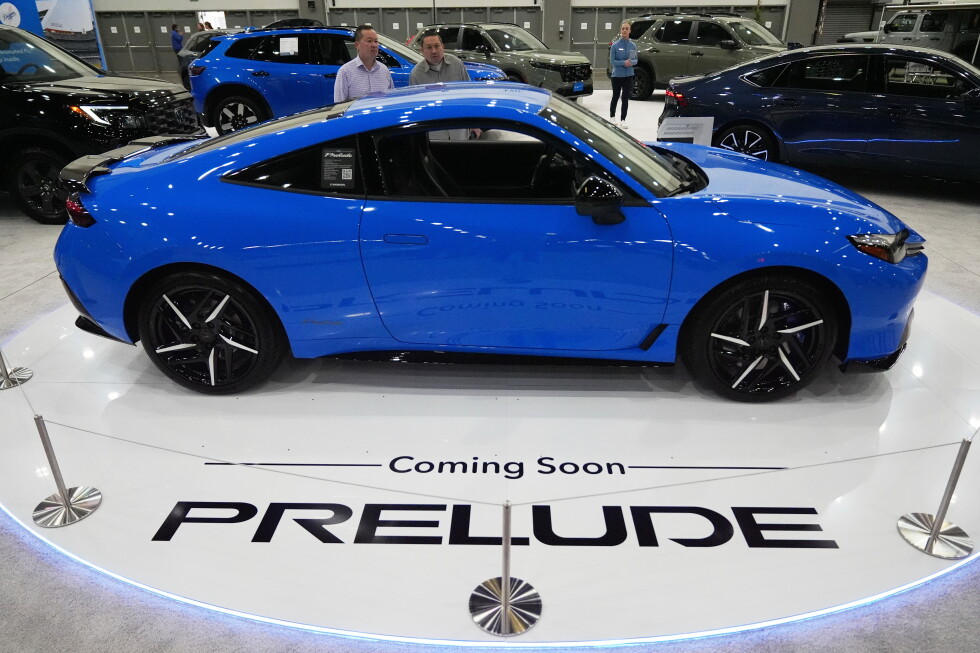
Fun-to-drive coupes have been on the wane in recent decades, so it's worth paying attention when a new one shows up. The Honda Prelude returns after a 26-year hiatus for 2026, and it's got some interesting elements. It comes standard with a frugal hybrid powertrain — which you wouldn't necessarily associate with a performance coupe — combined with a specialized suspension and braking system to enhance handling and stopping. This was reported by Qazaqyia.kz citing Associated Press.
This was reported by Qazaqyia.kz citing Associated Press.
The new Prelude faces off against a small collection of two-door rivals that includes the Toyota GR86, a car that follows the classic formula of rear-wheel drive, an available manual transmission and a low price tag. Which of these two-doors is the better buy? Edmunds' auto experts tested both to find out.
This is where the GR86 makes its strongest case. At Edmunds' test track, a manual transmission-equipped GR86 accelerated from zero to 60 mph in 6.0 seconds. This isn't outrageously quick, but the GR86's 228-horsepower four-cylinder engine has enough power to have some fun on highway entrance ramps or when powering out of corners. Toyota also offers an automatic transmission; that slows the car's acceleration by about a second.
The Prelude's 200-horsepower four-cylinder hybrid powertrain simply doesn't hit as hard as the GR86's. Edmunds' test Prelude needed 7.2 seconds to get to 60 mph. Honda's hybrid system doesn't have a transmission or gears in the traditional sense. It's smooth and great for congested traffic, but you don't get the same level of engagement that you do from revving out the GR86's engine.
The GR86 also draws praise for excellent steering feel and balance that Edmunds identifies as its best traits. The same goes for the Prelude. It's undeniably front-wheel-drive in character, which some drivers prefer less than the GR86's classic rear-wheel-drive merits. But the Prelude is an excellent front-driver with class-leading handling grip.
It's a close call, but the GR86's extra character gives it the win here.
Away from the backroads, the Prelude pulls ahead. Its cabin is more comfortable, with supportive front seats, high-quality materials, and a straightforward control layout carried over from the Civic. The 9-inch touchscreen uses a Google-based operating system, is quick and easy to navigate, and both Apple CarPlay and Android Auto connect wirelessly. Edmunds' editors also like the Prelude's adaptive suspension that allows for a smooth ride on daily commutes.
The GR86 leans harder into its sporting mission, which does nothing for its everyday livability. The cabin is noisy at speed, and the infotainment system feels dated with wired-only phone mirroring. Getting in and out requires some effort because of the car's low stance. It's not uncomfortable, but the Toyota clearly favors the driving experience over ease of use.
The Prelude's hatchback-style trunk holds 15.1 cubic feet, a genuinely useful figure for a small coupe and far more than most rivals offer. The GR86, in contrast, manages just 6.3 cubic feet. And its shallow trunk and small opening severely limit what cargo actually fits, even though the rear seats fold down to swallow a spare set of its own wheels and tires, which adds practicality for track days. But for road trips or even a grocery run, the Prelude has a clear edge.
There's no contest here. The Prelude's hybrid powertrain returns an EPA-estimated 44 mpg in combined city/highway driving, a number the Edmunds team matched in real-world driving. The GR86 earns an estimated 22 mpg with a manual transmission and 24 mpg with the automatic, numbers that reflect the lower efficiency of its traditional gas engine. Plan to spend a lot more for fuel if you choose a GR86.
This is where the GR86 comes roaring back.