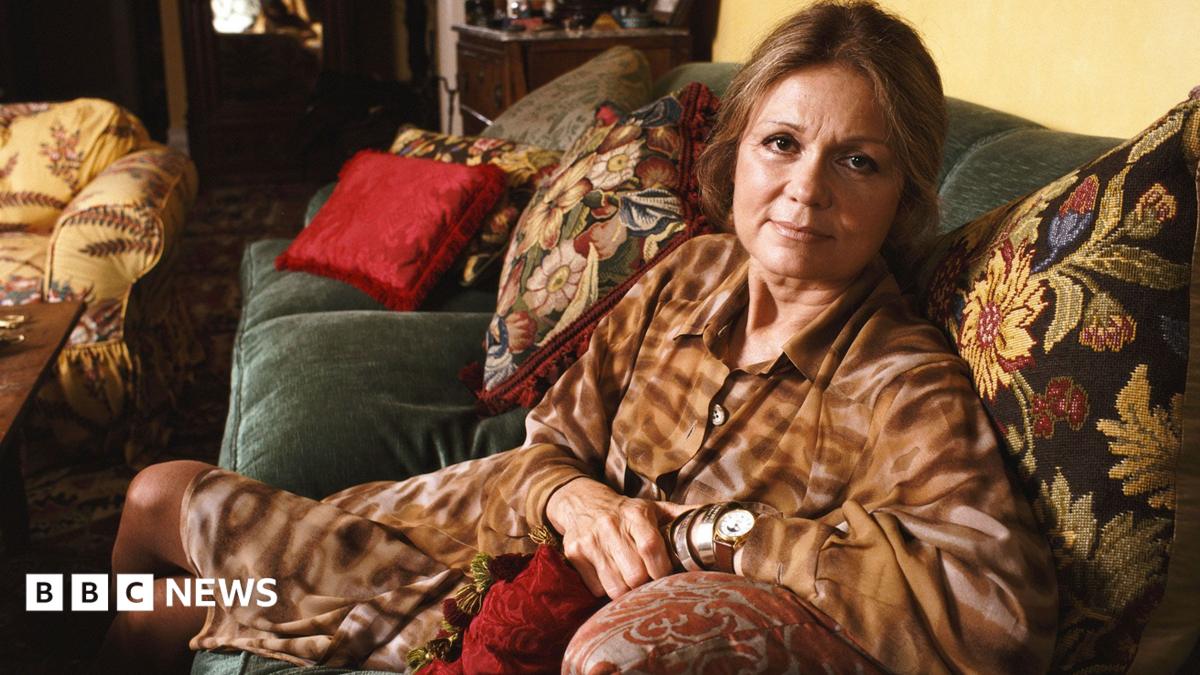
Gloria Steinem was a powerful icon of America's feminist movement, and her career spanned numerous roles that changed the lives of generations of women. This was reported by Qazaqyia.kz citing BBC News.
With her iconic aviator sunglasses and long, blonde-streaked hair - which she considered rebellious in the 1970s - Steinem was an internationally recognised activist in the fight for women's equality.
She spoke out for the legalisation of abortion, same-sex marriage, and equal rights and pay for women, and protested against the death penalty and female genital mutilation.
Her activism was not without a backlash - from both men and women - and harassment that could be as vulgar as it was intimidating.
Born on 25 March 1934 in Toledo, Ohio, Gloria Steinem did not have an easy childhood.
Her father Leo Steinem was a travelling salesman and, together with her mother Ruth and older sister Susanne, they lived in a caravan, crisscrossing the country.
Leo abandoned the family and moved to California when Steinem was 10 years old, leaving her to care for Ruth who had long suffered with mental illness and had terrifying hallucinations.
As a result, Steinem did not go to school full-time until she was 12 years old.
She would later remark that she had never wanted children because she had already had one - her mother.
In the late 1950s she went to India on a research scholarship, and spent two years in a variety of roles, including helping village women organise non-violent protests against government policies, which sparked her interest in grassroots activism.
Steinem left India and moved to New York City in the early 1960s to start her career as a freelance writer. It was a time when male-dominated newsrooms made it difficult for women to get hard-hitting stories.
Her big break came in 1963, when Steinem went undercover as a Playboy Bunny cocktail waitress and wrote A Bunny's Tale, an exposé for Show magazine detailing the seedy and sexist reality of Hugh Hefner's empire.
As soon as she arrived for the interview, a security guard called out, "Here bunny, bunny, bunny."
Using the fake name Marie, she lied about her age - telling Playboy she was 24 years old when she was actually four years older.
Steinem lifted the lid on the underpaid life of a Bunny, and the physical pain of wearing the high-heels and tight corsets for hours.
Despite the fame - and infamy - that followed, she still found herself struggling to be taken seriously by editors.
Though the Playboy exposé helped land her assignments for the New York Times and New York Magazine, often they were about ladies' stockings and the latest hairstyles.
"To this day when people don't like me they introduce me as a former Bunny, as a put-down," she told the New York Times in 2016. "On the other hand, I did improve the working conditions for those women."
Undaunted, by 1968 Steinem was a columnist for New York Magazine, focusing on progressive social issues and women's rights.
Her article, After Black Power, Women's Liberation, brought her national fame, making her the face of the US feminist movement in the 1970s.
"I was the only woman, and after I wrote an abortion article, my [male] friends there said to me: 'Don't get involved with these crazy women. You've worked hard to be taken seriously,'" she told Rachel Cooke for The Guardian in 2011.
In 1972, she launched Ms. magazine with a group of feminist activists. It was the first all-female founded and operated periodical, designed to be an alternative to other women's magazines that typically focused on housekeeping and fashion.
Critics - mainly men - were quick to write it off. News presenter Harry Reasoner said he gave it six months "before they run out of things to say".
The first issue sold out within a week and generated 26,000 subscribers. The magazine is still going today.
In 1978, Steinem wrote one of Ms. magazine's most infamous and widely read essays - If Men Could Menstruate.
Her satirical reflection on how different power, political and economic structures might be if men had menstrual cycles is still referred to in discussions about gender roles.