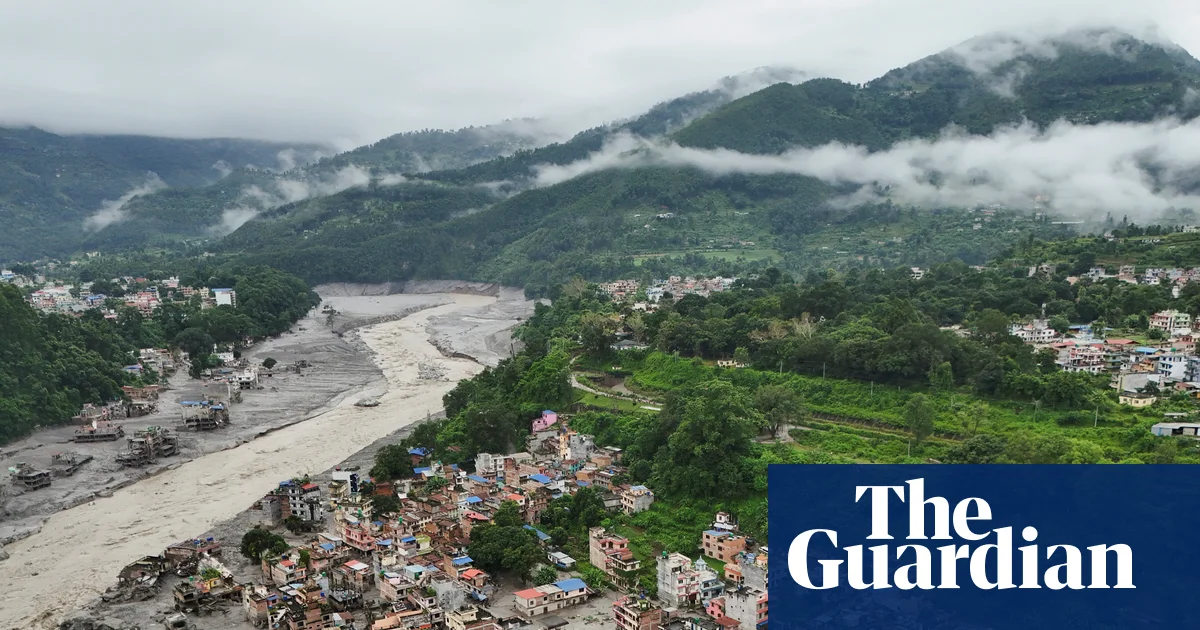
The devastating floods in Nepal have left dozens of Indian families desperately searching for missing loved ones. Social media is flooded with pleas, photos, and details of people from Mumbai to Kolkata, posted by families seeking any trace of life. This was reported by Qazaqyia.kz citing The Guardian.
The disaster occurred when a melting glacier slammed into the valley, unleashing a deadly cascade of rock and ice down the Bhote Kashi River, which flows from Tibet into Nepal. Among the 275 Indians missing are workers of a hydropower project and pilgrims heading to Mount Kailash in Tibet. Another 128 people of Indian origin, including a large group from Sadhguru's Isha Foundation, are also missing; 149 Indians have been rescued as of Monday.
Gauri Joshi, whose five relatives remain unaccounted for, said they cleared immigration at the Gyirong border between Nepal and Tibet and boarded buses shortly before the flood waters destroyed the crossing. "Chances appear very bleak now. But maybe a miracle will happen," Joshi said.
Expert insights
Dr Ashim Sattar, a professor at Indian Institute of Technology Bhubaneswar and an expert on glacial lake outburst floods, explained the climate-related risks in the Himalayas. He identified three cryospheric hazards: glacial lakes, glacier ice, and permafrost. The Nepal event was caused by a glacier detachment, while permafrost degradation could lead to more frequent debris flows in the future.
"With climate change, these grounds will go above zero degrees and will start to degrade. We might expect a higher frequency of debris flows in the future," Sattar said. He noted that monitoring the vast Himalayas is challenging, requiring scientific investigation.
Risks for India
Sattar stated that in the Indian Himalayas, the number, size, and volume of glacial lakes are increasing, posing a direct threat. "The risk exists because it might happen any time," he said. Eastern Himalayan lakes have reached their maximum extent, while western and central lakes continue to grow.
Early warning systems
India's National Disaster Management Authority is taking proactive steps with the Glacial Lake Outburst Flood (GLOF) Risk Mitigation Programme to install early-warning systems. Sattar emphasized the importance of community involvement: "Maybe an early warning system should be community-based. It should be for the people and by the people."
Experts agree that climate change in the Himalayas poses a significant threat to India, requiring urgent attention.