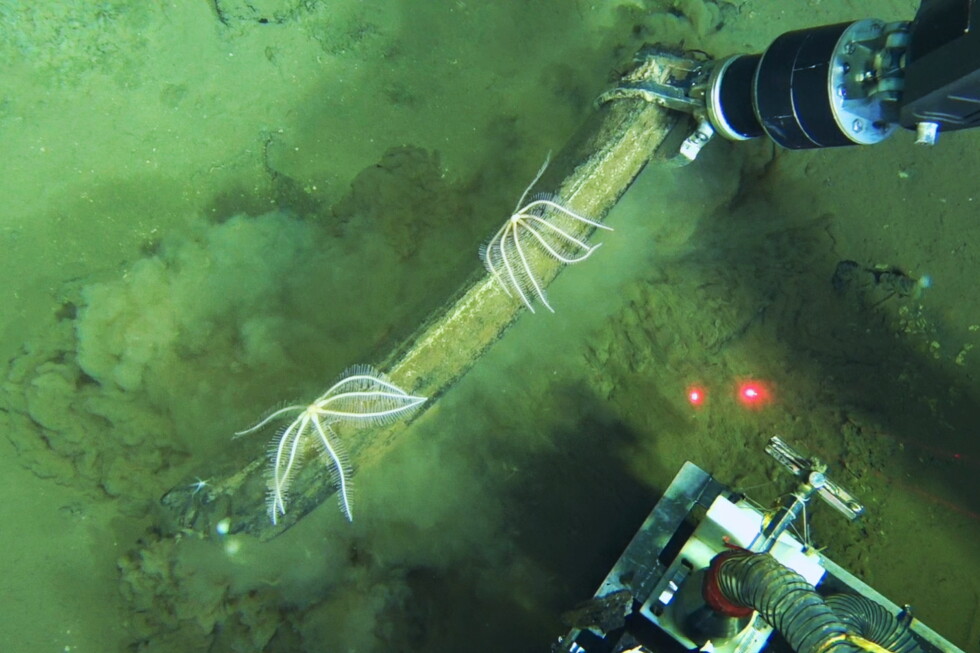
Scientists have discovered communities of marine life, including jellyfish, tubeworms and brittle stars, thriving on a millions-year-old whale graveyard in the southeastern Indian Ocean. This was reported by Qazaqyia.kz citing Associated Press.
These graveyards form when whale carcasses fall to the sea floor, becoming a sustaining snack for nearby critters. This one, located up to 7 kilometers below the surface, spans the largest area and is the deepest and oldest found. Researchers explored the remains during multiple deep-sea submersible trips in 2023, collecting samples and mapping the extent of the necropolis. They found five carcass sites and fossils, including skulls belonging to beaked and baleen whales. The oldest bones date back 5.3 million years.
A whale's sheer size and the unique chemistry of its bones are the keys to forming these unique underwater neighborhoods, said Xikun Song, a biologist with the Chinese Academy of Sciences' Institute of Deep-sea Science and Engineering. "At the same time, the very nature of the deep ocean makes these sites exceptionally difficult for scientists to locate," Song wrote in an email.
Feeding and living on the carcasses were myriad creatures, including sea cucumbers, squat lobsters, jellyfish, tubeworms and brittle stars.