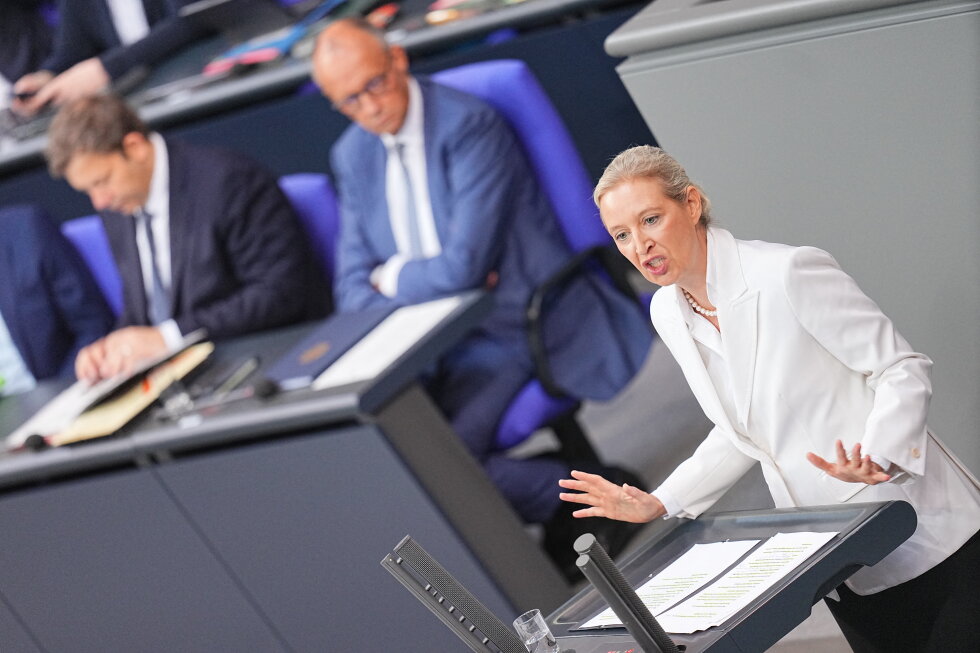
During the general debate in the Bundestag on the budget in Berlin, the leader of the far-right party Alternative for Germany (AfD), Alice Weidel, taunted Chancellor Friedrich Merz. This was reported by Qazaqyia.kz citing Associated Press.
In the eastern state of Saxony-Anhalt on Sunday, the AfD surged to its biggest win yet, defeating the chancellor's center-right Christian Democratic Union (CDU). This has increased pressure on Merz.
In her speech, Weidel highlighted the defeat of Merz's party in the election, calling him "having lost the trust of the people." She also spoke of the AfD's growing influence in the country.
Merz responded that the AfD will not win a majority in the country, criticizing their stance toward Ukraine and rhetoric on migration. He called the AfD's policies "contrary to national interests."
The election results in Saxony-Anhalt showed the AfD's growing influence in eastern Germany. Experts see this as a sign of political instability in the country.
In his speech, Merz sharply criticized the AfD's stance on migration policy, calling their proposals "unrealistic." He also noted that the AfD opposes military aid to Ukraine, which threatens the country's security.
This event shows the aggravation of the political situation in Germany. The rise in popularity of the AfD is linked to a decline in trust in traditional parties.
Merz said his party will work to win the upcoming federal elections. He expressed confidence that the majority of Germans will not support the AfD's policies, despite their promises.
Weidel, in turn, said the AfD will continue to increase its influence in the country. She expressed hope that the party will perform even better in future elections.
Political experts in Germany see this as a significant change in the country's political landscape. They note that the rise of the AfD is linked to growing discontent over immigration and economic issues.
Merz acknowledged the AfD's victory in the election but said they will not be able to govern the country. He stressed that his party will work to win the trust of the people in the future.
This event shows that political struggle in Germany is intensifying. The rise in popularity of the AfD is accompanied by a decline in trust in traditional parties.
In his speech, Merz criticized the AfD's stance on Ukraine, noting their too-close relations with Russia. He said Germany will continue to support Ukraine.
Weidel, in turn, said the AfD puts Germany's interests first and demands an end to aid to Ukraine. She noted that these measures harm the German economy.
The political situation in Germany may worsen further in the coming months. The rise of the AfD is intensifying the conflict between political parties.
Merz repeated that, despite the AfD's victory in the election, they will not be able to win a majority in the country. He said his party will make every effort to win the upcoming elections.
This event reflects an important moment in Germany's political life. The rise in popularity of the AfD could change the political balance in the country.
In his speech, Merz sharply criticized the AfD's stance on migration policy, calling their proposals "dangerous." He noted that Germany supports legal immigration but opposes illegal migration.
Weidel, in turn, said the AfD proposes to sharply restrict immigration, which will ensure the country's security. She stressed the need to protect Germany's culture and traditions.
Political experts in Germany see this as an important event affecting the country's future. They note that the rise of the AfD could lead to a change in the political system.