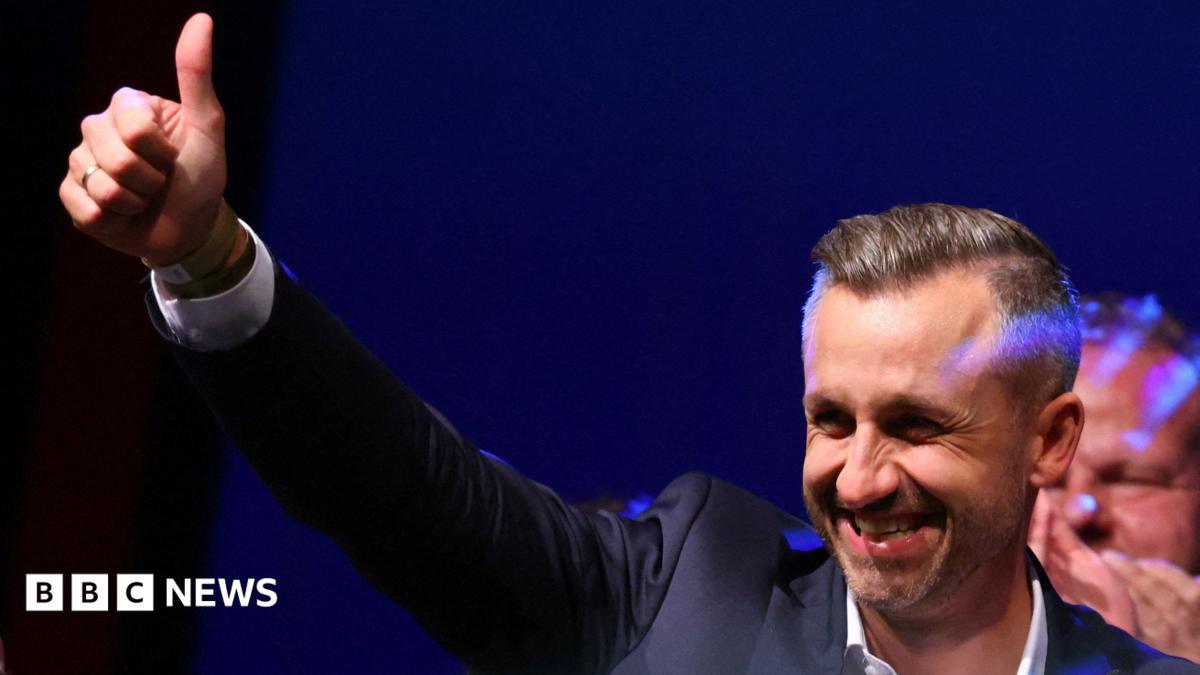
The stunning victory of the anti-immigration Alternative for Germany (AfD) party in local elections in Saxony-Anhalt has been described by political analysts and media as "seismic", "a socio-political earthquake" and "a watershed moment for Germany". This was reported by Qazaqyia.kz citing BBC News.
Saxony-Anhalt is one of the smallest of Germany's 16 regions, with only 1.7 million of the 59 million eligible voters nationwide. However, the significance of this vote is great, as the result impacts at the national level, even though the AfD narrowly failed to win an outright majority.
The AfD landslide piles even more pressure on the already beleaguered centrist coalition government in Berlin. It may prove to be the nail in the political coffin of Germany's deeply unpopular conservative Chancellor, Friedrich Merz, who had promised to slash the AfD's popularity.
The Saxony-Anhalt result also provokes soul-searching throughout Germany, where the Nazi past still looms large. This is the first outstanding electoral landslide for a hard-right nationalist party since the fall of the Third Reich in 1945.
The German authorities have labelled the AfD, in part, anti-democratic, and a number of regional factions of the party, including Saxony-Anhalt, far-right extremist. The AfD is particularly popular in east Germany, but it's now also polling as the biggest political party nationwide.
This event is causing waves outside Germany too. US President Donald Trump swiftly posted the Saxony-Anhalt exit poll on his Truth Social platform on Sunday. The AfD's anti-immigration, "Germany for Germans" message chimes closely with Trump's MAGA missive. Along with other nationalist parties in Europe, the AfD borrows heavily from the Trump playbook - undermining mainstream media, questioning the neutrality of judges and promising to "make Germany great again".
Hot on Trump's heels was influential Russian businessman Kirill Dmitriev, CEO of the Russian Direct Investment Fund. He declared the AfD result "historic", Germany's national government "discredited" and the Chancellor "humiliated", comparing Friedrich Merz to the UK's not-long-gone prime minister, Keir Starmer, who felt forced to resign this summer.
The German government is the largest single donor to Ukraine, and the UK is known to have provided Kyiv with missiles used to strike inside Russian territory. This has deeply angered Moscow. The AfD, by comparison, is pretty pro-Russia. It wants to stop sending military aid to Ukraine, halt sanctions against Moscow and start buying much cheaper Russian energy again. Energy-hungry German industry suffered a huge economic blow after the country halted Russian energy imports following the 2022 full-scale invasion of Ukraine.
The AfD's softly-softly approach to Russia has another appeal in Germany's east, which remains far poorer than the west. Germany has spent between 2.3 and 3 trillion euros (depending on reports and whether inflation is taken into account) to help integrate the former communist part of the country after the 1989 fall of the Berlin Wall. Saxony-Anhalt is Germany's poorest region, and there, as in much of east Germany, you often encounter "Ostalgie" - nostalgia for comparatively more stable times under communism.
The European Union also watched the Saxony-Anhalt election closely. The next 12 months is a bumper election season across the EU, with ballots expected in key nations France, Italy, Spain and Poland. Brussels fears more "extreme" parties, particularly on the right, may benefit. The leader of Spain's nationalist Vox party, Santiago Abascal, posted on X that the AfD victory was "a great hope for Germany and for Europe". By contrast, France's Europe Minister, Benjamin Haddad, warned "this is a serious moment in Europe, seeing the far right win in a regional election in Germany".
Neither the AfD nor other parties labelled "extreme right" or "hard right" accept the label. They also differ from one another in tone and party programme. France's National Rally under Marine Le Pen kicked the AfD out of its grouping in the European Parliament two years ago for being too "radical". What the parties do tend to share, however, is an anti-immigration platform and strong nationalist messaging. And that really worries the EU. Whether it's a rallying cry for "Germany First" or "Italy First" or "France for the French!", the concern in Brussels is that the rise of nationalist parties strains European cohesion at a time when outside events demand it more than ever.