The German government has blamed Russia for the drone attack on Leipzig airport last month, calling it “dangerous behaviour” and part of a systematic and concerted effort by Moscow to “cause great damage” through a large number of hybrid attacks. This was reported by Qazaqyia.kz citing The Guardian.
The interior minister, Alexander Dobrindt, and the foreign minister, Johann Wadephul, ended weeks of speculation and the government’s hesitancy to blame Russia, saying in a brisk 10-minute briefing in Berlin that all indications were the Russian state had provided the knowhow and equipment for the planned attack and “low-level agents” were recruited to carry it out.
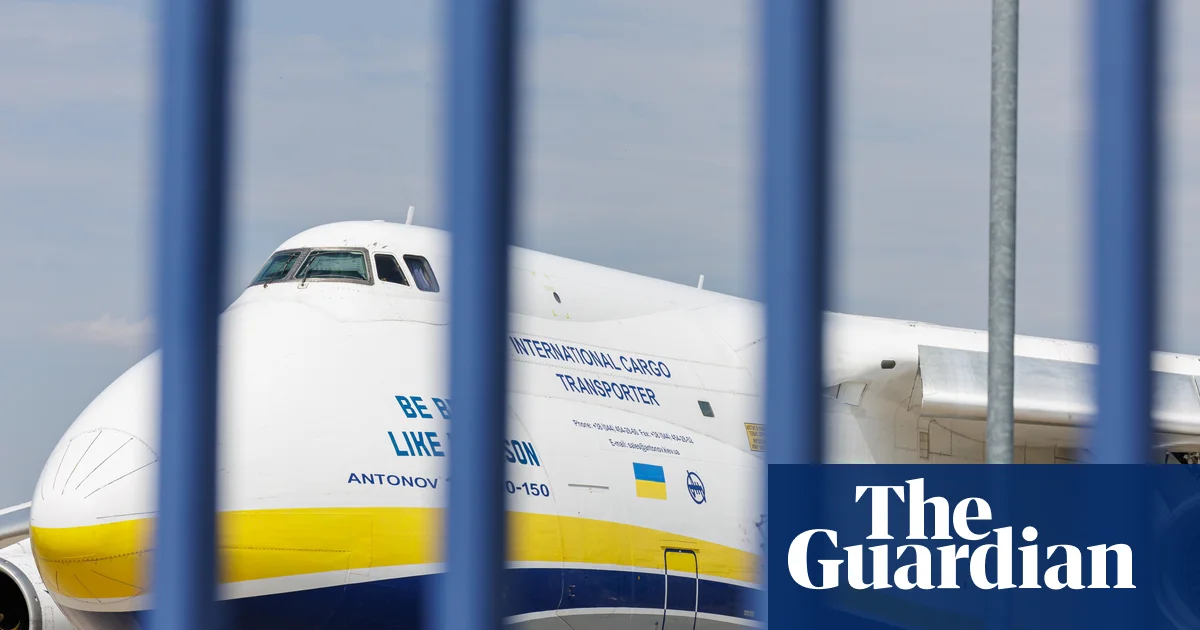
A drone loaded with explosives was discovered at Leipzig/Halle airport on 4 August attached to the wing of a Ukrainian Antonov cargo plane used to transport weapons to Ukraine. It failed to detonate but could have caused a catastrophe, authorities said.
Russia will face a package of penalty measures, Wadephul said, adding that the German government saw “a need for appropriate and necessary action in this situation”. It would respond “to this hybrid attack in Leipzig with proportionate and measured, yet equally resolute, action”, he said. “We are not at war, but we are a daily target of hybrid warfare.”
He added: “The dangerous behaviour of the Russian Federation is part of attempts at destabilisation, disinformation, threats, sabotage and aggression.” Berlin regretted the abysmal state of its relations with Moscow, he said.
The EU expressed “full solidarity” with Germany over the attack, and Nato assured Berlin that it would defend its members.
The Russian ambassador had been summoned to the foreign ministry at that very moment to be informed of the consequences, Wadephul said. The Russian consulate in Bonn will be closed later this month, and Russian House, a sprawling cultural and science institute in the centre of Berlin, which is alleged to house Russian spies and to have been the launchpad for a number of hybrid attacks carried out in Germany over the past few years, is to be turned out of its rented building.
A clampdown on Russia’s shadow fleet – illegal ships carrying Russian oil and other supplies in the Baltic and North seas – is also planned. Sweden and Finland track and disrupt the shadow fleet but Germany does not, so vessels regularly opt to sail via German waters in its foreign economic zones.
New lists of people on a blacklist would be drawn up and tighter border controls of Russians entering Germany would be carried out, Wadephul said.
Parallel to these moves, Berlin is also backing the European Commission’s 22nd package of sanctions, to cover a further 1,600 companies and organisations with a Russian connection.
Responding to Germany’s announcement, Russia’s foreign ministry spokesperson, Maria Zakharova, said Moscow would respond to what she called Berlin’s “anti-Russian action”, according to the Interfax news agency.
The government has previously said it does not intend to directly involve Nato by invoking article 4 of the alliance. However, its Nato and European partners were informed about the investigation and agreed on the planned consequences, Wadephul confirmed.
The Nato secretary general, Mark Rutte, and the European Commission president, Ursula von der Leyen, promised “full solidarity” with Berlin.
Rutte said Berlin had put forward clear evidence of Moscow’s role in the “hybrid attack” and welcomed the measures announced in response, while von der Leyen vowed to “keep the EU united despite these escalating and serious acts”.
Tuesday’s announcement marks the first time the German government has concretely named Russia as responsible for the attack.
It marks the lowest point in decades for relations between Russia and the EU’s largest member, which had already plunged after Russia’s full-scale invasion of Ukraine.
This weekend will see a critical election in the eastern states of Saxony-Anhalt and Mecklenburg Vorpommern, in which the war in Ukraine and relations with Russia have been a focal point.
The far-right populist Alternative für Deutschland, which is pushing a pro-Russia agenda as it seeks to win an absolute majority in Saxony-Anhalt, has accused the government of double standards over its treatment of Russia. Urging the government to prove Russia’s involvement in the Leipzig incident earlier this week, it said the same rigour should be applied to investigations into the attack on the Nord Stream pipeline, for which Ukraine is alleged to have been responsible.
The drone in the Leipzig incident was carrying 600g of explosives and was discovered in the security area of the airport close to Ukrainian Antonov cargo planes on the night of 4-5 August. The explosive device detonator appeared to have failed. A second drone was believed to have been part of the planned attack but investigators have since thrown doubt on that theory. Traces of the military explosive hexogen were found on the edge of the airport on 14 August along with a further drone, investigators confirmed. Had the devices exploded they could have caused a catastrophe.