The International Committee of the Red Cross has said the risk that the thousands of Palestinians buried beneath Gaza's rubble may never be identified is increasing by the day, as recovery efforts remain slow and many victims have yet to be retrieved. This was reported by Qazaqyia.kz citing The Guardian.
"There is no doubt that these bodies could soon become difficult to identify," said Pat Griffiths, the ICRC spokesperson in Jerusalem. "The longer it takes for human remains to be recovered, the more difficult it can be to identify them. The longer the deceased lie beneath the rubble, the more likely they will be in advanced stages of decomposition – even skeletonised – when eventually recovered." He added: "Forensic experts lose access to circumstantial evidence that can be used to corroborate their identity."
Since the fragile US-brokered ceasefire took hold in October, Palestinians have started digging through an estimated 61m tonnes of debris, about 20 times the combined amount generated by conflicts worldwide since 2008. Beneath the rubble, at least 10,000 people are thought to be buried, according to health officials in Gaza. Some experts believe the number could be as high as 14,000.
Rescue teams have so far been forced to rely on rudimentary tools – shovels, pickaxes, wheelbarrows, rakes and hoes – as well as their bare hands. Repeated requests for Israel to allow the entry of excavators and other heavy machinery, which would significantly speed up recovery efforts, have gone unanswered. "Search and recovery teams need access to all sites where human remains are thought to be located," Griffiths said. "We know that much of this machinery and equipment remains almost impossible to bring into Gaza right now. And it remains our call, and part of our ongoing direct dialogue with the relevant authorities, to allow the entry of these items and equipment into Gaza."
The longer it takes to retrieve a body, the harder it becomes to identify – including by using DNA. Dr Cristina Cattaneo, a professor of forensic pathology at the University of Milan, said: "Time, ultimately, is the greatest enemy of identification. When it comes to identification, the more time passes, the slimmer the chances of success. In the early stages, if a body is relatively well preserved, the face and other distinguishing features may still be recognisable. As time passes, many of the features that allow for a reliable identification are lost."
When human remains are recovered, forensic experts can use age, sex, height, fingerprints, dental records and personal belongings, alongside details about where and when the body was found, to establish an identity. But the ICRC says the longer bodies remain unrecovered, the greater the risk that such evidence is lost. Remains can be displaced from their original location, personal effects destroyed or scattered, and environmental conditions – humidity and animal activity – can erase vital clues needed for identification.
Dr Ahmed Dahir, Gaza's forensic medicine director, said: "In some cases, we were surprised to find that a person reported missing for only two weeks had turned into bones bearing signs of animal scavenging, with nothing left but bones. Under normal conditions, reaching this stage due to environmental factors and weathering usually takes between six months and one year."
Witnesses have also raised concerns that Israeli military bulldozers operating in areas controlled by the Israel Defense Forces may be moving bodies still buried beneath the rubble, making it harder for families to locate and recover their loved ones. The ICRC said it could not single out specific groups. "But what we can say is that certainly, in any armed conflict in any part of the world, heavy machinery must be used with incredible caution so as not to disturb human remains – to maintain the dignity of the deceased, but also to ensure that crucial information that could be used to identify them isn't lost."
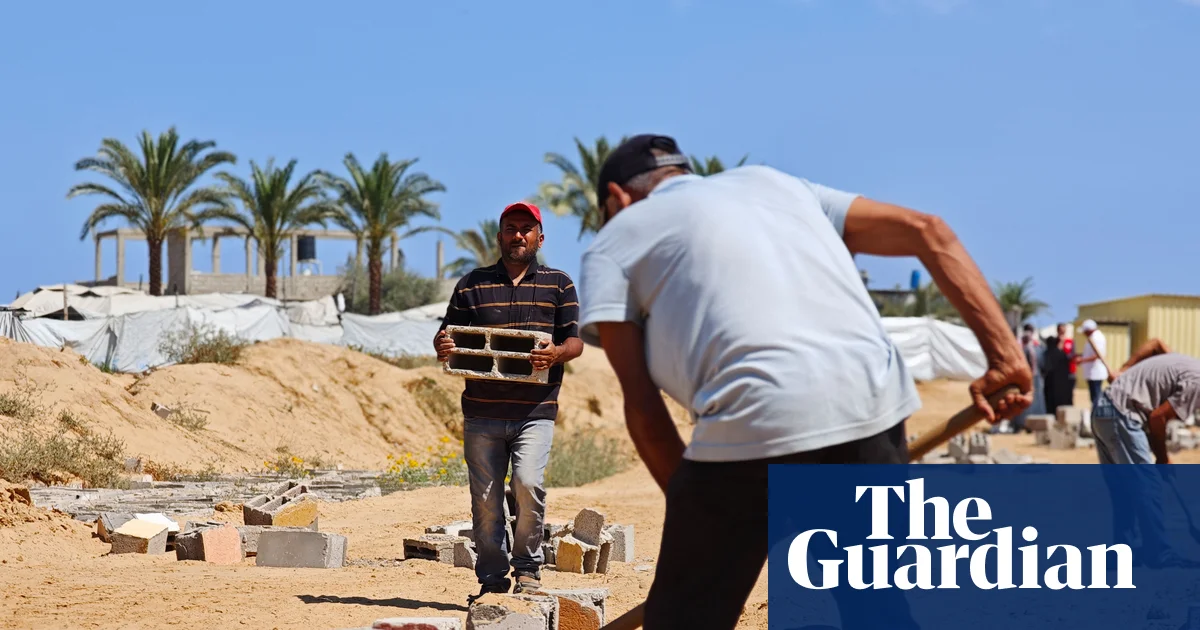
A cemetery was established in Deir al-Balah to bury and preserve unidentified bodies recovered from the rubble and other temporary burial sites, with each grave numbered and documented in the hope that the remains could one day be identified and returned to their families. "The number of bodies buried in this cemetery has now exceeded 650," said Ziad Obeid, the director of the cemeteries department in Gaza. "Today, we are approaching three years since the beginning of the war, and some bodies have now been buried for more than two years."
Further worsening the situation, the few remaining hospitals in the territory lack the equipment for DNA testing, which is desperately needed to help identify the deceased. Israel does not allow DNA testing materials to enter Gaza. But genetic material, too, can deteriorate over time. "The passage of time also affects DNA, increasing the risk of degradation and making identification progressively more difficult," Cattaneo said. "A genetic match that might have been rapid and highly reliable a few weeks earlier can become far more complex months later."
Identifying the bodies is not just a question of restoring dignity.