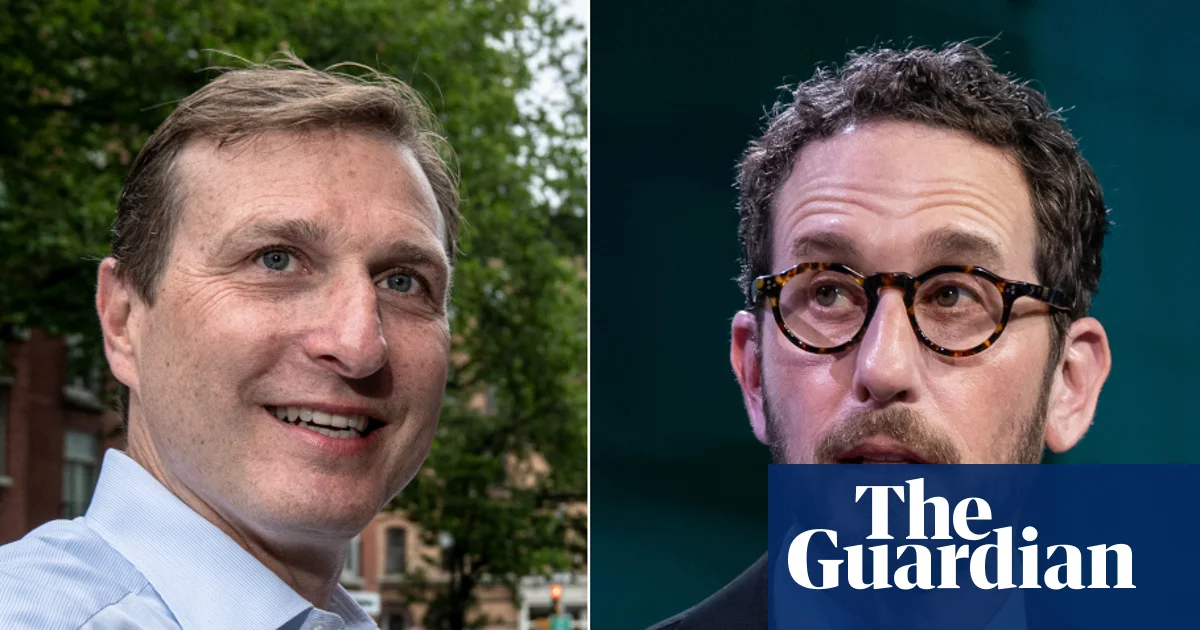
Two recent incidents involving US congressional candidates on opposite coasts have blown up into major controversies, underscoring how the Israel-Palestine conflict has transformed US elections – and illustrating how aggressive protest tactics can spark backlash that overshadows the issues activists meant to highlight. This was reported by Qazaqyia.kz citing The Guardian.
Scott Wiener, a gay Jewish state senator and trans rights advocate who is currently the frontrunner in the race to replace the longtime representative Nancy Pelosi in California’s 11th district, said he felt forced to leave last week’s annual trans pride march in San Francisco after a group of people ran up to him at a local park where the event was taking place, surrounded him and screamed at him over his positions on Israel’s war on Gaza. “They were so physically and verbally aggressive that it was impossible for me to safely remain in the park,” Wiener said in a statement shortly after the incident, which was also filmed and shared on social media by a local activist. The video shows activists surrounding Wiener and screaming profanities at him, with one of them at one point saying: “You stopped being queer the moment you started supporting Israel.” “I have no objection whatsoever to anyone disagreeing with me, opposing me or protesting me,” Wiener said. “But when opposition and disagreement transition to harassment, including cornering me, touching me or trying to physically bully me out of a public event, that crosses a line.” The episode sparked widespread condemnation from scores of elected officials – including Pelosi and Wiener’s opponent in the congressional race, Connie Chan.
The other incident occurred last month in New York City, where a Brooklyn coffee shop said in a since-deleted social media post that had staff recognized him, they would have turned away the Democratic congressman Dan Goldman, who had been at the cafe with his daughter earlier that day, over his support for Israel. “We don’t serve racists, fascists, homophobes, genocide enablers, or anyone in between,” the post read. The incident sparked immediate backlash, with some accusing the shop of antisemitism. The US justice department’s civil rights division has said it is investigating the cafe for potentially discriminating against a patron “based on their race, religion or national origin”. In an interview with CNN, Goldman called the episode “sad” but said he would rather the justice department spend its resources “investigating antisemitism against people who do not have a platform that I do, who are not elected officials”.
Goldman, an Israel supporter who was endorsed by the American Israel Public Affairs Committee (Aipac) and received funding from aligned political action committees, has since lost his primary to Brad Lander. Both are Jewish, but Lander is far more critical of Israel, a stance that helped propel him to a resounding victory in the progressive Brooklyn and Manhattan district Goldman had represented. Goldman has since said that his support for Israel has cost him the election. “Ultimately this really did come down to Israel-Gaza,” he said in an interview with CNN. “It has taken on a massive and outsized role in Democratic politics.”
Goldman’s loss was perhaps the most vivid example of how reflexive support for Israel – once viewed as a prerequisite for political viability – is no longer a safe bet, and many otherwise progressive Democrats are learning that the hard way as a number have lost seats in recent primaries to unabashedly pro-Palestinian challengers. “It used to be that politicians on the broader left could be progressive on many issues except for Palestine, but that’s really not the case anymore,” Ashik Siddique, co-chair of the Democratic Socialists of America, which has backed many such candidates, said in a recent interview. “It has become a very clear litmus test.”
A week after the confrontation between Wiener and the pro-Palestinian protesters in San Francisco, some Jewish activists have denounced the ensuing backlash as a distraction from the crimes against Palestinians that were the protesters’ focus. Wiener, who is known as one of California’s more progressive state legislators, has introduced a number of pro-LGBTQ+ bills, even as he has faced criticism from some San Francisco leftists on other issues, including homelessness and housing. But he has faced the most pointed backlash, including from Jewish and trans constituents, over his initial hesitation to name Israel’s actions in Gaza a “genocide”, as well as his championing of state legislation aimed at combating antisemitism in schools that critics say undermines teachers’ ability to speak truthfully about Palestine. Wiener has been critical of the government of Benjamin Netanyahu and has said that if elected to Congress he would not approve US military aid to Israel. But at a January debate he declined to describe Israel’s actions in Gaza as genocide. He subsequently embraced the term in a video statement, leaving pro-Palestinian critics dissatisfied that his changed stance came too late, and pro-Israel ones accusing him of having caved to pressure.
As controversy surrounding the incident at the trans march escalated over the past week, the protest’s organizers issued a lengthy statement saying that Wiener was “at no point in danger” and that his departure was “voluntary”. However, the statement did not quell the debate.