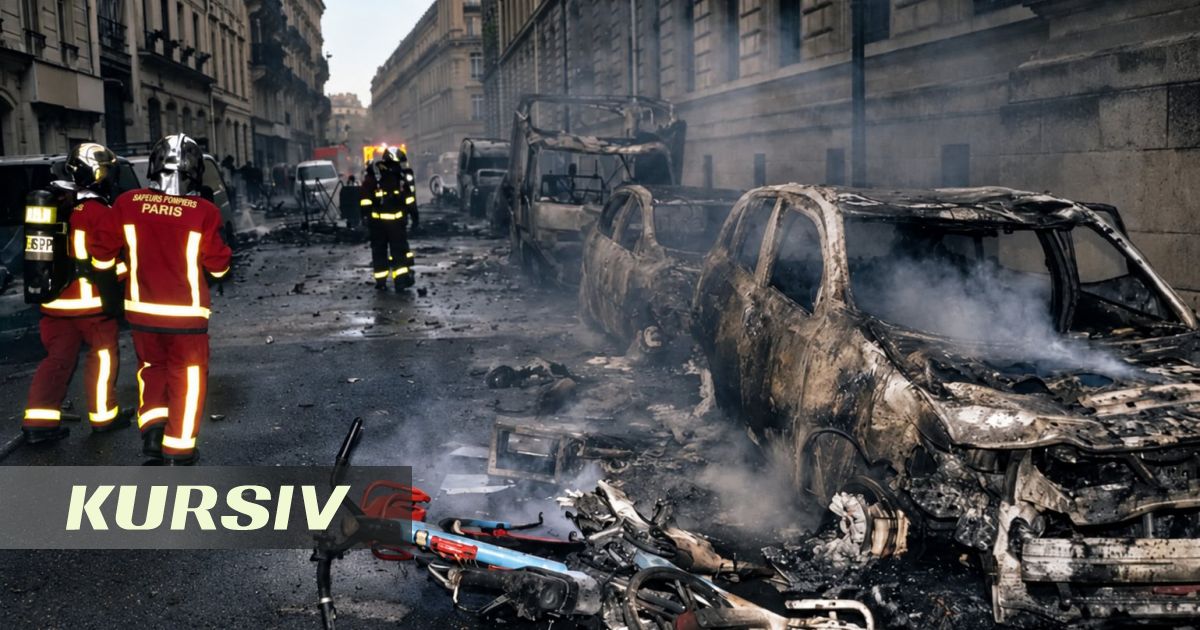
French authorities will strengthen security measures ahead of new protests planned for October 24. Police and gendarmes will be supported by special units, helicopters and armored vehicles, while military personnel will guard key facilities. After mass unrest in several cities, local curfews were extended. This was reported by Qazaqyia.kz citing Kursiv Media.
Prime Minister Sébastien Lecornu promised a large-scale deployment of security forces. He acknowledged that during the October 17 protests, the authorities made mistakes: intelligence information was insufficient, and police units were too static.
"The deployment of forces next Saturday will be large-scale," Lecornu said.
Interior Minister Laurent Nunez also acknowledged his share of responsibility for what happened.
According to the head of the Interior Ministry, the government intends to increase the number of police and gendarmerie units involved and to use helicopters and armored vehicles. The main emphasis will be on mobility and the ability to respond quickly to the actions of small, scattered groups of rioters.
Nunez also did not rule out banning undeclared demonstrations and actions whose organizers cannot ensure order. The authorities propose routing marches away from government buildings and shopping streets.
According to reports on the evening of October 20, the situation became calmer after restrictions were introduced. Police and gendarmerie reported that the night of October 19-20 passed without significant incidents. The government decided to continue the practice of local curfews where it considers necessary. The restrictions affect certain areas of cities.
In Paris, for the night of October 20-21, a ban on movement from 23:00 to 06:00 has been established in certain zones — Place de la République and the Les Halles area. In Lyon, the curfew in the city center was extended for the period from 21:00 to 06:00. In Marseille, restrictions were introduced for minors unaccompanied by adults.
At the same time, protests continue, although their scale has decreased. According to Associated Press, on October 20, about 400 people took to the streets in Rennes, and about 750 in Lyon.
According to Trade Minister Serge Papin, about 3,000 retail businesses were affected over the weekend, including almost 700 in Marseille.
The government announced assistance to businesses. From October 23, affected entrepreneurs will be able to apply for loans of up to 50,000 euros. For employees of businesses forced to close, a mechanism for compensating part of their wages has been provided.
The protest movement began in September with high school students speaking out against learning conditions. Later they were joined by participants opposing the rising cost of living and the deterioration of public services.
On October 17, actions took place across the country. The French Interior Ministry estimated the number of participants at 550,000, while organizers estimated about 800,000. Most marches were peaceful, but in a number of cities there were clashes with police, arson and looting of shops.
Earlier, Kursiv wrote that mass protests and unrest in France have intensified the political crisis around President Emmanuel Macron. Amid the pogroms, economic problems and public discontent, even his former allies began discussing his early resignation.