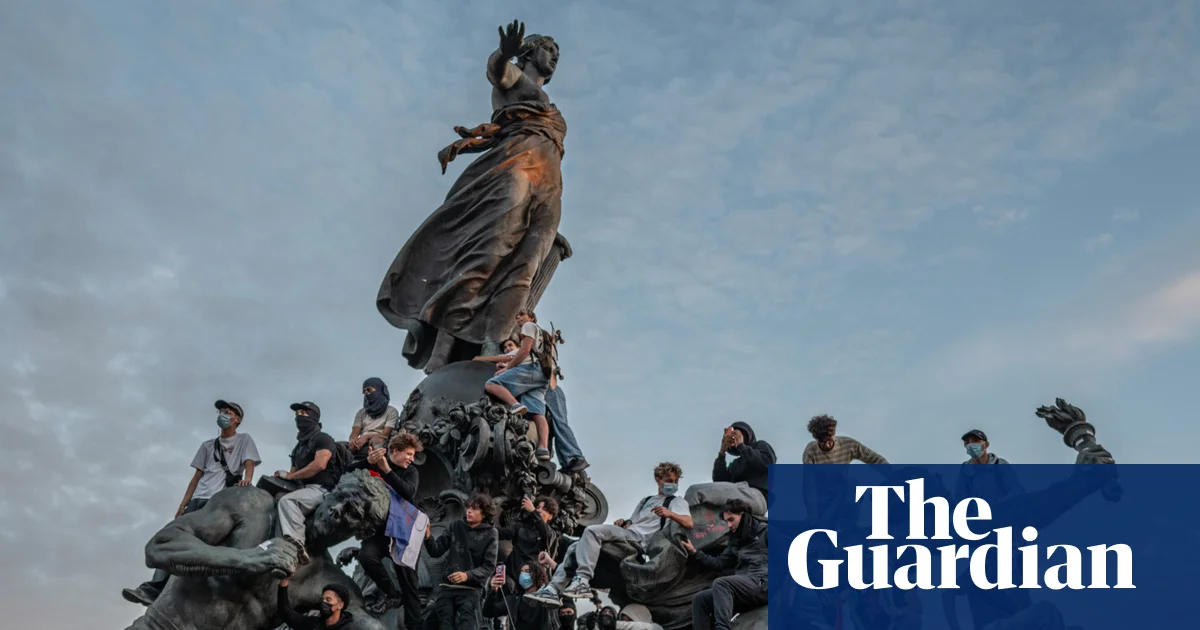
Hundreds of thousands of protesters in France have gathered to demonstrate against what they call an overcrowded, ill-equipped and understaffed education system. This was reported by Qazaqyia.kz citing The Guardian.
In Paris, huge youth protests over the state of high school education have brought tens of thousands of young people and adults on to the streets, with further strikes planned today. "School is a right, not a privilege," read one sign held aloft by a student in Paris. "A state that gasses high school students is a weak state," another sign said, referencing growing public anger at alleged police brutality towards young protesters.
Tens of thousands of young people have also taken to Spanish streets in recent weeks to protest against the country's deepening housing crisis. And outside the Labour conference in Liverpool last week, a crowd of jobless young people protested against what they saw as their bleak employment prospects. From Paris to the north of England, a similar thread runs through it all: a generation who feel betrayed by the absence of basic economic security and the erosion of public services that older generations took for granted.
The most significant youth movement to emerge across France in recent decades started on 17 September. Pupils returning to the Lycée Saint-Exupéry in Créteil, southwest of Paris, after the summer holidays, discovered they couldn't continue their studies because of the extent of staff absences. The 15- to 18-year-olds blockaded their high school in protest.
After negotiations with the education ministry, those staffing gaps were filled, but the impassioned complaints about crumbling buildings, overcrowded classrooms, and long school days – alongside a wider sense of inequality in the education system – resonated in the suburbs. "This movement grew from the ground up, from teenagers speaking to others outside their lycées. And over a couple of weeks, it has spread to hundreds of schools across France," Angelique Chrisafis, our Paris correspondent, tells me.
There's a tendency to mythologise youth protest, especially in France. But youth activism is often diminished. When I reported on the schoolchildren who protested against the war in Iraq in 2003, and those who took part in climate strikes more than a decade later, adults repeatedly questioned whether they were swayed by older provocateurs or just wanted an excuse to dodge school and indulge in petty vandalism. (In my experience: no, no and no.)
So it is in France this past month. "This is very much a youth movement," says Angelique, comparing it to similar protests in 2006 over an unpopular youth employment contract, which were organised by students' unions. "High schoolers are organising themselves without a centralised system or even spokesperson. That's historic, and it's taken the government by surprise."
This week, the sociologist Fabien Truong, who has written widely on youth protest culture, praised the "maturity and coherence" of the protesters. He pointed to a "social media effect" whereby teenagers in wealthier areas were sharing videos of scurrying rats, gaping ceilings and leaking toilets in poorer schools. "It's beautiful, this solidarity with students from more privileged backgrounds fighting for others and more equality."
This is precisely what Angelique has witnessed on the streets of Paris in recent days, where some of the most elite state schools have also been barricaded. She spoke to one teacher outside a school in a richer inner-city area, who was proud of her pupils. "She said there was a feeling of solidarity and generosity between teenagers, and how it flies in the face of the idea that they're part of a social media generation who are selfish and narcissistic."
"I spent a long time speaking to teenage girls at one of the barricades in the centre of the city," Angelique says, "who were sitting on top of a pile of bins and shopping trolleys. They told me: 'We're told in France that state education is a great leveller...'"