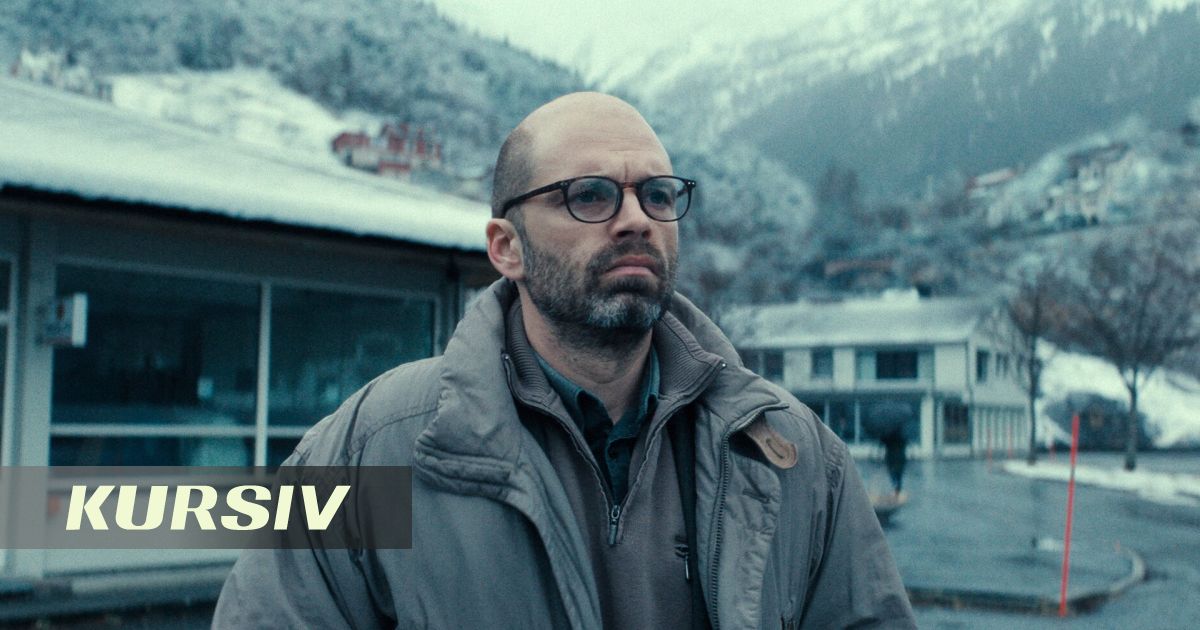
The release of this year's Palme d'Or winner in Kazakhstani cinemas has become another gift for fans of serious festival cinema. «Fjord» brought director and screenwriter Christian Mungiu his second top Cannes award in his career, a rare achievement. This was reported by Qazaqyia.kz citing Kursiv Media.
The first victory for the Romanian filmmaker was back in 2007 for «4 Months, 3 Weeks and 2 Days». «Fjord» is undoubtedly outstanding cinema, raising a huge number of important discussion issues and not providing answers to them. At the same time, the film may leave the Kazakhstani viewer... indifferent – it is so far from our mentality and reality.
Christian Mungiu gave his film a succinct, short and almost genius title, possessing both literal and figurative meanings. A fjord, as is known, is a narrow, winding sea bay deeply cut into the land with rocky shores. And the action of the picture takes place in small villages in a fjord in western Norway. But the fjord in this case is also a metaphor – for how deeply stereotypes, imposed rules, outright prejudices and confidence in one's own rightness have cut into the consciousness of adults.
At the epicenter of the plot is a family that emigrated from Romania. Lisbeth, a mother of five children, including an infant, is Norwegian by origin, who once left her country and met Mihai Georgiou in Bucharest, whom she married. But in Romania, after the death of Mihai's parents, no close ones remained, and in Norway Lisbeth has a mother, and the family decides to move. Whether this is the only reason is unknown – after all, the economic situation in Norway is much better than in Romania. Even in a small town, Mihai and Lisbeth immediately get jobs, and their children (except the youngest Benjamin, of course) go to school. The Georgious are a deeply religious family: the elder Elia and Emanuel and the middle Judith and Timotei are allowed to study the Bible, read prayers and go to church, but are forbidden to use gadgets, go on YouTube and contradict their parents. Naturally, in a country with a completely different way of life, conflict happens quickly: teachers notice bruises on Elia and report to the child protection service. The Georgiou couple are instantly deprived of their children (all their children), and now the parents must prove that they are not domestic monsters at all.
To some extent, «Fjord» echoes the well-known American film from a decade ago, «Captain Fantastic». But Christian Mungiu delivers a much more extensive and contradictory cinematic canvas. At the same time, «Fjord» has excellent internal dynamics, and almost two and a half hours of runtime fly by almost unnoticed. It's surprising, because there are few events in the film, but Mungiu raises so many issues that you can barely keep up with your internal dialogue.
It all starts with seemingly banal differences in interpretations and the language barrier. What counts as a smack and what as a slap, and how do they differ from a punch? Is it acceptable in principle to use even a light cuff on the head in parenting? And then the lump of mutual reproaches and conflicts grows into an avalanche – akin to the one that periodically descends from the mountains toward the school, and from which the strong walls of the educational institution protect.
The foundations of progressive Norwegian society, which Mungiu calls into question, if not more, are just as strong. When a person believes that family is a union of a man and a woman, is he obliged to keep this opinion to himself and agree with the modern definition? If religion forbids him to recognize homosexuality as a given, should he be forced to publicly accept the opposite?
At some point it seems that Mungiu is on the side of his on-screen compatriots, especially since the fate of one of the indigenous peoples of the North, the Sami, who were once forcibly assimilated like many similar ethnic groups, runs as a clear thread through the film.
But Mungiu – and he is certainly a full-fledged author here – does not take an unequivocal side with anyone. He emphasizes the extremes of both maximally polar points of view and relentlessly fires questions. Moreover, we do not even learn how Elia actually got her bruises. Because they are merely a pretext to brightly highlight overdue problems.
Mihai, Lisbeth and the like naturally ask why they cannot remain themselves? Why must they mimic the majority, especially since part of this majority does not actually adhere to the declared beliefs, pretending. In particular, the appearance of the Georgious awakens atavisms of former parenting rules in some other parents, and this frightens them.
And if in maximally democratic Norway (an absolutely splendid shot with the huge flag of the kingdom fluttering outside the window during Lisbeth's conversation with child protection representatives) there is freedom of speech and beliefs, then why do they not work in the case of inconvenient points of view? And is there not prejudice against newcomers and discrimination here?
The authorities and their representatives have their own arguments against the immigrants' logic. Where does children's freedom end and parental dictatorship begin? Is it right to impose one's religious beliefs, especially on the weak, as well as those unable or literally unable to say no? Is it appropriate to use the principles «We know better», «We were beaten, and we will beat»? Or to declare one's worldview in a foreign country? The author's finale answers, first of all, the last question.
The pair of Lisbeth – Mihai were played brilliantly by Renate Reinsve («The Sentimental Value», «Behind the Scenes of Reality») and Sebastian Stan, known primarily as the Winter Soldier in the Marvel cinematic universe, and for the lead role in «The Apprentice. The Rise of Trump». Here Stan, by the way, born in Romania and moving to the US only at the age of 12, is completely unrecognizable thanks to makeup and glasses.
As for the difference in mentalities and realities, against the backdrop of the frightening ordinariness of various violence against children in Kazakhstani society, a film in which parents are severely punished even for suspicion of smacking a child looks not like a contradictory drama, but science fiction.